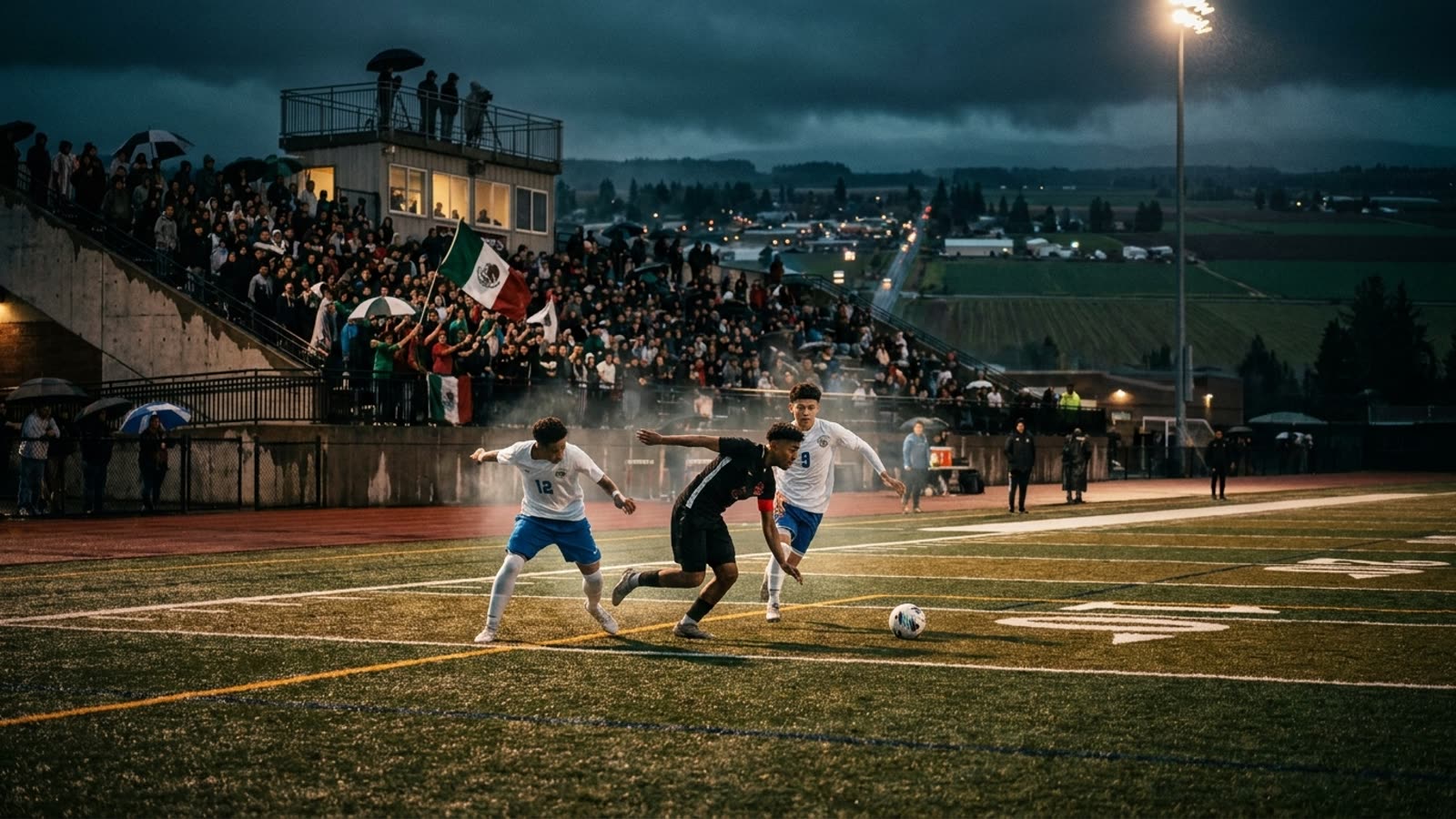
The 2026 World Cup is being played across North America, but one of its most fervent outposts won't appear on any FIFA venue map. Woodburn, Oregon—population 26,000, roughly 60 percent Latino—has become the de facto capital of Mexican soccer fandom in the Pacific Northwest, a place where El Tri's matches empty the streets and the local economy runs on the rhythm of the tournament bracket.
This isn't new. Woodburn's transformation began decades ago, when agricultural labor drew Mexican and Central American families to the Willamette Valley. What started as seasonal migration calcified into permanent community. The town's main drag now features more taquerías than diners, and the youth soccer leagues play a style that owes more to Liga MX than to American suburban rec programs.
The economics of fandom
World Cup years are good for Woodburn's merchants. Sports bars that might struggle during MLS season become standing-room-only operations when Mexico plays. Jersey sales spike. The local Walmart stocks more green-white-and-red face paint than anywhere within 200 miles. This isn't mere ethnic nostalgia—it's a functioning parallel economy that activates every four years and sustains businesses in between.
The pattern repeats in similar communities across the American West and Southwest: Pilsen in Chicago, Boyle Heights in Los Angeles, the Rio Grande Valley in Texas. What makes Woodburn notable is its concentration. In larger cities, Mexican soccer fandom dilutes across sprawling metropolitan areas. In Woodburn, it defines the town.
What FIFA missed
The 2026 tournament's venue selection prioritized stadium capacity and infrastructure over cultural resonance. Seattle got games. Portland did not. Woodburn, obviously, was never in consideration. Yet the passion-per-capita in this small agricultural town likely exceeds anything the tournament will see in its official host cities.
This is the paradox of modern mega-events: they chase scale while the most authentic expressions of fandom happen at human scale. A 60,000-seat stadium in Dallas will host Mexico matches with corporate hospitality suites and $15 beers. Woodburn will watch on screens in packed living rooms and overflow crowds at the American Legion hall, and the experience will be incomparably more intense.
Our take
Woodburn matters because it's a rebuke to the sanitized version of sports globalization that FIFA and its broadcast partners prefer to sell. The World Cup's real American story isn't happening in the gleaming stadiums of Atlanta or Los Angeles—it's happening in towns that don't appear on the tournament's radar but feel the competition in their bones. Immigration didn't just change American demographics; it rewired American sports geography. Woodburn is the proof.