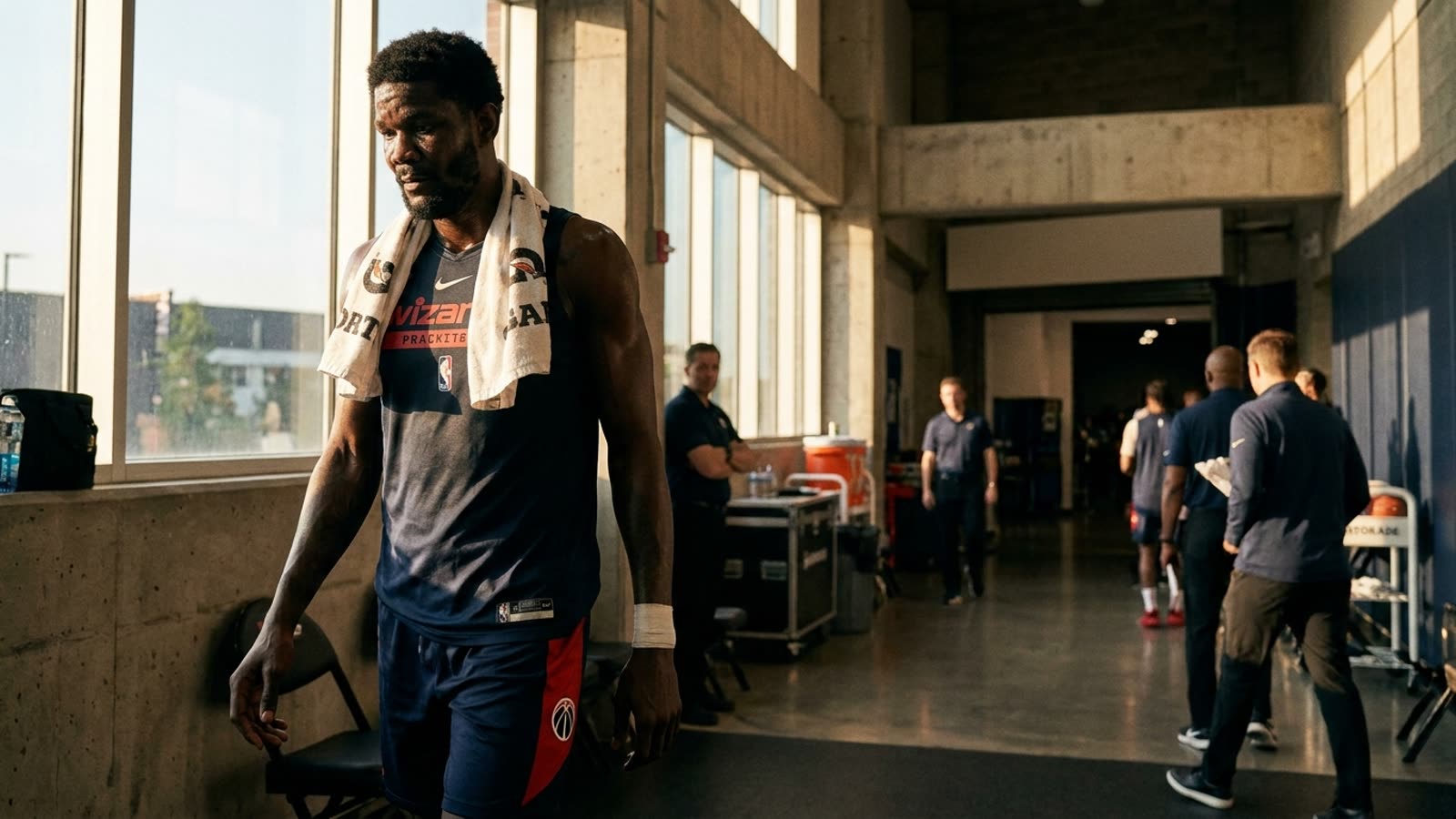
The Los Angeles Lakers have spent three years trying to figure out what to do with Deandre Ayton, and they have finally arrived at an answer: make him someone else's problem.
The trade sending Ayton to the Washington Wizards, first reported Thursday, represents the latest chapter in one of the NBA's stranger recent sagas — a former first overall pick who has never quite matched his draft position's promise, shuffled between franchises searching for the right context. For Los Angeles, the deal is less about basketball than arithmetic. Ayton's contract, which runs through 2027, had become an obstacle to the roster flexibility the Lakers desperately need as they attempt to extend the competitive window around an aging core.
The Ayton paradox
Ayton arrived in Los Angeles last summer as a reclamation project, a 26-year-old center who had already worn out his welcome in Phoenix despite averaging a double-double and shooting above 60 percent from the field. The theory was simple: pair him with playmakers, let him roll to the rim, watch the efficiency numbers climb. The reality proved more complicated. Ayton's passivity on offense and inconsistent defensive engagement frustrated coaches and teammates alike. He averaged 14 points and 10 rebounds — perfectly respectable numbers that somehow felt like underperformance.
Washington, perpetually rebuilding, has different incentives. The Wizards are collecting assets and contracts, not competing for titles. Ayton gives them a young-ish center who can mentor their lottery picks while they wait for the next iteration of the franchise to take shape. If he flourishes without the pressure of championship expectations, they can flip him at the deadline. If he stagnates, the contract expires eventually.
What Los Angeles actually gained
The Lakers' return — reportedly draft compensation and expiring contracts — matters less than what they subtracted. Ayton's departure opens roughly $35 million in cap space, depending on the final structure of the deal. In an NBA where max contracts now exceed $60 million annually, that is not transformative money. But it is enough to pursue a meaningful second option, or to aggregate role players who can defend and shoot.
The question is whether the Lakers' front office can convert cap space into wins. Their recent history suggests caution. The Russell Westbrook trade, the Anthony Davis extension negotiations, the revolving door of complementary pieces — Los Angeles has not exactly demonstrated roster-building acumen in the post-championship era. Cap flexibility is only as valuable as the decisions made with it.
Our take
This trade is addition by subtraction, and the Lakers should be graded on what comes next, not what they shipped out. Ayton was never going to be the answer in Los Angeles; his skillset requires patience and development time that a franchise chasing rings cannot afford. Washington gets a low-risk flyer on a talented but frustrating player. The Lakers get a blank canvas and one fewer excuse. Whether they paint something worth watching is entirely up to them.