The numbers arrived Thursday morning like a serve nobody could return: Serena Williams's first-round Wimbledon match against a qualifier ranked 87th in the world drew more UK viewers than any tennis broadcast since 2016, and outpaced the concurrent World Cup group-stage fixture between Belgium and Morocco on the other channel.
This was not supposed to happen. Williams retired from professional tennis in September 2022, tearfully walking off the court at the US Open after a third-round loss to Ajla Tomljanović. She was 40, her body betraying her, her daughter Olympia waiting in the stands. The farewell tour had ended. The GOAT debate was settled—or at least frozen in place.
Then, six weeks ago, she announced she was coming back.
The calculus of a comeback
Williams's return is not without precedent, but it defies actuarial logic. At 44, she is attempting something no woman has accomplished in the Open Era: winning a Grand Slam title after turning 40. Martina Navratilova won Wimbledon doubles at 46, but singles is a different animal—a young person's war of attrition fought over five sets and three hours.
The All England Club granted her a wildcard, which is to say they handed her a golden ticket and hoped she would fill their coffers. She obliged. Centre Court was sold out within minutes of the draw. Secondary market prices for her opener touched £4,000. The BBC cleared its afternoon schedule.
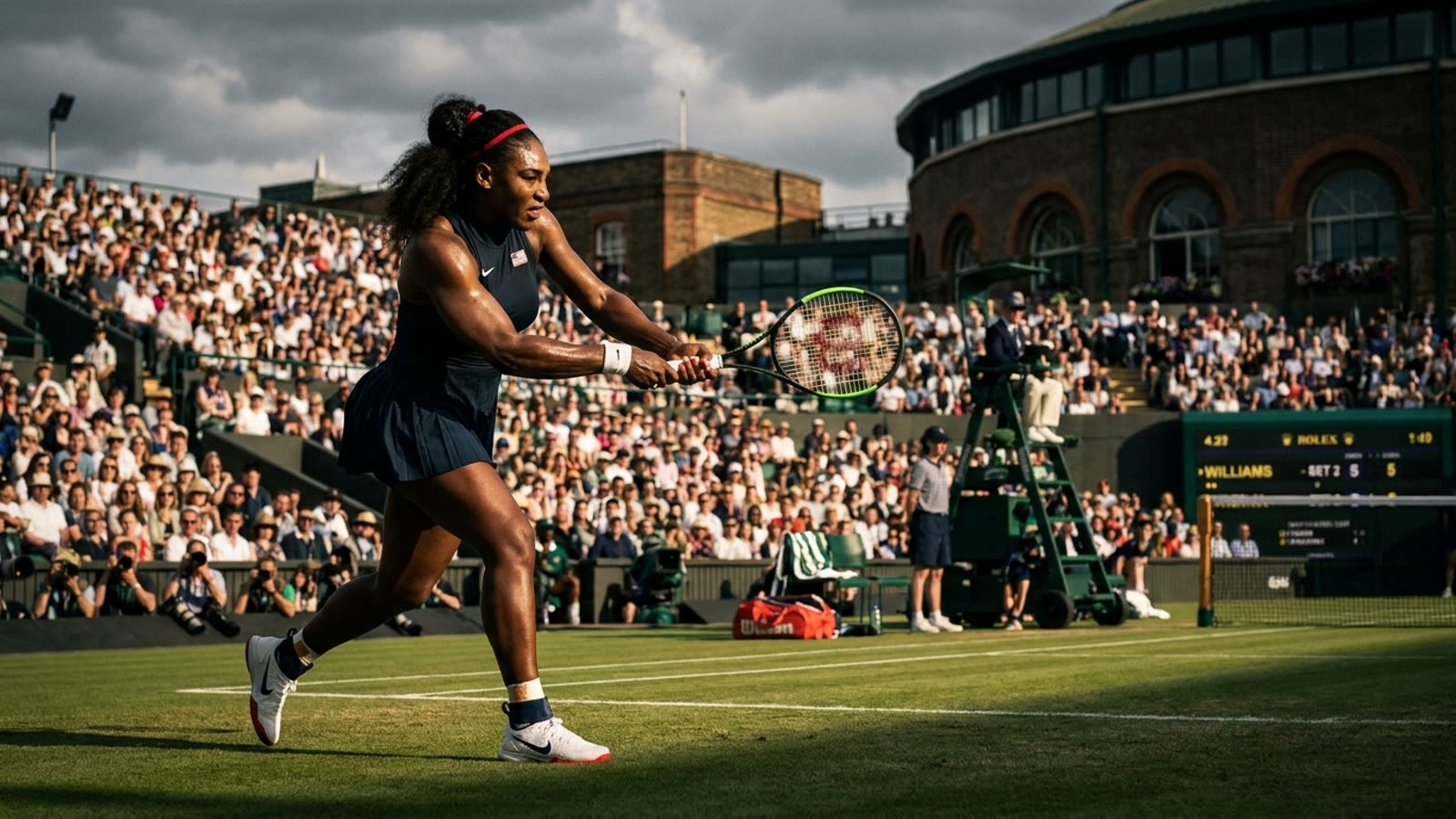
What viewers got was vintage Serena: the grunt, the fist pump, the serve that still touches 115 mph when she needs it. She won in straight sets, 6-3, 6-4, looking neither dominant nor desperate—merely competent, which at her age is a kind of miracle.
Why star power still wins
The ratings story is instructive. The World Cup is the planet's most-watched sporting event, and this summer's tournament—hosted across the United States, Canada, and Mexico—has delivered record American audiences. But in Britain, where football is a secular religion, a 44-year-old American woman playing a sport with polite applause beat the beautiful game.
The explanation is simple: Serena Williams is a singular narrative. She is comeback, motherhood, age-defiance, and Black excellence wrapped in a tennis dress. Belgium versus Morocco, by contrast, is two decent teams grinding toward a draw. One is a story; the other is a fixture.
This is the lesson sports executives keep relearning. Leagues matter, but stars matter more. Michael Jordan sold more tickets than the NBA. Tiger Woods sold more than the PGA Tour. And Serena Williams, even at 44, sells more than Wimbledon itself.
Our take
Williams will almost certainly not win this tournament. Her body will betray her eventually—probably in the second week, possibly sooner. But that is beside the point. She has already won the thing that matters: attention. In an era of fragmented audiences and infinite content, she reminded the world that some athletes transcend their sport. The ratings record is not a fluke. It is a proof of concept. Serena Williams is not playing tennis. She is performing a one-woman show about mortality, ambition, and the refusal to accept that the best days are behind her. The world, it turns out, will always tune in for that.