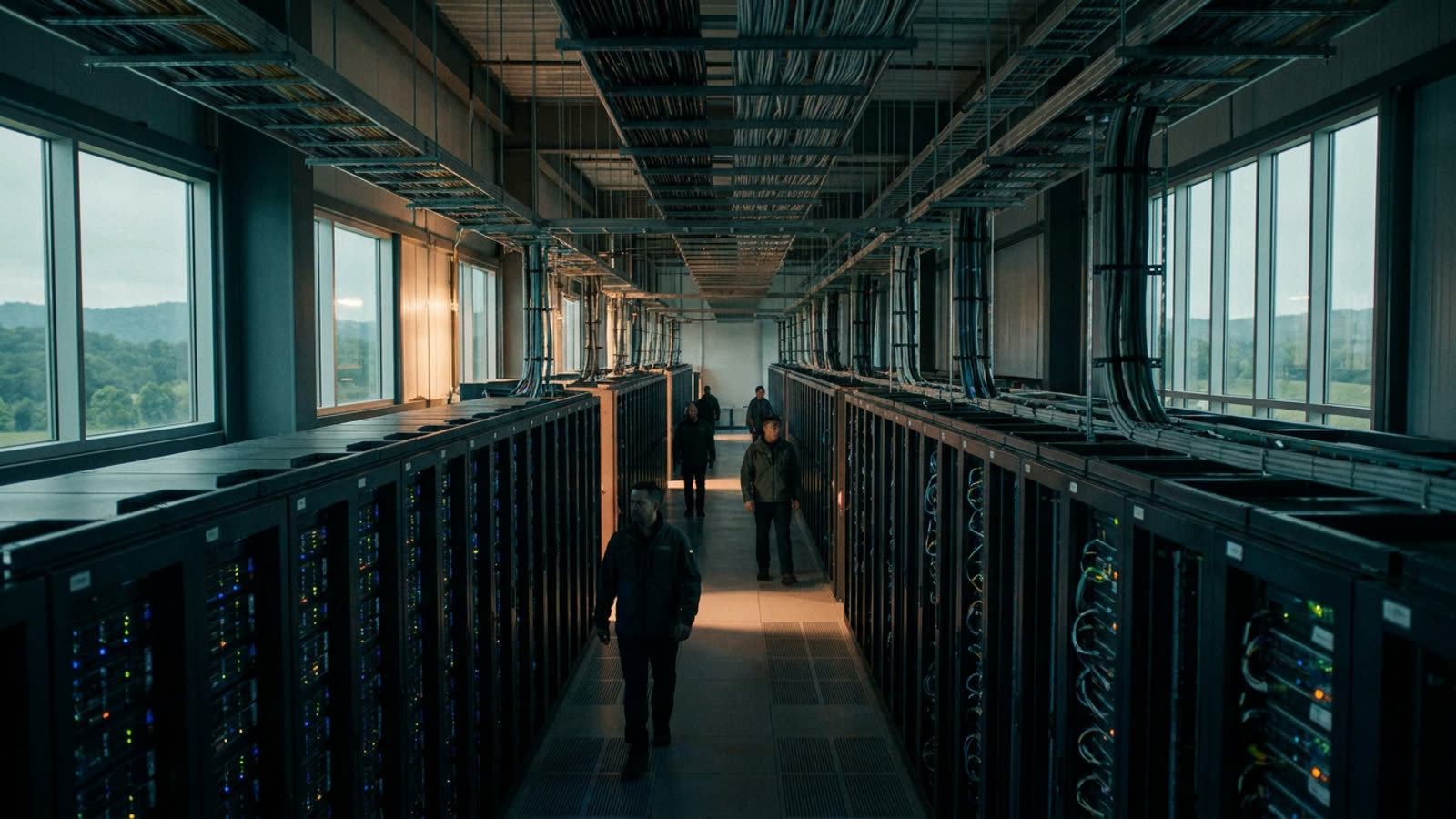
The residents of Lake Tahoe have discovered they are less valuable than graphics processing units. Their longtime energy supplier, facing the choice between serving a scenic mountain community and powering the insatiable server farms of the AI industry, has chosen the machines.
This is not a metaphor about technological priorities. It is a straightforward business decision playing out across the American West, where the explosive demand for AI computing power has transformed regional utilities from public servants into power brokers hunting the most lucrative contracts. Lake Tahoe, with its modest residential load and inconvenient geography, simply cannot compete with a data center willing to pay premium rates for guaranteed gigawatts.
The arithmetic of abandonment
The numbers tell a brutal story. A single large-scale AI data center consumes electricity equivalent to tens of thousands of homes. The margins on industrial power contracts dwarf what utilities earn from residential customers, who demand reliability, complain about outages, and vote for rate-limiting politicians. Data centers, by contrast, sign long-term agreements, pay upfront, and never call to dispute a bill.
For utilities operating in deregulated or semi-deregulated markets, the calculation becomes irresistible. Why maintain aging infrastructure serving dispersed mountain communities when a single hyperscaler client can anchor your revenue for a decade? The Tahoe situation represents the logical conclusion of treating electricity as a pure commodity rather than essential infrastructure.
A pattern emerges
Lake Tahoe joins a growing list of communities discovering that proximity to major transmission lines has become a liability rather than an asset. The same corridors that once brought power to rural and resort communities now serve as highways for electrons flowing toward the nearest data center cluster. Pennsylvania towns have organized against new facilities. California's grid operator has warned of capacity constraints. And now the Sierra Nevada faces an energy supplier choosing to serve different customers entirely.
The irony is not lost on residents: the AI systems consuming this power are trained partly on images of places like Lake Tahoe, scenic destinations that may become harder to inhabit as the infrastructure supporting them gets repurposed for computation.
Our take
This is what happens when essential services operate on pure market logic. The AI industry's power demands are legitimate, and the economic incentives facing utilities are rational. But a system where mountain communities can simply be dropped from the grid because they are insufficiently profitable is a system that has confused efficiency with purpose. Someone will eventually have to decide whether Americans have a right to electricity or merely an opportunity to bid for it. Lake Tahoe is now a test case.