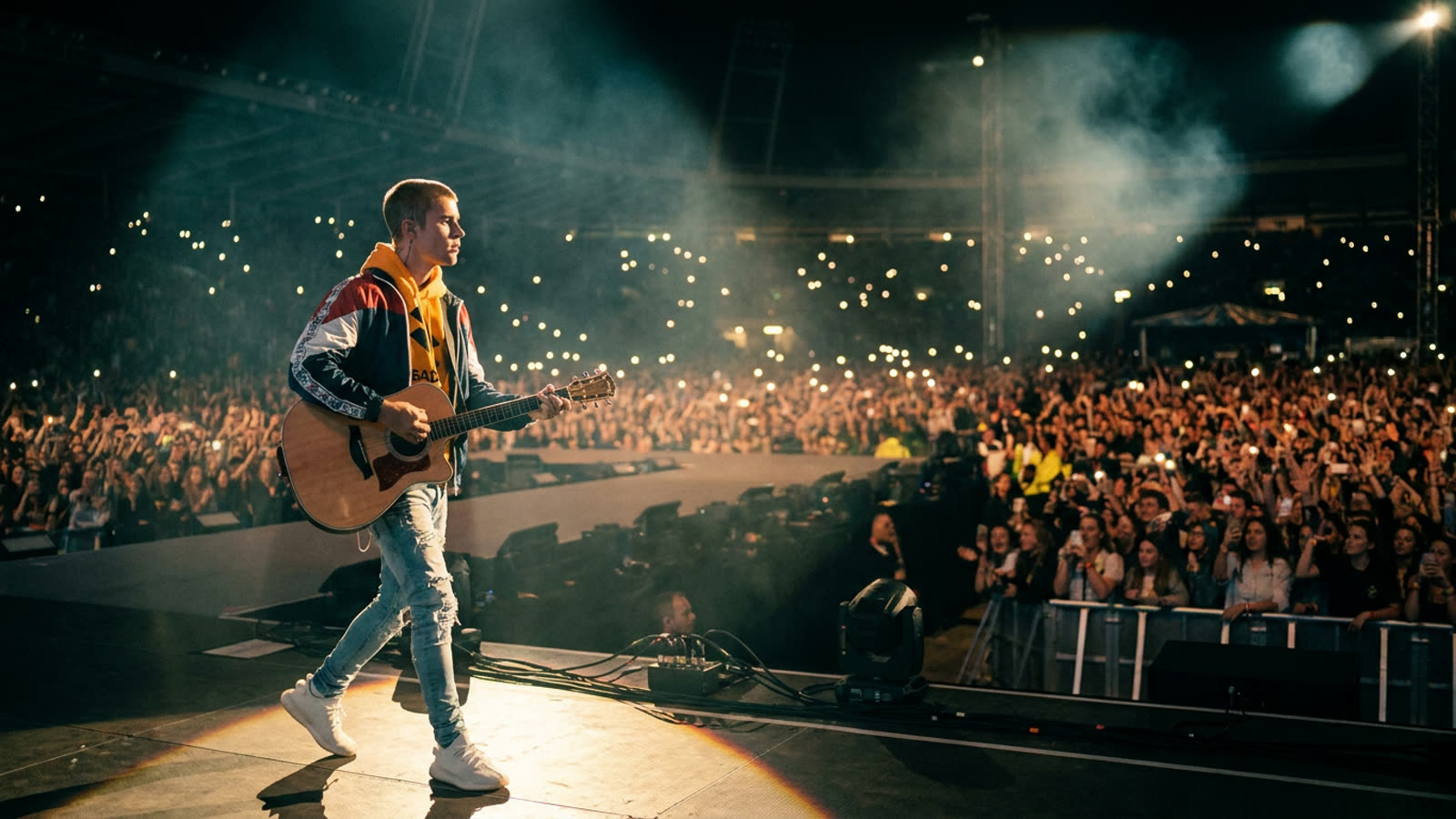
The image is almost too perfect to be real: Justin Bieber, once the biggest pop star on the planet, performing an intimate set for a room of media and technology executives at an undisclosed Los Angeles venue. No screaming teenagers. No stadium production. Just one of the most famous musicians alive, singing for people who could buy his entire catalog with their quarterly bonuses.
This is not a fall from grace. It is, arguably, the opposite — a rational response to an entertainment economy that has made traditional touring simultaneously more exhausting and less profitable than ever before.
The math that broke the arena model
The economics of modern touring have become genuinely perverse. Production costs have ballooned, insurance premiums have spiked, and the logistical complexity of moving a stadium show across continents now requires the organizational capacity of a small military operation. Meanwhile, streaming has collapsed the album-sale revenue that once subsidized tour losses, leaving artists dependent on merchandise and ticket sales that increasingly flow to promoters and venues rather than performers.
Private performances flip this equation entirely. A single corporate event can reportedly command fees in the seven figures for top-tier talent — compensation that would require weeks of arena dates to match, without the physical toll, the crew costs, or the risk of a viral moment going wrong. For an artist like Bieber, who has been publicly candid about health struggles that forced him to cancel tour dates, the appeal is obvious.
The new patron class
What makes this moment culturally interesting is less the economics than the clientele. The tech elite have become the new Medicis, commissioning private performances the way Renaissance patrons once commissioned frescoes. The difference is visibility: where Lorenzo de' Medici wanted his patronage displayed in public chapels, today's billionaires want their cultural consumption kept discreet, accessible only to those already inside the room.
This creates a strange bifurcation in celebrity culture. The public-facing version of stardom — Instagram posts, paparazzi shots, award show appearances — continues to operate as a kind of marketing apparatus, maintaining the cultural relevance that makes private bookings valuable. But the actual economic center of gravity has shifted behind closed doors, into spaces most fans will never see or know about.
Our take
There is something both logical and melancholy about watching pop stars become, essentially, very expensive wedding bands for the ultra-wealthy. Bieber built his career on accessibility — the YouTube videos, the parasocial intimacy, the sense that fame was a conversation between artist and audience. Now the conversation has been privatized, available only to those who can afford the cover charge. The celebrity economy has not collapsed; it has simply remembered who actually has money.