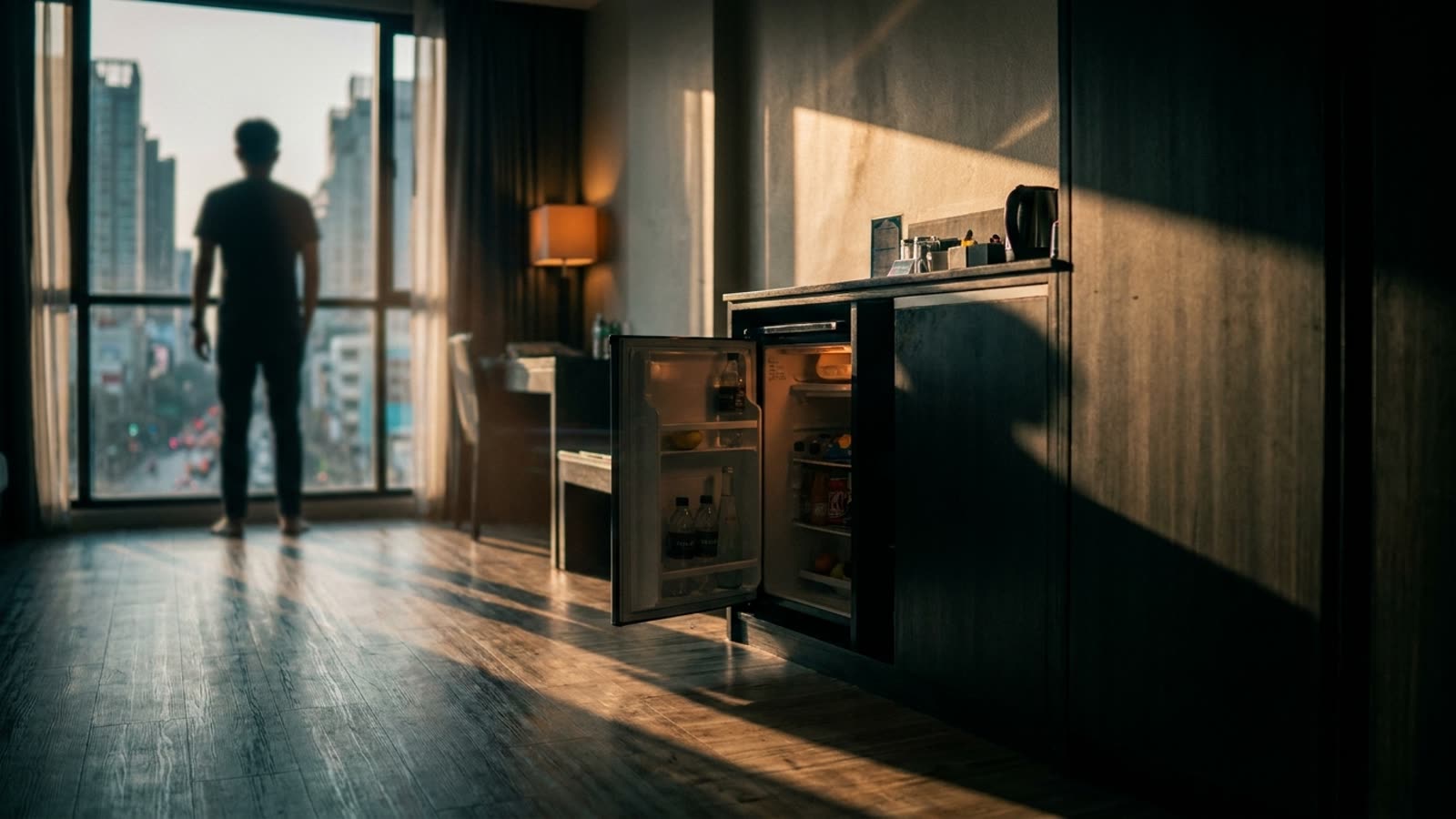
The minibar was never really about the Toblerone. It was about permission — the tacit understanding that when you crossed the threshold of a hotel room, normal rules of thrift and restraint could be suspended. That tiny refrigerator humming beneath the television represented a philosophy of travel: that being away from home entitled you to small, expensive pleasures without the friction of decision-making or public scrutiny.
Now the minibar is vanishing from hotels worldwide, and its disappearance tells a more interesting story than its presence ever did.
The economics that stopped making sense
Hotel minibars emerged in the 1970s, when Hong Kong's Peninsula and a handful of European luxury properties realized they could monetize the dead hours between check-in and dinner. For decades, the model worked beautifully: stock a small fridge with items marked up several hundred percent, and guests — either too tired to leave the room or too embarrassed to ask about prices — would consume them without much thought.
The labor economics have since inverted. Restocking minibars requires daily room-by-room inventory checks, specialized staff, and increasingly sophisticated tracking systems to catch guests who consume items and deny it upon checkout. The revenue rarely justifies the operational headache. A single minibar might generate a few hundred dollars annually in a busy property, while the staff time, inventory shrinkage, and guest disputes cost more than that in aggregate friction.
The cultural shift that made it irrelevant
But the deeper change is behavioral. The minibar assumed a captive guest with limited options and high tolerance for marked-up convenience. Today's travelers arrive with delivery apps that can produce restaurant-quality meals in thirty minutes, with detailed knowledge of every bar and café within walking distance, and with a general suspicion of anything that feels like a hidden fee.
The psychology of luxury itself has shifted. Contemporary affluent travelers increasingly prize authenticity, local experience, and the appearance of savvy consumption over the old-money indifference that made paying nine dollars for a can of Pringles feel sophisticated rather than foolish. The minibar now reads as a trap for the uninformed rather than a perk for the discerning.
What replaced it
The smarter hotel groups have pivoted to models that acknowledge these shifts. Some have converted minibar space into complimentary amenities — a curated selection of local snacks and bottled water included in the room rate, transforming a profit center into a hospitality gesture. Others have eliminated the in-room refrigerator entirely, redirecting guests toward lobby bars and restaurants where the experience carries more perceived value.
The most interesting experiments involve hybrid approaches: empty refrigerators stocked on request, partnerships with local food purveyors, or subscription-style packages where guests pre-select their in-room provisions. These models treat the guest as a collaborator rather than a mark.
Our take
The minibar's decline is a small death, but a revealing one. It marks the end of a particular kind of travel — passive, trusting, willing to pay for convenience without scrutiny. What has replaced it is more democratic and more demanding: travelers who expect value, transparency, and the option to opt out. Whether that represents progress depends on how much you miss the old permission to be foolish in private.