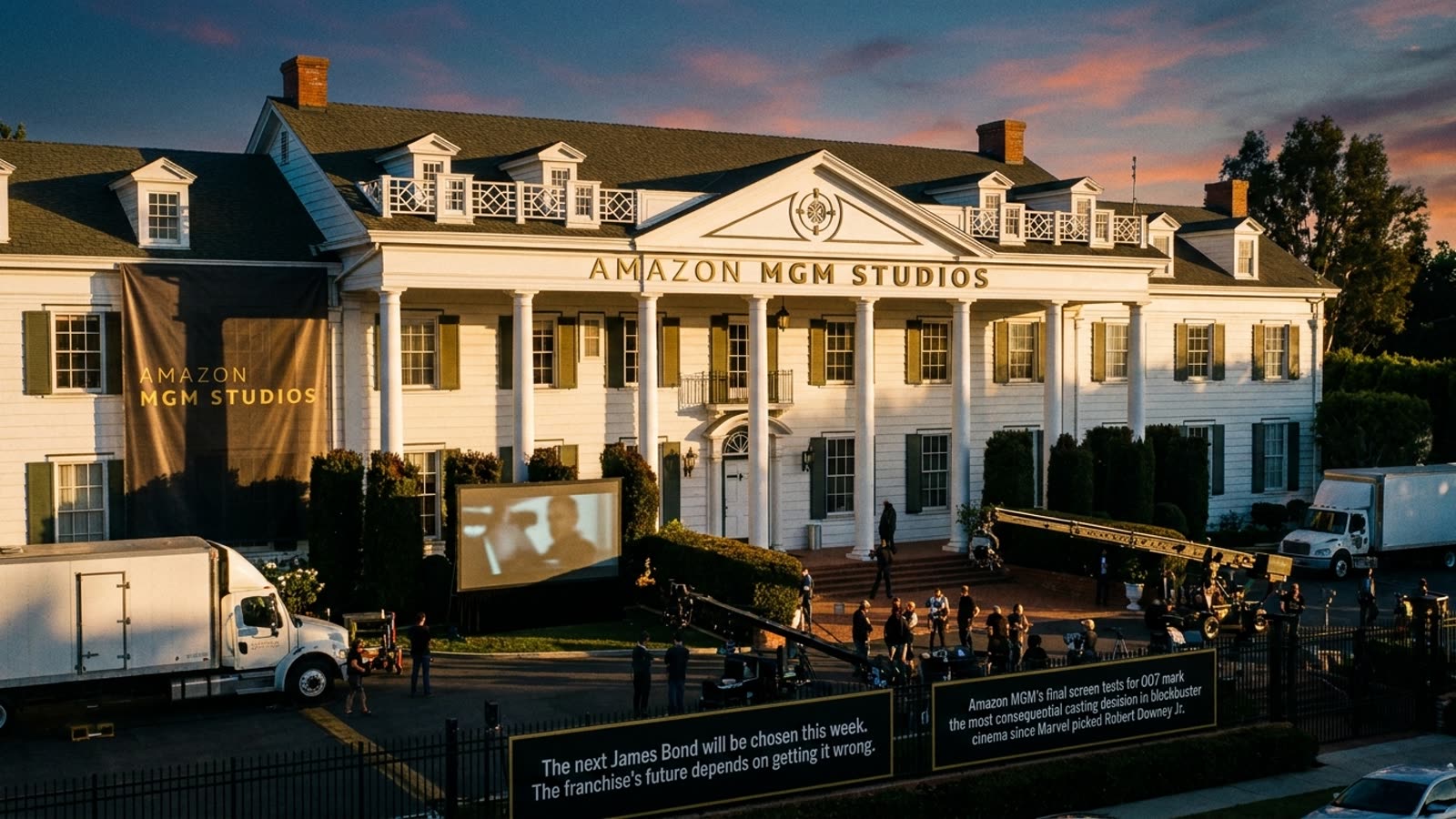
The sixty-year-old question of who will play James Bond has, at various moments, felt like a parlor game, a national referendum, and a stock-market indicator. This week it becomes something more prosaic: a screen test. Final auditions for Amazon MGM's next 007 are scheduled to begin as early as Friday, with a shortlist of actors stepping into the tuxedo under studio lights while executives weigh charisma against franchise math.
The stakes are difficult to overstate. Bond is not merely a character but a financial instrument—one that has generated north of $7 billion at the global box office and anchored entire distribution strategies. Daniel Craig's fifteen-year tenure stabilized the series after the Pierce Brosnan era's diminishing returns, but it also raised the bar for what a Bond actor must deliver: critical credibility, awards-season adjacency, and the stamina for a multi-decade commitment. The next choice will define Amazon's ambitions for the property it acquired alongside MGM.
The shortlist speculation
Names have circulated for years—Aaron Taylor-Johnson, Callum Turner, Regé-Jean Page—but the studio has maintained unusual discipline in preventing leaks. What is known is that Amazon MGM wants youth. Craig was thirty-seven when cast; the new Bond will likely be younger, capable of anchoring five or six films over fifteen years. The preference signals a pivot away from the brooding, self-interrogating spy of the Craig era toward something more sustainable, perhaps more serialized.
The timing is notable. Amazon's theatrical strategy has been uneven since the MGM acquisition, with expensive misfires and a lingering perception that the company treats cinema as a loss leader for Prime subscriptions. A successful Bond relaunch would be the clearest rebuttal—proof that the streamer can operate as a legacy studio when it matters.
Why getting it "wrong" might be the point
The franchise's most successful casting decisions have historically been controversial. Craig was mocked as "James Blond" before Casino Royale silenced critics; Connery was dismissed as a bodybuilder with limited range. The safe choice—the actor everyone agrees is perfect—has never produced the best Bond. What the role requires is someone who can redefine it, not someone who fits the existing template.
This is Amazon's paradox. The company's data-driven culture favors consensus and risk mitigation, but Bond demands a leap of faith. The screen tests this week will reveal whether the studio has the nerve to pick an actor who makes people uncomfortable—or whether it will default to the handsome, unimpeachable option that satisfies focus groups and underwhelms audiences.
Our take
Bond has survived by reinventing itself every decade, and the reinvention has never been comfortable. The worst outcome this week isn't picking the wrong actor; it's picking the obvious one. Amazon paid $8.5 billion for MGM largely because of this franchise. If the company treats the casting as a brand-safety exercise rather than a creative bet, it will have purchased the most expensive insurance policy in entertainment history—and gotten exactly what it paid for.