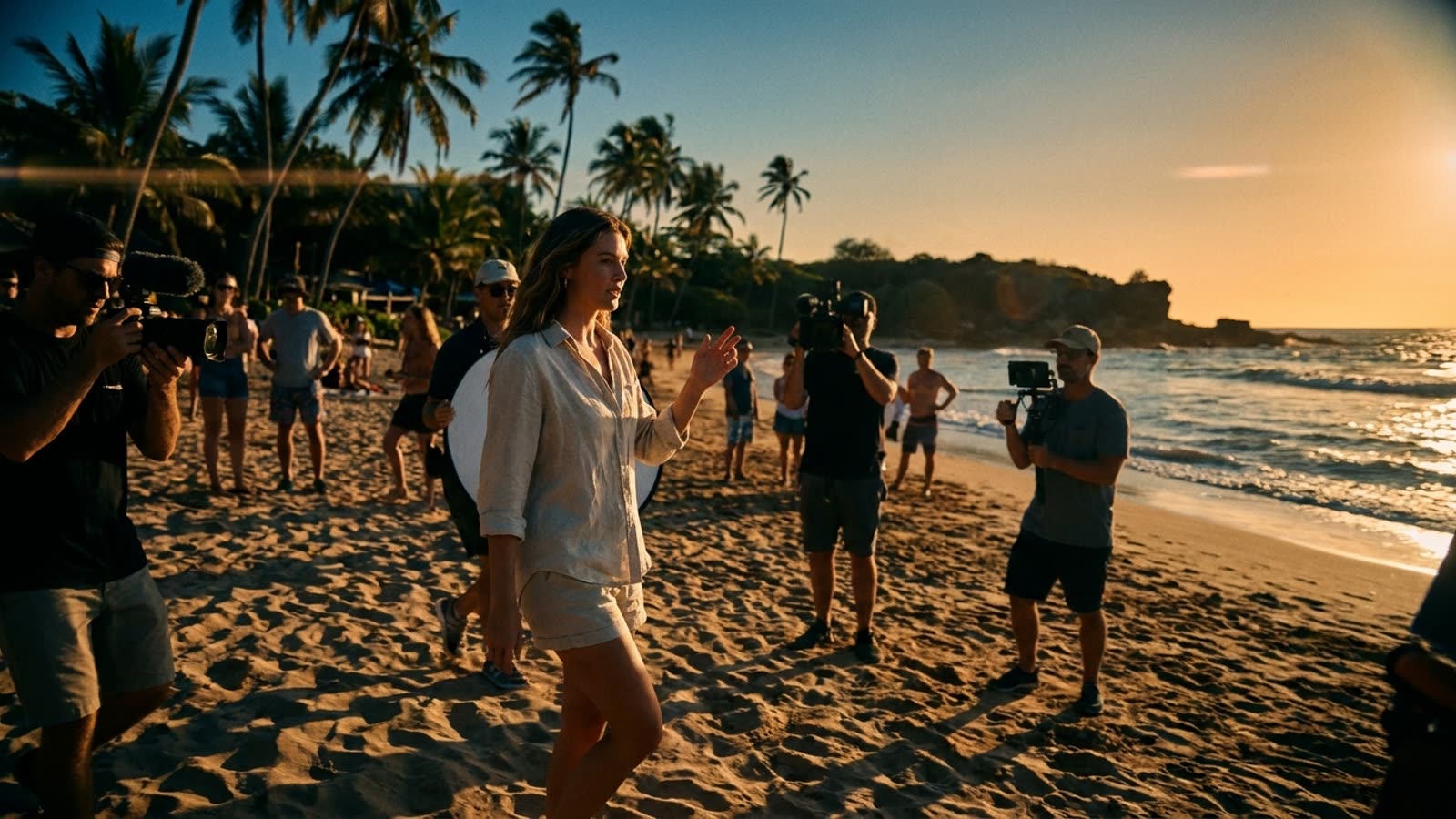
The celebrity beach photograph was once a violation—a telephoto intrusion into a private moment that tabloids paid six figures to publish. Now it is a collaboration, a carefully orchestrated performance in which subject and photographer both understand their roles, and the resulting images function less as journalism than as brand content with plausible deniability.
Iris Kendall's recent Spanish vacation photos, which have circulated widely enough to earn her a "Cheek of the Week" designation from various celebrity outlets, exemplify this evolution. The images are technically "candid"—she is ostensibly unaware of the camera, simply enjoying the Mediterranean sun. But everything about them suggests meticulous preparation: the precise angle of repose, the strategic placement of accessories, the lighting that happens to be golden-hour perfect.
The death of the unflattering shot
There was a time when beach paparazzi photos served as a democratizing force, a reminder that even the famous had cellulite and sunburn. Publications like Heat magazine built entire franchises around "Stars: They're Just Like Us" features that showed celebrities looking approximately human. That era is functionally over.
The modern celebrity beach photo is the product of an implicit détente between talent and tabloid. Publicists tip photographers to locations; subjects arrive camera-ready; everyone profits. The paparazzo gets saleable images without the legal liability of genuine stalking. The celebrity gets controlled exposure that reinforces their brand. The audience gets content that feels voyeuristic while being anything but.
Kendall, who has built a following through a combination of modeling work and strategic social media presence, represents the generation that never knew the old rules. For her cohort, there is no meaningful distinction between a professional photoshoot and a "candid" beach moment—both are opportunities for content creation, and treating them differently would be naive.
The economics of staged spontaneity
The financial incentives have shifted accordingly. Where paparazzi agencies once paid sources for celebrity location tips, the flow of information—and sometimes money—now moves in both directions. A well-timed beach photo can be worth more to a celebrity's brand than a magazine cover, with none of the editorial oversight or approval processes that formal shoots require.
This has created a curious professional category: the celebrity beach photo as loss leader. The images themselves may generate relatively modest licensing fees, but they function as advertising for the subject's other ventures—fashion collaborations, beauty lines, the general aura of desirability that converts to commercial value downstream.
The Spanish setting is not incidental. European beaches offer a combination of glamour, permissive photography laws, and sufficient distance from Los Angeles that the resulting images feel aspirational rather than quotidian. A celebrity photographed in Malibu is working; a celebrity photographed in Ibiza is living.
Our take
There is something almost admirable about the honesty of the current arrangement, even as it pretends to be something it is not. The old paparazzi economy was genuinely predatory—photographers camped outside homes, chased cars, created dangerous situations for subjects and bystanders alike. The new version is transactional in ways that benefit everyone except perhaps the audience, which continues to consume "candid" images while understanding, on some level, that candor left the building years ago. Iris Kendall's Spanish vacation photos are not journalism, but they were never meant to be. They are advertising that has learned to wear a bikini.