The minibar is perhaps the most misunderstood profit center in hospitality. Guests see a tiny refrigerator stocked with overpriced snacks and assume they're witnessing corporate greed at its laziest. They're actually looking at one of the industry's most sophisticated exercises in price discrimination, convenience arbitrage, and psychological theater.
The economics are counterintuitive. Minibars are not, by most accounts, particularly profitable on a per-unit basis. The labor required to restock them, the inventory management, the refrigeration costs, and the dispute resolution when guests insist they never touched that Heineken — all of this eats into margins that look impressive only on the sticker. A hotel might clear a few dollars per occupied room night from minibar revenue, a rounding error compared to the room rate itself.
So why do they persist? Because the minibar is not really selling Pringles. It's selling the idea of abundance, of being cared for, of having your needs anticipated before you knew you had them.
The convenience premium
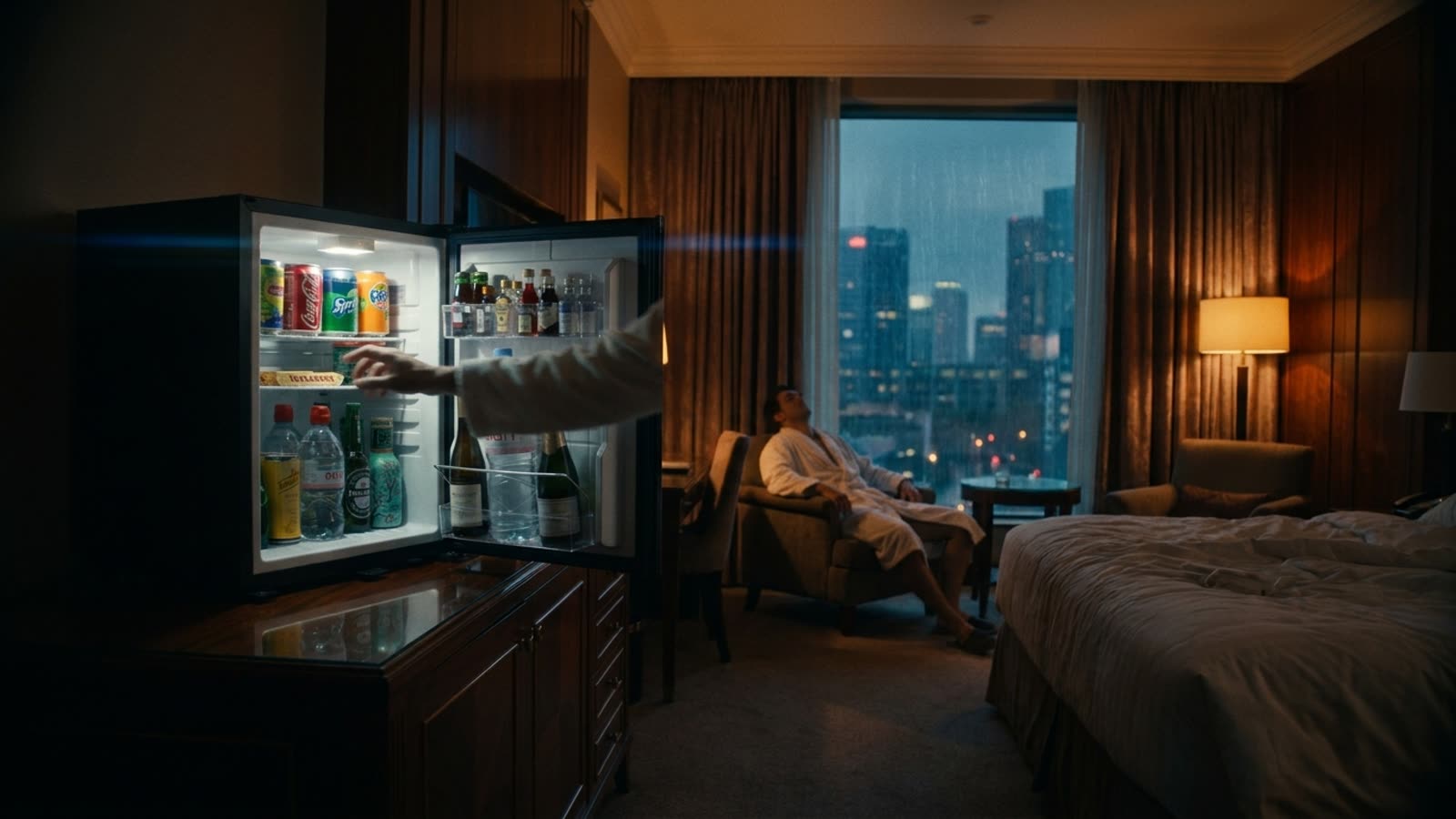
What the minibar actually monetizes is a very specific moment: 11 p.m., shoes off, too tired to go back out, willing to pay almost anything to avoid putting pants on again. This is not irrational behavior. The guest is correctly valuing their time, energy, and the psychic cost of leaving a comfortable room. The hotel is simply capturing that value.
The pricing, which strikes many as absurd, functions as a sorting mechanism. Business travelers on expense accounts don't blink. Honeymooners celebrating don't care. Budget-conscious guests simply ignore the minibar entirely, which is fine — the hotel has already captured their willingness to pay through the room rate. The minibar exists for the segment willing to pay for immediacy.
The theater of plenty
There's a reason luxury hotels stock their minibars with items you'd never actually want. The jar of macadamia nuts, the split of mediocre champagne, the artisanal chocolate bar from a country you've never heard of — these aren't really inventory. They're props in a production about what kind of establishment you're staying in.
The minibar tells a story: this is a place where your desires, however peculiar, have been anticipated. The fact that you'll never open the cashews is irrelevant. Their presence suggests a world of possibility, of someone having thought about you before you arrived. This is the same logic that drives turndown service, the excessive thread counts, the orchid on the bathroom counter. Luxury hospitality sells the feeling of being considered.
The quiet retreat
The minibar's future is uncertain. Some properties have abandoned them entirely, calculating that the labor costs and guest friction outweigh the modest revenue. Others have pivoted to honor bars, unstaffed pantries, or curated local snack selections that feel less predatory and more editorial. A few have gone the other direction, installing sensor-equipped units that automatically charge your card the moment you lift a bottle — a technology that has generated roughly as much goodwill as you'd expect.
What's being lost, perhaps, is the specific pleasure of transgression. The minibar offered a small, victimless rebellion: you knew you were being overcharged, you did it anyway, and you felt slightly naughty about it. That's a harder experience to replicate with a QR code and a delivery app.
Our take
The minibar deserves more respect than it gets. It's easy to mock the $9 water bottle, but harder to build a system that consistently converts exhaustion into revenue while making guests feel pampered rather than fleeced. The best minibars aren't selling products — they're selling permission to indulge without leaving the room, to treat yourself without effort, to be the kind of person who doesn't check prices. That's a more sophisticated value proposition than most retail environments ever attempt.