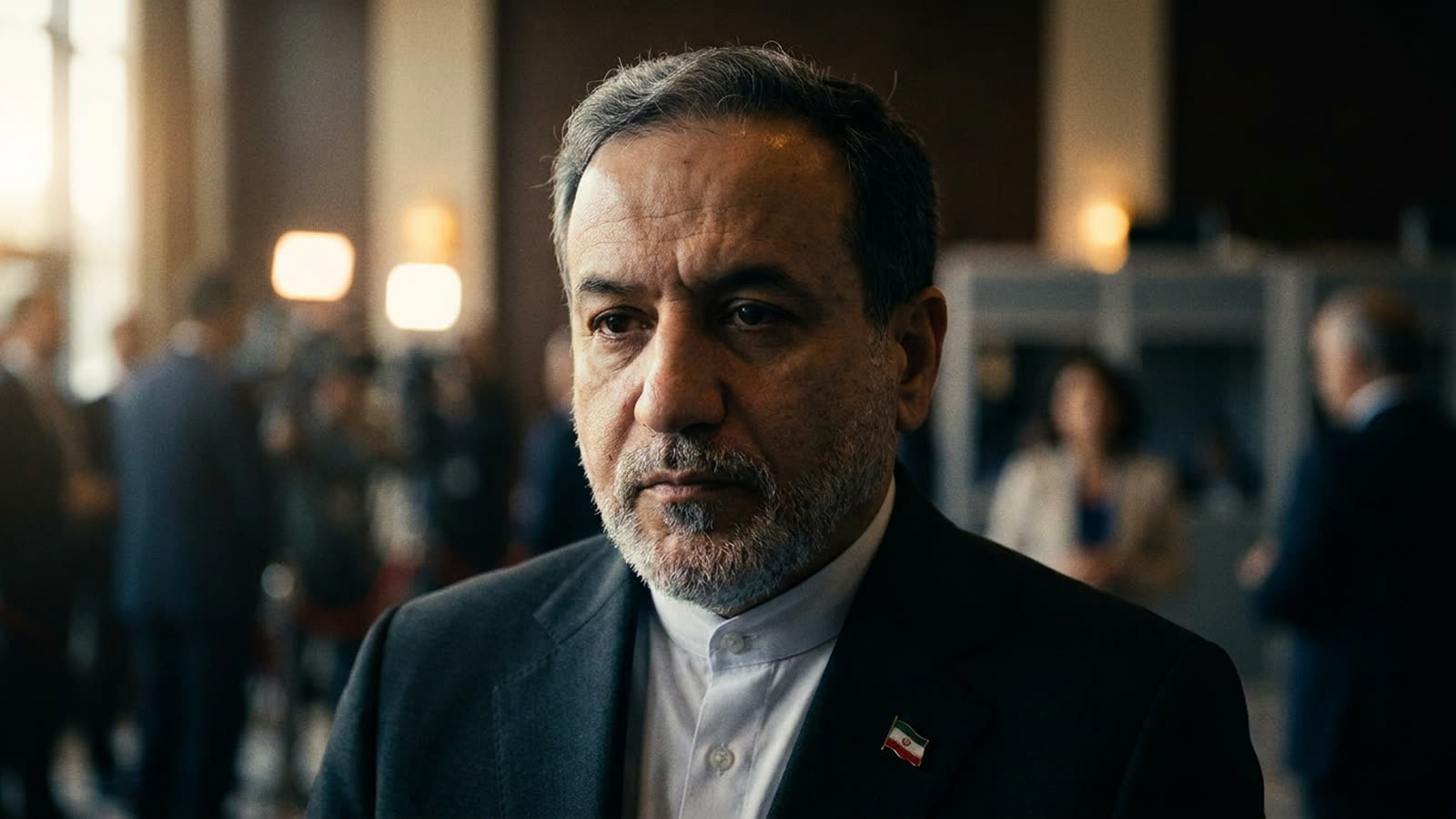
Iran's Foreign Minister Abbas Araghchi stood in front of a podium in Tehran on Friday morning and told the assembled press corps something no diplomat wants to say out loud on a day when a ceasefire is officially in effect: that the United States, in his words, "opts for a reckless military adventure every time a diplomatic solution is on the table."
The line was short. It was also, according to three diplomats who spoke to the BBC on background, the most openly hostile Iranian statement since the direct US-Iran strikes began six weeks ago. Coming on a day when the ceasefire was supposed to be holding, it landed like a brick through a window.
The ceasefire that isn't really a ceasefire
Officially, the guns went quiet four days ago. In practice, the Israeli Air Force has continued to target what it calls "logistical resupply corridors" in western Iran, and Iranian-aligned militias in Iraq have resumed rocket fire on the Al-Asad airbase. Neither side is calling these events violations. Both sides are calling them responses.
That is the language of a ceasefire that nobody expects to last. Oil markets agree — Brent crude closed up 3.8 percent on Friday, its fourth consecutive day of gains, and the Strait of Hormuz risk premium is now baked into every barrel of oil leaving the Gulf.
The Rubio-Pope Leo meeting
US Secretary of State Marco Rubio spent Friday morning at the Apostolic Palace in Rome, meeting Pope Leo XIV for what the Vatican described as a "discussion on peace in the Middle East." Rubio's presence in Rome is not an accident. The Holy See has been one of the few diplomatic channels both Washington and Tehran have been willing to tolerate since the conflict began, and Pope Leo — the first American pope in history — has made Middle East de-escalation the defining early priority of his pontificate.
The meeting was short. The readout was shorter. Both sides called it "constructive." That is Vatican for "we did not get what we wanted, but we did not walk out either."
What Tehran is actually saying
Araghchi's statement contained a second line that received less attention but may matter more. He said Iran was "willing to return to the negotiating table the moment the United States demonstrates it has chosen diplomacy over improvisation." That is a door. It is a very narrow door, wedged open by a very specific set of conditions, but it is a door.
The conditions, according to two Iranian officials who spoke to Reuters on background, include an immediate halt to Israeli strikes, a suspension of the latest sanctions package the Treasury added in April, and a public US acknowledgement that the nuclear facility strikes in March violated the Vienna framework. None of those are going to happen. But the fact that Iran has written them down in a sentence that ends with "negotiating table" is, on balance, better than a sentence that ends with "retaliation."
The business of war
As the BBC also reported Friday, some defense contractors are having their best quarter in a generation. Lockheed Martin, Raytheon, and Northrop Grumman are all trading at record highs. Interceptor missile production lines that had been idle since the early Biden years are running three shifts. War is, as it always has been, a revenue category.
Our take
Ceasefires hold when both sides are exhausted and neither can justify another strike to its domestic audience. Neither condition is met here. Iran has domestic hardliners to appease, Israel has coalition partners who are openly advocating for regime change, and Washington has a president who has told his base that de-escalation is weakness. Araghchi's statement is not the end of the ceasefire, but it is the sound of the lease being renegotiated in real time.