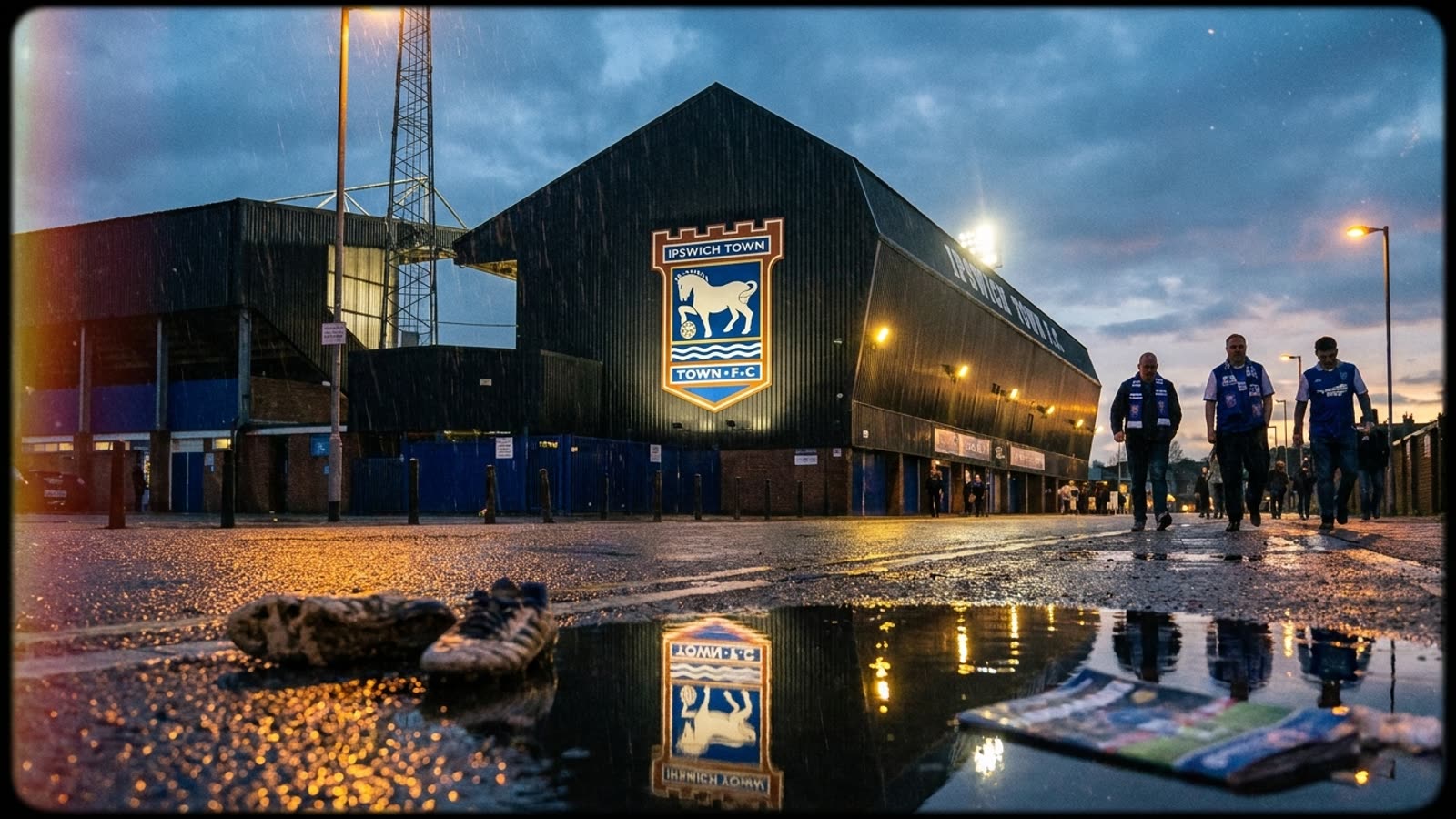
The most instructive moments in a relegation battle rarely arrive gift-wrapped with drama. They come in the 78th minute of a Friday night match at Portman Road, when a side that trailed is now level and choosing to defend with discipline rather than chase a winner that might never come. Ipswich Town's 1-1 draw against Nottingham Forest was not beautiful football. It was something more valuable: proof of concept.
Gary O'Neil, the manager who inherited a squad many wrote off as Premier League tourists, offered a telling post-match assessment. "We had to scrap," he said, the verb choice deliberate. Scrapping is not the language of ambition; it is the language of survival, and O'Neil has clearly decided that survival is ambition enough for now.
The Forest test
Nottingham Forest arrived at Portman Road as the more settled side, their own Premier League rehabilitation now entering a comfortable middle phase. Taking the lead should have been the beginning of a professional away performance—controlled possession, cynical fouls, a second goal on the counter. Instead, Forest found themselves unable to put Ipswich away, and that inability speaks to something O'Neil has quietly installed in this squad.
Ipswich's equalizer was not a moment of individual brilliance but a product of collective refusal. The Tractor Boys kept pushing into areas Forest had vacated, kept recycling possession when the final ball failed, kept believing that effort would eventually be rewarded. When the goal came, it felt earned rather than fortunate.
The O'Neil method
O'Neil's managerial career has been defined by making limited resources stretch further than they should. At Bournemouth, he kept the Cherries competitive despite a transfer budget that would embarrass most Championship clubs. At Ipswich, he faces an even steeper challenge: convincing players who earned promotion that they belong at this level, even when the evidence is mixed.
His approach is unfashionable. There are no elaborate positional rotations, no attempts to out-possess opponents who have better passers. Instead, O'Neil demands compactness, intensity in transition, and—crucially—the mental fortitude to respond when things go wrong. "Dig in and fight" was his other post-match phrase, and it doubles as a mission statement.
What a point means
In the context of Ipswich's season, this draw is neither salvation nor disaster. They remain in the relegation conversation, their goal difference unflattering, their fixture list offering few obvious opportunities for relief. But there is a difference between a team sliding toward the Championship and a team fighting to stay up, and O'Neil appears to have the latter.
The Premier League's bottom third is unforgiving. Sides that lack belief tend to collapse in clusters—one defeat becomes three, confidence evaporates, and suddenly the gap to safety looks unbridgeable. Ipswich's ability to come from behind and take a point from a competent Forest side suggests they possess the psychological infrastructure to avoid that spiral.
Our take
Gary O'Neil will not win Manager of the Year. He will not be courted by clubs with Champions League aspirations. But he might just keep Ipswich Town in the Premier League, and in the current economics of English football, that achievement would be worth more than most trophies. The Tractor Boys are not pretty, but they are stubborn—and stubbornness, properly channeled, is a survival skill.