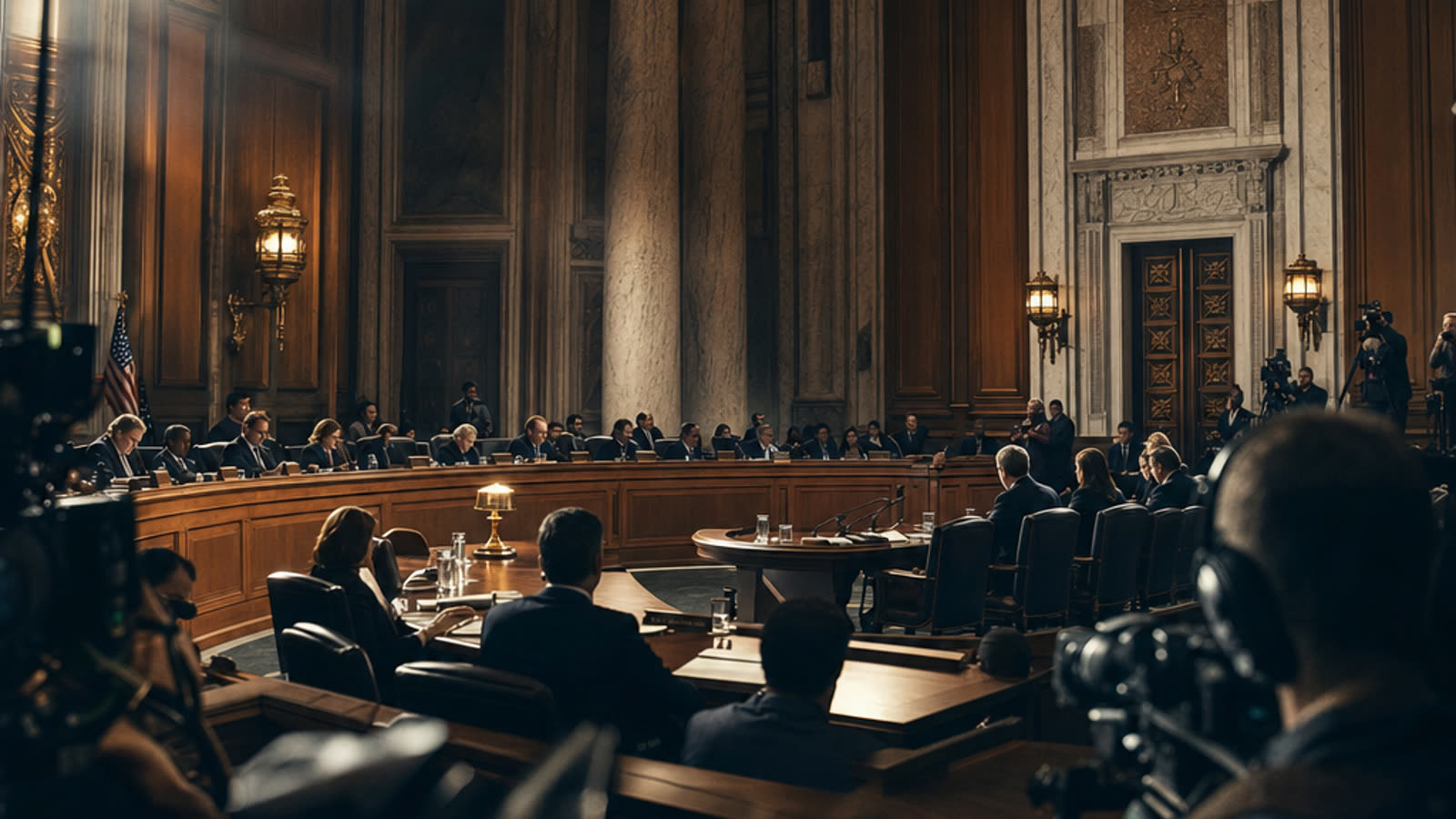
The first debate in Iowa's open Senate race arrived with the awkward energy of a family reunion where nobody wants to discuss the elephant in the room — or, more precisely, the former president whose shadow looms over every Republican primary in America.
With Chuck Grassley's retirement after nearly five decades ending an era in Iowa politics, the candidates vying to replace him spent ninety minutes on Monday night trying to thread an increasingly impossible needle: appealing to a Trump-loyal base while not alienating the suburban moderates who have steadily drifted from the party since 2020.
The loyalty dance
What emerged was a masterclass in political contortion. The Republican frontrunners praised Trump's economic record while sidestepping questions about January 6th. They invoked his name when discussing border security but grew conspicuously vague when asked whether they would support him as the 2028 nominee. The Democratic candidate, meanwhile, seemed content to let Republicans tie themselves in knots, focusing instead on agricultural policy and healthcare access — issues that poll well in a state where farming communities feel increasingly squeezed by trade uncertainty.
The debate's most telling moment came when candidates were asked directly whether Trump bore responsibility for the Capitol riot. The responses ranged from "we need to move forward" to lengthy digressions about Democratic overreach. Not one offered an unqualified yes or no.
Iowa's shifting terrain
This matters beyond Iowa's borders because the state has become a bellwether for Republican strategy nationwide. Once reliably red, Iowa voted for Obama twice before swinging hard toward Trump. Now it sits in an uncomfortable middle ground — not quite swing state, not quite safe harbor. How Republicans navigate that ambiguity here will inform campaigns from Pennsylvania to Arizona.
The Grassley seat carries particular symbolic weight. His brand of pragmatic Midwestern conservatism — constituent services, farm bills, the occasional bipartisan compromise — feels almost quaint in an era of nationalized grievance politics. Whether his successor governs in that mold or adopts the combative style that dominates the party's national profile will say much about where the GOP is headed.
Our take
The Iowa debate revealed something Republicans would prefer to keep hidden: they have no coherent answer to the Trump question. They cannot fully embrace him without losing general-election viability, and they cannot distance themselves without facing primary challenges. This paralysis is not unique to Iowa, but watching it play out in the race for Grassley's seat — a man who represented a fundamentally different Republican Party — makes the transformation feel especially stark. The party is not post-Trump; it is stuck in an endless negotiation with his legacy, and Monday night showed no exit in sight.