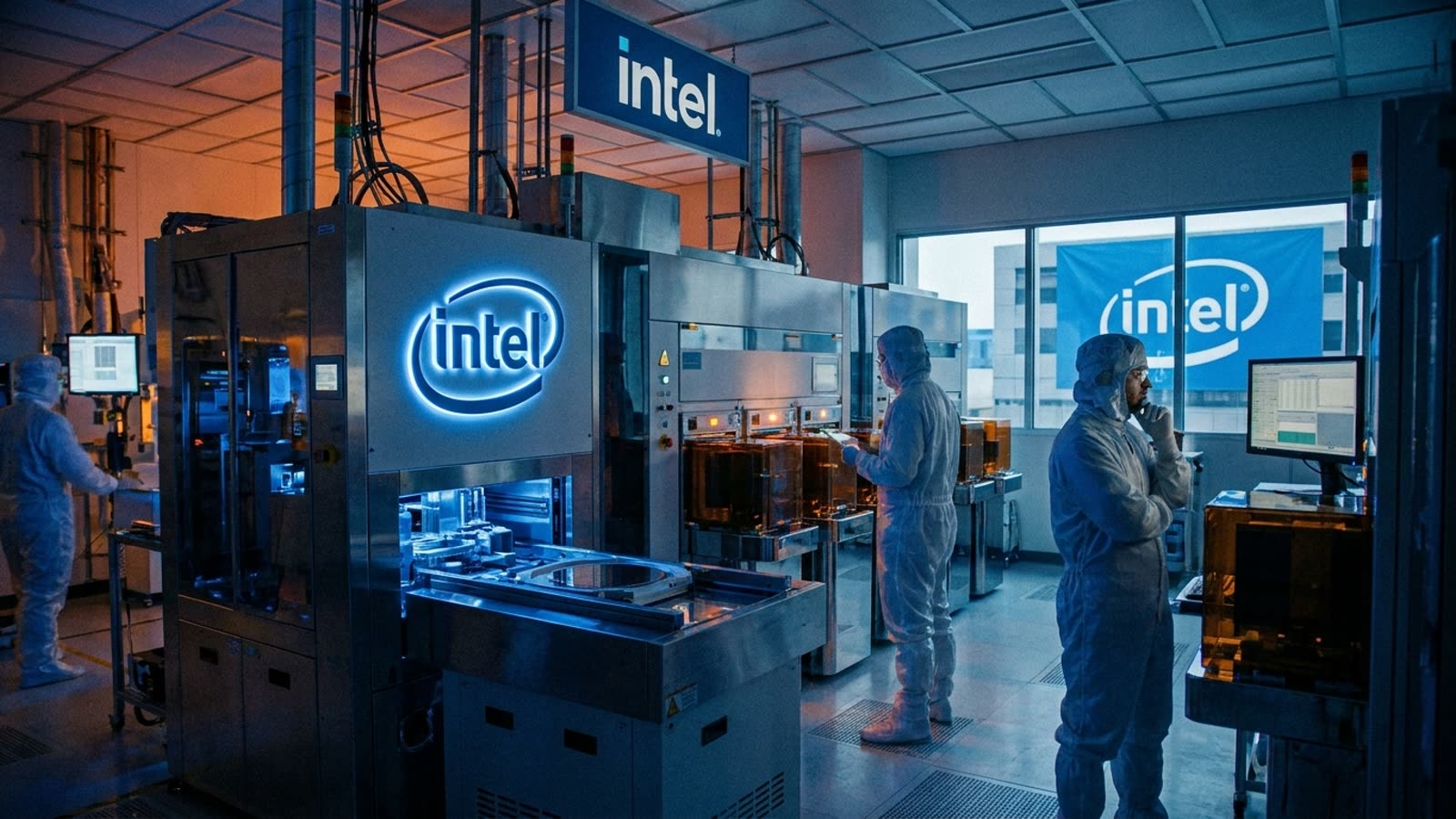
Intel's pitch to the AI hardware market has arrived, and it sounds less like a victory lap than a plea bargain. The company announced that its upcoming AI accelerator will undercut both Nvidia and AMD on price while consuming less power—a positioning that tacitly concedes Intel cannot win on performance alone.
The strategy is not without logic. Data center operators are increasingly vocal about the brutal economics of AI infrastructure: Nvidia's H100 and successor chips command eye-watering prices and generate enough heat to strain cooling systems designed for an earlier era. If Intel can deliver 80 percent of the capability at 60 percent of the cost and power draw, the math could work for customers running inference workloads rather than training frontier models.
The credibility deficit
Intel's problem is not the pitch—it is the pitcher. The company has spent the better part of a decade watching its manufacturing lead evaporate, its mobile ambitions collapse, and its data center dominance erode. Its previous AI chip efforts, including the Gaudi line acquired through Habana Labs, have failed to dent Nvidia's market share in any meaningful way. Promising cheaper and cooler hardware is easy; shipping it at scale, on time, with competitive software support is something Intel has struggled to do consistently since the mid-2010s.
The timing is also awkward. Nvidia's CUDA ecosystem has become the de facto standard for AI development, creating switching costs that go far beyond hardware specifications. Developers have built careers around CUDA; enterprises have sunk millions into CUDA-optimized pipelines. Intel's oneAPI framework is technically capable but lacks the community depth and tooling maturity that makes CUDA sticky.
The enterprise opening
Yet there is a genuine market opportunity here, and Intel is not wrong to chase it. The AI gold rush has created a two-tier economy: hyperscalers and well-funded AI labs that can absorb Nvidia's pricing, and everyone else scrambling for alternatives. The "everyone else" category includes banks, insurers, manufacturers, and government agencies that need AI capabilities but cannot justify—or cannot procure—top-tier Nvidia silicon.
For these customers, a chip that is "good enough" at inference tasks while fitting within existing power and cooling infrastructure could be compelling. Intel's x86 dominance in enterprise data centers also means it has relationships and sales channels that AMD and smaller players lack. If Intel can bundle AI accelerators with its existing server CPU business, it could create a package deal that appeals to IT departments wary of managing multiple vendor relationships.
Our take
Intel is not trying to win the AI chip war—it is trying to survive it. The company's announcement reads as a tacit admission that competing head-to-head with Nvidia on cutting-edge training hardware is a losing proposition. Instead, Intel is carving out a niche as the sensible, budget-conscious choice for enterprises that need AI capabilities without the bleeding-edge price tag. It is a defensible strategy, but it is also a diminished ambition for a company that once set the pace for the entire semiconductor industry. Whether Intel can execute even this modest plan remains an open question, given its recent track record. The chip may be cheaper and cooler, but Intel's credibility runs hot.