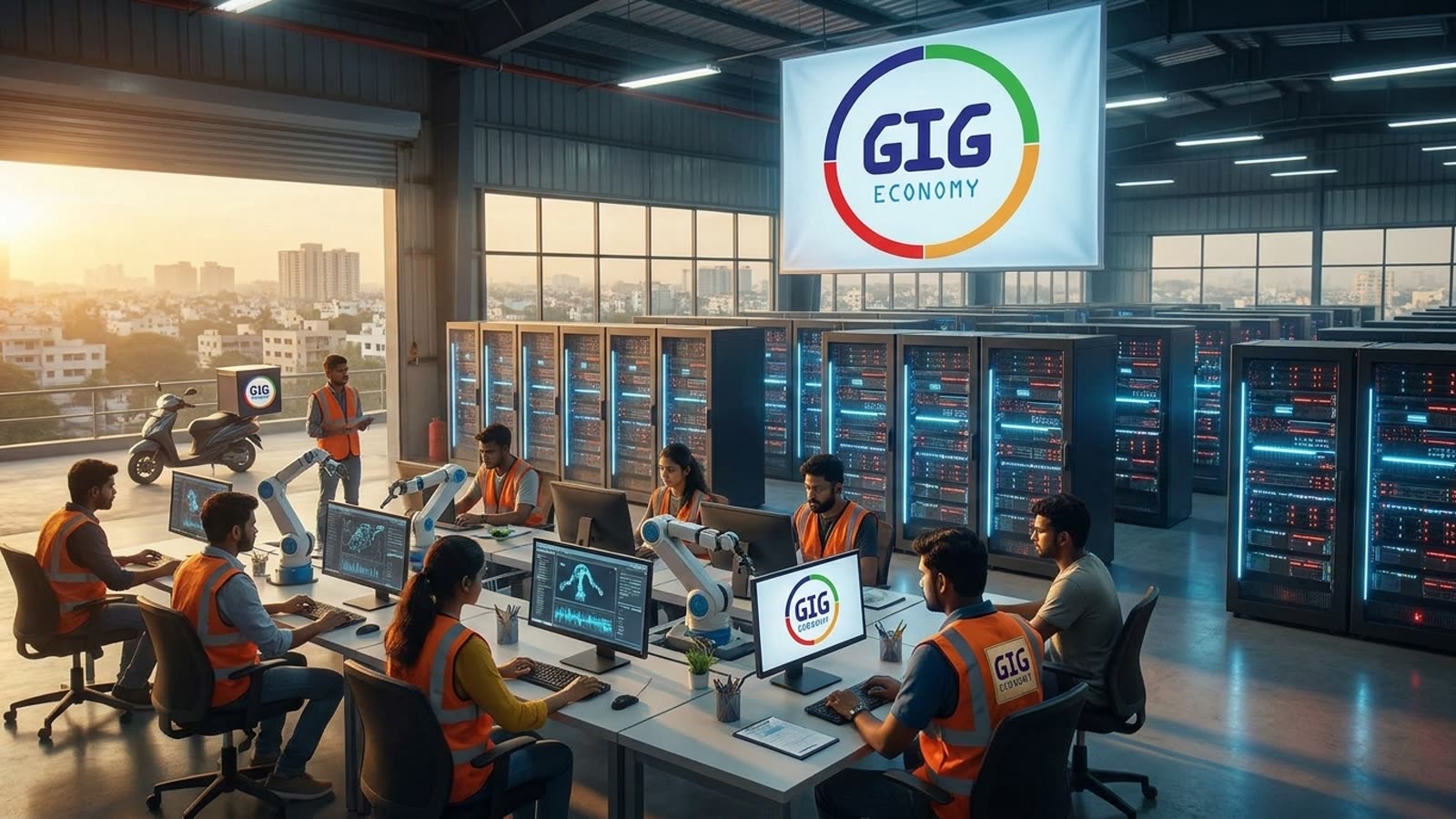
The AI industry has a dirty secret: for all its talk of emergent intelligence and self-improving systems, most models still require staggering quantities of human-generated training data. Now a Bangalore-based startup is making an audacious bet—that India's vast gig economy, already the backbone of the country's delivery and ride-hailing boom, can become the world's primary source of robotic training data.
The proposition is elegantly cynical. Millions of Indian workers already navigate chaotic streets, negotiate with vendors, and handle unpredictable physical environments for a few dollars per delivery. Why not strap cameras and sensors to them and harvest that real-world experience for the benefit of robots that will eventually replace workers elsewhere?
The data hunger problem
Autonomous systems—whether warehouse robots, self-driving vehicles, or humanoid assistants—require exposure to edge cases that simulation cannot adequately replicate. A robot needs to understand how a human navigates a crowded marketplace, how to handle a package when the recipient isn't home, how to respond when a dog charges. These scenarios are expensive to stage in developed markets and difficult to synthesize computationally.
India offers scale that nowhere else can match. The country has an estimated eight million gig workers, many already equipped with smartphones and accustomed to app-based work. The startup's model reportedly equips workers with lightweight sensor arrays that capture video, audio, and motion data during their normal delivery routes. Workers receive modest bonuses—reportedly a few rupees per hour of usable footage—on top of their standard delivery pay.
The ethics of extraction
The model raises uncomfortable questions that the AI industry has largely avoided. Workers generating this data have no ownership stake in the models it trains. The privacy implications—for workers, bystanders, and customers—remain murky under Indian law. And the ultimate beneficiaries are robotics companies in wealthy nations building systems that will automate jobs in those same wealthy nations.
This is not new. The labeling industry that powers supervised learning has long relied on workers in Kenya, the Philippines, and India to tag images and moderate content for wages that would be illegal in San Francisco. What's different here is the directness: these workers aren't labeling data about robots, they're generating the embodied experience that robots need to function.
Our take
There's something grimly efficient about this arrangement. India's gig workers already subsidize the convenience of the country's middle class; now they'll subsidize the automation ambitions of the global north. The startup will likely succeed—the economics are too compelling, and the regulatory environment too permissive, for it to fail. But we should be clear-eyed about what we're watching: the construction of an AI supply chain that extracts value from human labor while building systems designed to make that labor obsolete. The robots will learn to navigate the world by watching humans who can't afford to say no.