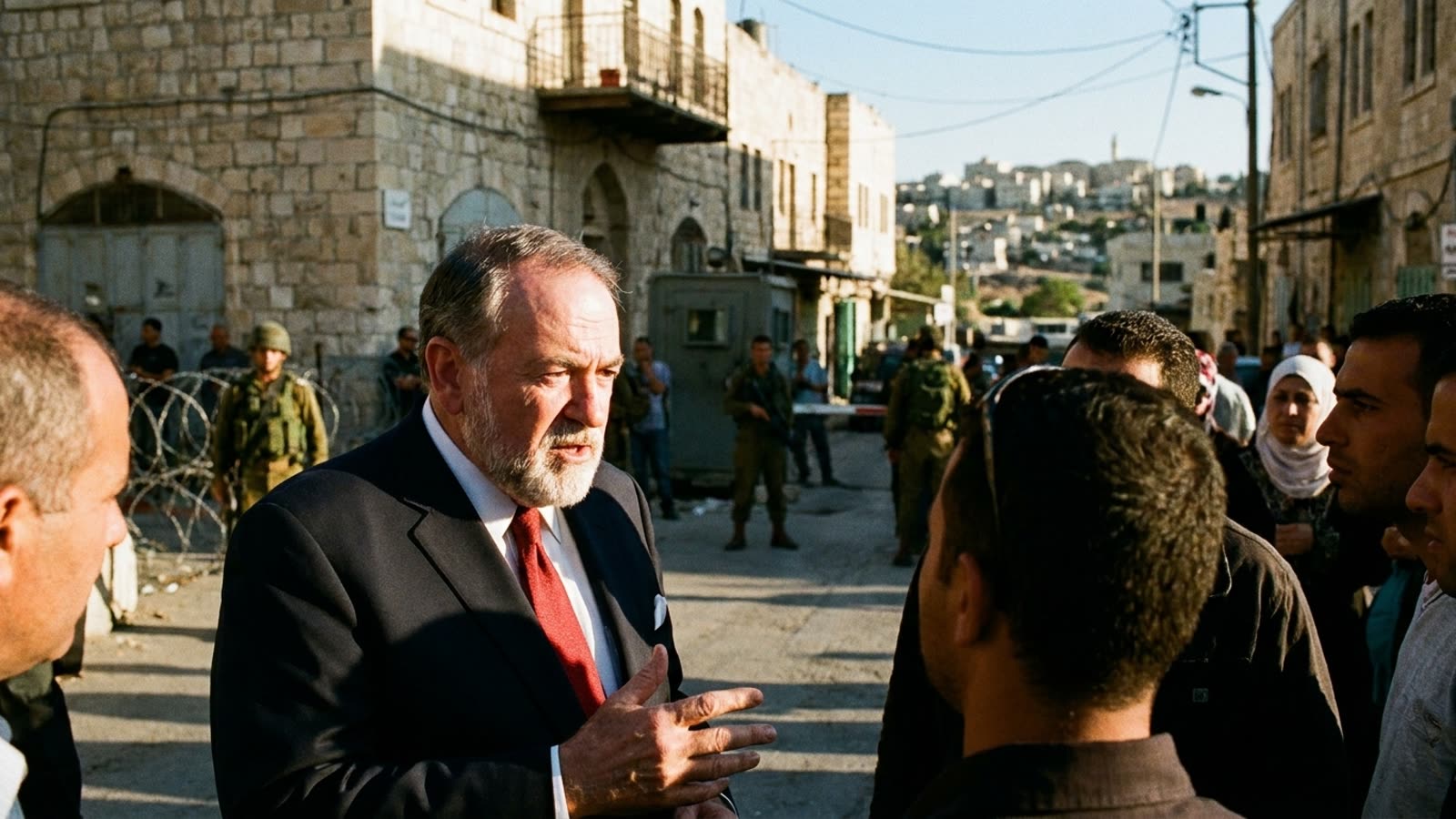
When Mike Huckabee, the most vocally pro-settlement American ambassador in Israeli history, labels something "a despicable act of terror," it is worth pausing to consider what could have prompted such language. The answer: masked Israeli settlers attacked an American journalist in the occupied West Bank this weekend, part of a broader surge of extremist violence that also targeted European diplomats—and that the Netanyahu government has dismissed as a "smear" campaign.
Huckabee's demand that Israel prosecute the attackers is remarkable not for its moral clarity but for its diplomatic loneliness. The ambassador, who once suggested the West Bank was no more "occupied" than Texas, now finds himself publicly urging accountability from a government whose far-right coalition partners have spent years shielding settlers from consequences. Whether Jerusalem listens is another matter entirely.
The olive-harvest flashpoint
October is peak season for Palestinian olive harvests, and it is also peak season for settler harassment. This year's violence has been especially brazen. In addition to the assault on the American journalist, settlers attacked Palestinian farmers and smashed the window of a European diplomatic vehicle carrying officials who had come to observe the harvest. The Israeli military issued a condemnation; the prime minister's office issued something closer to a shrug, framing international outrage as propaganda.
The pattern is familiar. Settler violence has spiked since October 2023, with human-rights groups documenting hundreds of incidents. The Biden administration imposed sanctions on several extremist settlers; the Trump administration has shown little appetite for similar measures, preferring to emphasize Israeli security concerns.
Huckabee's awkward position
Huckabee's statement is less a policy shift than a personal red line. An American citizen was harmed, and even the most Israel-aligned ambassador cannot wave that away without domestic blowback. But his call for prosecution will test whether Washington is willing to follow up with pressure—or whether it was simply a press release designed to insulate the administration from criticism.
The early signs are not encouraging. The White House has not echoed Huckabee's language, and the State Department's response has been muted. Meanwhile, the administration is busy waiving Russia sanctions and feuding with Zelensky; settler accountability is unlikely to climb the priority list before the midterms.
Our take
Huckabee's condemnation is welcome and almost certainly sincere. It is also almost certainly toothless. The ambassador can demand prosecutions, but he cannot compel them, and Netanyahu's coalition has no political incentive to deliver. What the episode reveals is the contradiction at the heart of Trump's Middle East policy: you cannot be simultaneously the most pro-Israel administration in history and a credible advocate for restraining Israel's most extreme actors. Huckabee just discovered which side of that line he is actually standing on.