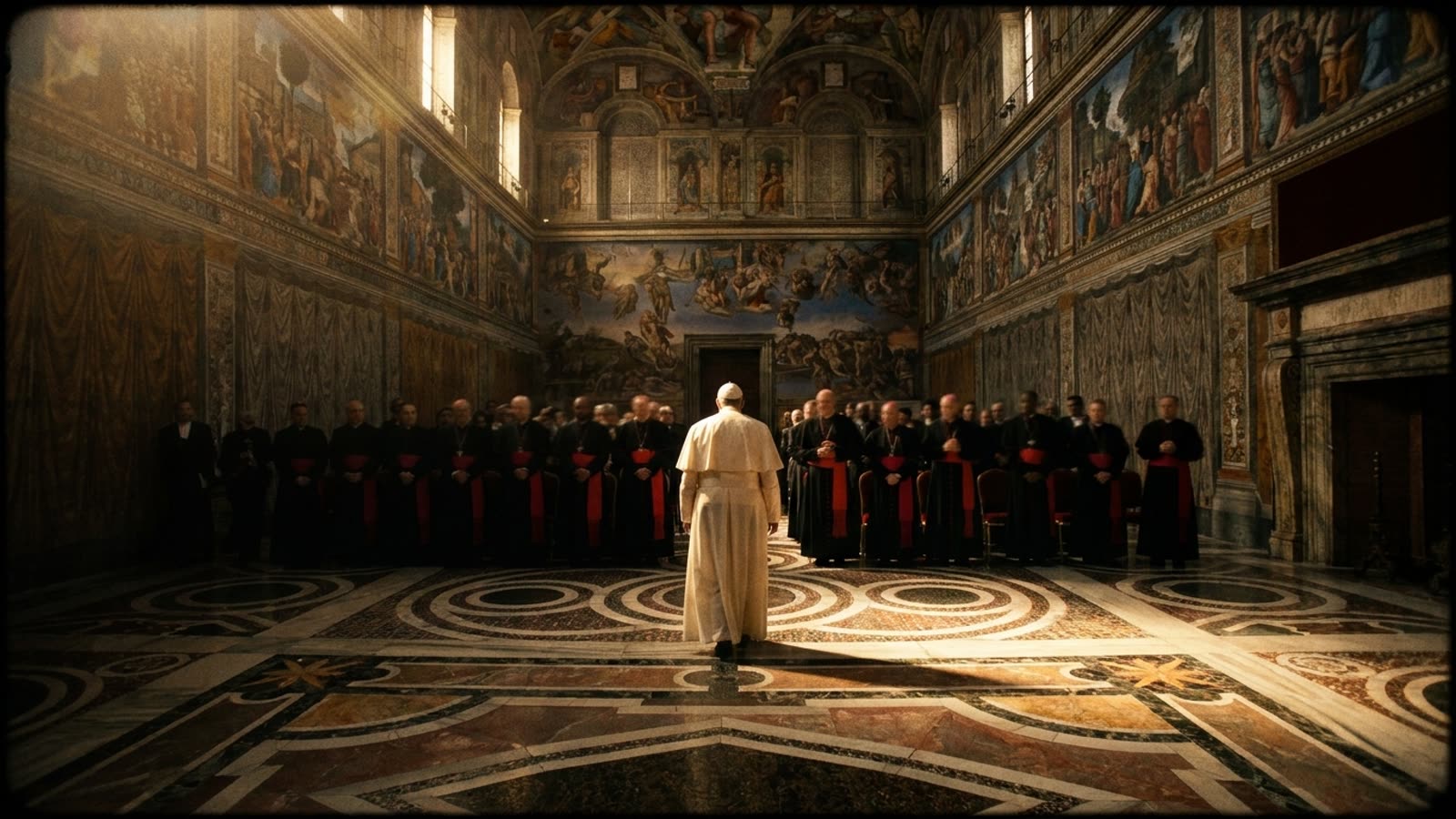
The Vatican maintains formal diplomatic relations with more countries than the United States does. This fact tends to surprise people who think of the Holy See as a religious curiosity rather than a geopolitical actor, but it shouldn't. The Catholic Church has been conducting foreign policy since before the concept of the nation-state existed, and its diplomatic apparatus remains one of the most sophisticated—and least understood—in the world.
The Holy See is not Vatican City, though the two are often confused. Vatican City is a 121-acre microstate, the temporal territory that gives the Pope sovereign standing under international law. The Holy See is the juridical personification of the Catholic Church itself, the entity that signs treaties, exchanges ambassadors, and holds permanent observer status at the United Nations. This distinction matters: it means Vatican diplomacy represents not a tiny city-state but a global institution claiming 1.4 billion adherents across every inhabited continent.
The machinery of papal statecraft
The Secretariat of State functions as the Vatican's foreign ministry, divided into two sections. The Section for General Affairs handles internal Church governance and papal communications. The Section for Relations with States conducts actual diplomacy—negotiating concordats, managing the network of apostolic nuncios, and coordinating the Holy See's positions on international questions from arms control to migration.
Apostolic nuncios serve as papal ambassadors, but their role differs fundamentally from secular diplomats. In many Catholic-majority countries, the nuncio holds precedence as dean of the diplomatic corps regardless of tenure, a privilege dating to the Congress of Vienna. More importantly, nuncios serve dual functions: representing the Pope to governments while simultaneously overseeing local Church affairs, including the crucial task of vetting episcopal appointments. This gives them influence that extends far beyond traditional diplomatic channels.
The soft power paradox
Vatican diplomacy operates without conventional leverage. The Holy See cannot threaten sanctions, deploy peacekeepers, or offer development loans. What it possesses instead is moral authority, institutional patience measured in centuries rather than election cycles, and access. Papal mediation helped resolve the Beagle Channel dispute between Argentina and Chile in the 1980s. Vatican back-channels facilitated the U.S.-Cuba rapprochement. The Holy See maintains relations with countries that recognize neither each other nor share diplomatic ties with major powers, making it a potential intermediary in conflicts where other actors cannot operate.
This soft power has limits. Vatican interventions in the Russia-Ukraine conflict have generated controversy rather than breakthroughs, with Pope Francis's calls for negotiation criticized as moral equivalence. The Church's positions on reproductive rights and LGBTQ issues complicate its humanitarian messaging. Yet the diplomatic apparatus persists, adapting to each pontificate's priorities while maintaining institutional continuity that outlasts any individual pope.
Our take
The Holy See's diplomatic network represents something genuinely unusual in international relations: influence derived almost entirely from perceived legitimacy rather than material power. Whether that legitimacy translates into actual conflict resolution depends heavily on context, timing, and the willingness of belligerents to accept mediation from an institution they may not respect. But in an era when great-power competition increasingly forecloses neutral ground, the Vatican's peculiar position—sovereign yet stateless, powerful yet unarmed—may prove more valuable than skeptics assume. The world's oldest diplomatic service has survived the collapse of empires before.