The veto is not a bug in the international system. It is the system.
When the United Nations was constructed from the wreckage of the Second World War, its architects faced an unsolvable problem: how do you create an organization meant to prevent great-power conflict while ensuring the great powers actually join? The League of Nations had failed precisely because major states either refused to participate or walked away when constrained. The solution was elegant and cynical in equal measure. The five principal victors of the war—the United States, the Soviet Union, the United Kingdom, France, and China—would each receive permanent seats on the Security Council and, crucially, the power to unilaterally block any substantive resolution.
The mechanics of paralysis
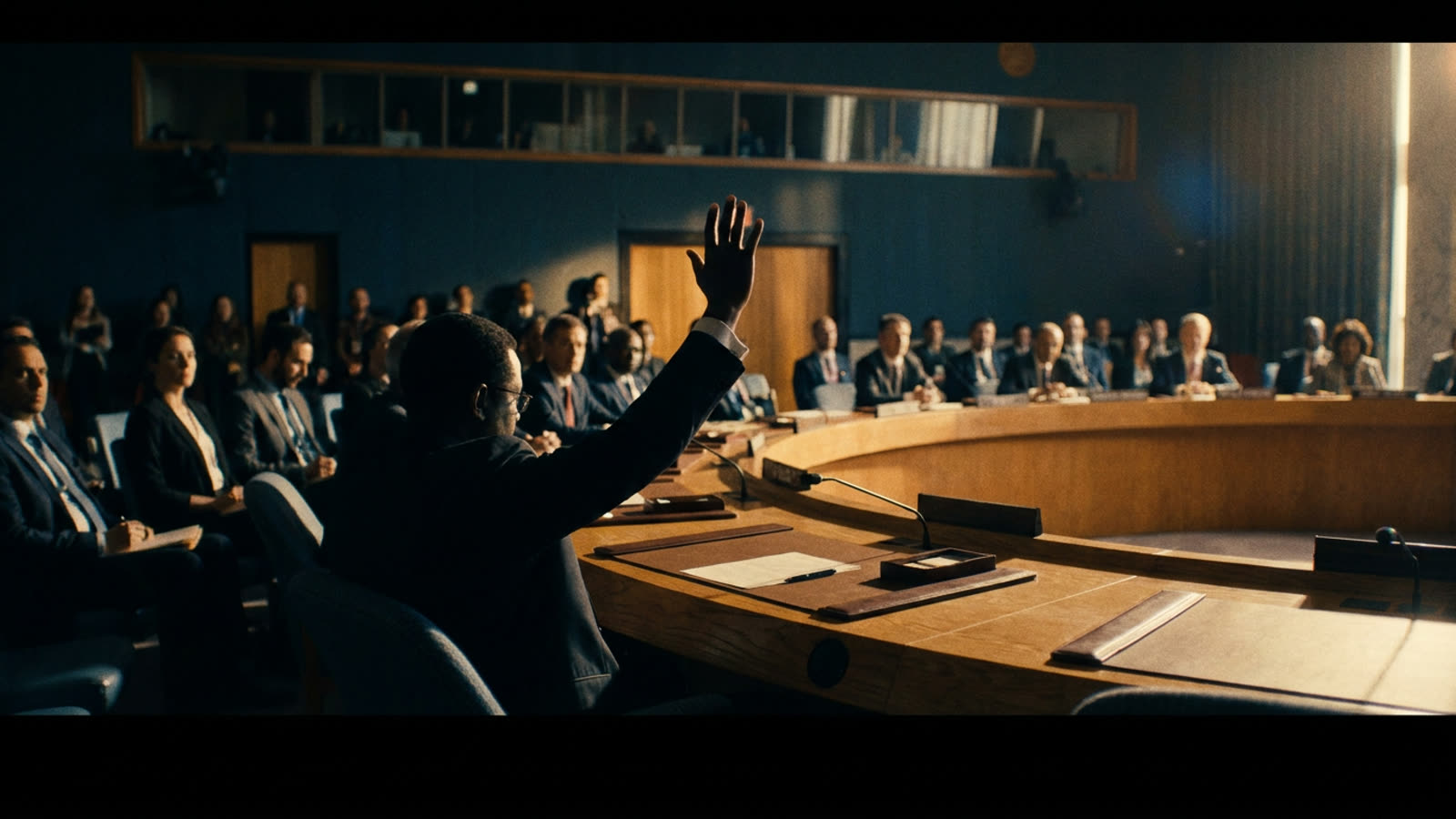
The veto operates with deceptive simplicity. Any of the five permanent members, known as the P5, can defeat a Security Council resolution by voting against it, regardless of how the other fourteen members vote. Abstention does not count as a veto; only an explicit negative vote does. This means that on questions of international peace and security—the deployment of peacekeepers, the authorization of force, the imposition of sanctions—a single nation can prevent collective action entirely.
The results speak for themselves. Russia has deployed its veto more than any other P5 member since the Cold War ended, blocking resolutions on Syria, Ukraine, and various matters touching its perceived sphere of influence. The United States has used its veto most frequently to shield Israel from condemnation. China, once relatively restrained, has grown more assertive, often voting alongside Russia. Britain and France veto rarely in the contemporary era but retain the theoretical capacity to do so.
Why reform never happens
Proposals to reform or abolish the veto emerge with metronomic regularity and fail with equal predictability. The fundamental obstacle is structural: amending the UN Charter requires ratification by two-thirds of member states, including all five permanent members. No P5 nation has any incentive to dilute its own power. Reform would require the powerful to voluntarily become less powerful, a transaction that occurs approximately never in the history of international relations.
Alternative proposals—expanding the permanent membership to include Germany, Japan, India, Brazil, or an African representative—founder on different rocks. Current P5 members resist dilution. Regional rivals block each other. And even if expansion occurred, it would likely mean more vetoes, not fewer.
The case for the indefensible
Here is the uncomfortable truth defenders of the veto articulate, usually in private: the mechanism works precisely because it prevents the UN from doing things that would cause great powers to ignore or abandon it. A Security Council that could compel the United States, Russia, or China to act against their core interests would be a Security Council those nations would simply bypass or leave. The veto is the price of keeping nuclear-armed states at the table.
This logic has a grim coherence. The UN has survived for eight decades in part because it never directly threatens the vital interests of its most powerful members. Whether this represents institutional wisdom or institutionalized impotence depends on your tolerance for ambiguity.
Our take
The veto is indefensible on any principle except the only principle that matters in international politics: power recognizes power. Complaining about it is a bit like complaining about gravity. The more productive question is whether the UN's other functions—humanitarian coordination, technical standard-setting, the General Assembly as a forum for smaller states—justify the organization's existence despite the Security Council's structural paralysis. The answer is probably yes, but only if you abandon the fantasy that the UN was ever meant to be a world government. It was designed to be a place where great powers could talk instead of fight. On that modest metric, it has succeeded more often than its critics acknowledge.