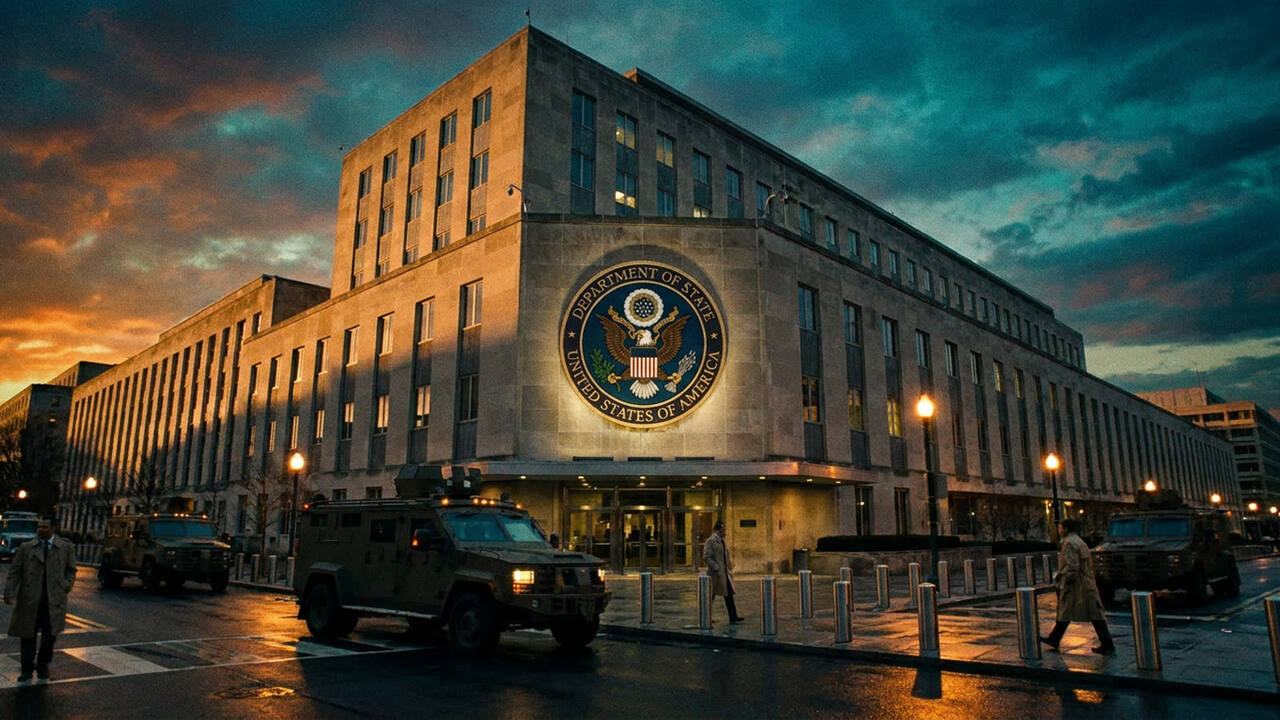
Before any president makes a foreign policy decision, someone in an embassy thousands of miles away has already framed the question. The diplomatic cable—that archaic-sounding term for encrypted messages between embassies and the State Department—remains the circulatory system of American foreign policy, pumping analysis and intelligence through bureaucratic arteries that most citizens never see.
The system is deceptively simple in theory. An embassy political officer in, say, Ankara meets with a Turkish opposition figure, attends a parliamentary debate, or picks up rumors at a diplomatic reception. Within hours, that officer drafts a cable—formally called a "telegram" in State Department parlance despite the technology having evolved considerably—summarizing what was learned and, crucially, what it means. That cable then begins its journey through classification levels and distribution lists until, if significant enough, it lands in the President's Daily Brief or shapes talking points for a bilateral meeting.
The art of the reporting officer
What makes cables powerful is not their existence but their craft. A skilled political officer learns to write with multiple audiences in mind: the desk officer in Washington who needs granular detail, the assistant secretary who needs strategic context, and potentially the secretary of state who needs a decision-ready summary. The best cables tell a story that reframes how Washington understands a country.
This creates enormous informal power. A single embassy officer's interpretation of a foreign minister's mood, a protest movement's trajectory, or a military's loyalty can cascade upward and become the basis for sanctions, aid decisions, or summit agendas. The officer's biases, blind spots, and analytical frameworks get embedded into policy before any elected official weighs in.
Classification as power
The classification system adds another layer of influence. Cables marked "Secret" or "Top Secret" reach smaller audiences but carry more weight precisely because of their exclusivity. Officers learn that higher classification can mean higher impact—a dynamic that incentivizes treating routine information as sensitive and sensitive information as explosive. The 2010 WikiLeaks release of State Department cables revealed not widespread scandal but rather the mundane reality that much classified material was simply candid assessment that would embarrass allies if published.
Distribution lists function as their own hierarchy. Being on the "NODIS" (No Distribution) list for a cable means you're in the inner circle. Being excluded means you're reconstructing policy from secondary sources. Careers are made and broken by access to the right cable traffic.
Why this matters now
The cable system emerged from an era when embassies were information islands, their dispatches arriving days or weeks after events. Today, when the secretary of state can video-call any ambassador instantly and CNN often breaks news before embassy officers can file reports, the cable might seem obsolete. It is not. The cable's value lies precisely in its formality—it creates a paper trail, forces analytical rigor, and distributes expertise across an institution rather than concentrating it in whoever has the president's ear that morning.
Our take
Democracies like to imagine foreign policy as the product of elected leaders making considered choices. The reality is that much of it is shaped by mid-level officers writing documents that never see public light, using judgment calls that reflect their training, their posting history, and their career incentives. This is not necessarily bad—expertise should inform policy—but it does mean that understanding American foreign policy requires understanding the cable, that humble encrypted dispatch that decides what the president even knows to decide about.