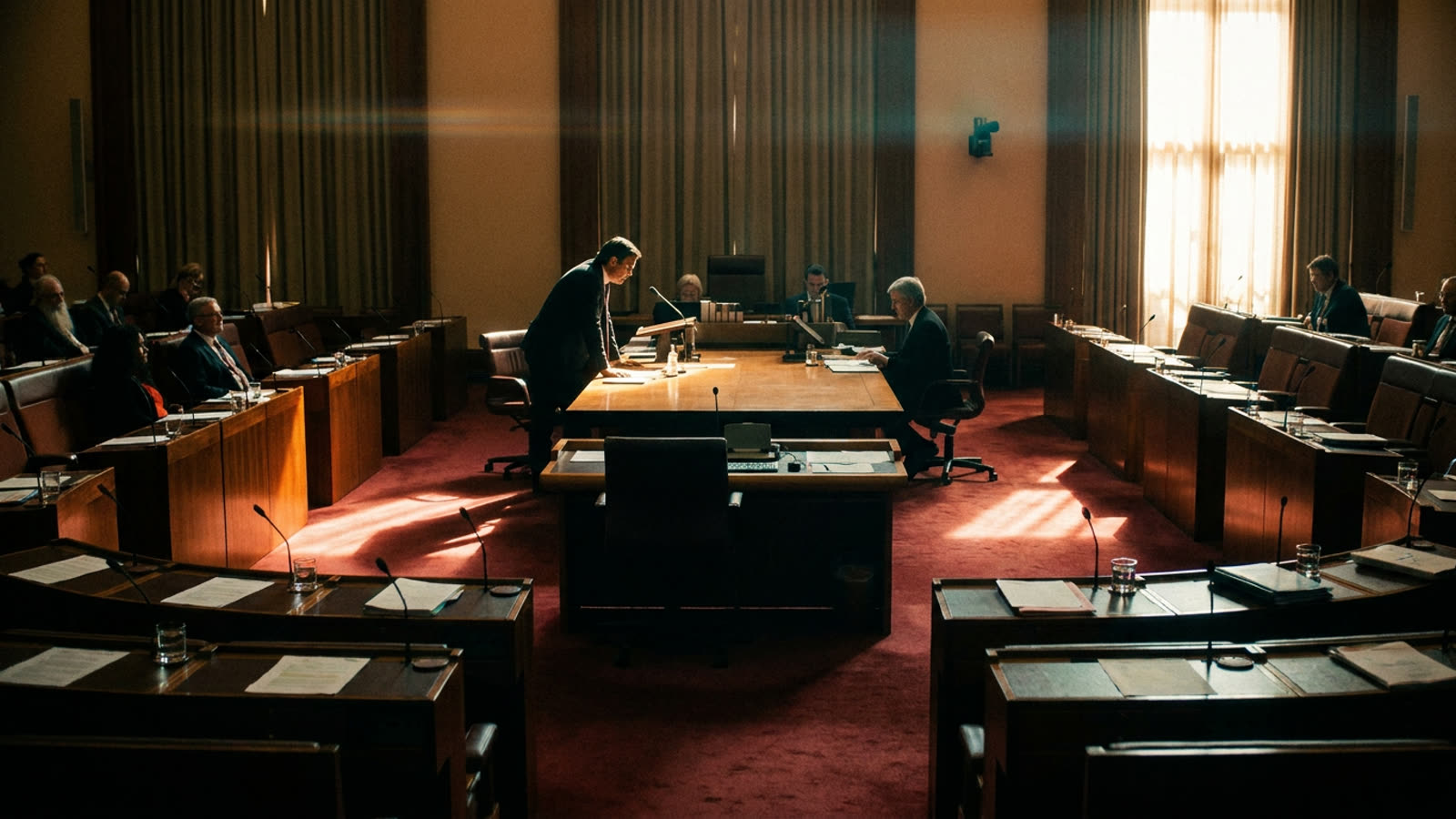
Every Wednesday at noon, the British Prime Minister walks into a bear pit. For 30 minutes, they face rapid-fire questions from 650 Members of Parliament, with no advance notice of most topics. One stumble, one moment of visible weakness, and careers end. This ritual—Prime Minister's Questions—is democracy's most brutal blood sport, yet most citizens barely understand how it works or why it matters.
The mechanics of accountability
Parliamentary questions exist in various forms across Westminster-style democracies, from Canada's Question Period to Australia's Question Time. The format appears deceptively simple: legislators ask questions, ministers answer. But beneath this straightforward exchange lies a sophisticated system of political control that predates modern polling, social media, and 24-hour news cycles.
The power lies not in the questions themselves but in the obligation to answer. Ministers cannot simply decline to appear or plead the fifth. They must stand, face their interrogators, and provide responses that become part of the official record. In the UK system, MPs submit questions in advance for written answers, but also reserve the right to ask unscripted supplementary questions—the political equivalent of a cross-examination without warning.
Why autocrats fear question time
The correlation between robust parliamentary questioning and democratic health is no accident. Functioning question periods require several democratic prerequisites: a legitimate opposition with protected speaking rights, ministers who actually control their departments, and a press corps free to report the exchanges. Remove any element, and the system collapses into theater.
Consider how parliamentary questions have evolved—or devolved—in various democracies. New Zealand's question time maintains its bite, with ministers regularly caught flat-footed by opposition queries about specific contracts or policy failures. By contrast, Singapore's version operates more like a choreographed dance, with questions submitted weeks in advance and supplementaries tightly controlled.
The most telling indicator of democratic backsliding is often found in how governments handle parliamentary questions. When Hungary's Viktor Orbán began consolidating power, one of his first moves was to limit opposition question time. When parliamentary democracies slide toward authoritarianism, question periods don't disappear—they become hollow rituals, with planted questions from government backbenchers and ministers reading prepared statements that dodge rather than address.
The art of the parliamentary ambush
Effective parliamentary questioning is a skill few master. The best practitioners understand that the goal isn't to extract information—ministers rarely reveal anything substantial—but to create moments of political theater that crystallize public doubts. A stammering minister, a clearly evasive answer, or a flash of prime ministerial temper can define a government's image more effectively than any advertising campaign.
The format rewards preparation and timing. Opposition researchers spend weeks gathering ammunition, waiting for the perfect moment to deploy it. They study ministers' speaking patterns, identifying tells that signal discomfort. They coordinate questions across multiple MPs to build pressure on a single issue. Most importantly, they understand that in the age of social media, a devastating 30-second exchange can reach more voters than hours of parliamentary debate.
Our take
Parliamentary questions remain relevant precisely because they're analog in a digital age. Unlike carefully managed social media posts or scripted press conferences, question time forces political leaders into uncontrolled, real-time performance. The format's survival across centuries suggests something fundamental: democracy requires moments when power must explain itself, without filters or delays. As authoritarianism gains ground globally, the health of a nation's question time offers a more reliable democratic indicator than any democracy index. The societies that maintain genuinely adversarial questioning of their leaders are the ones most likely to remain free.