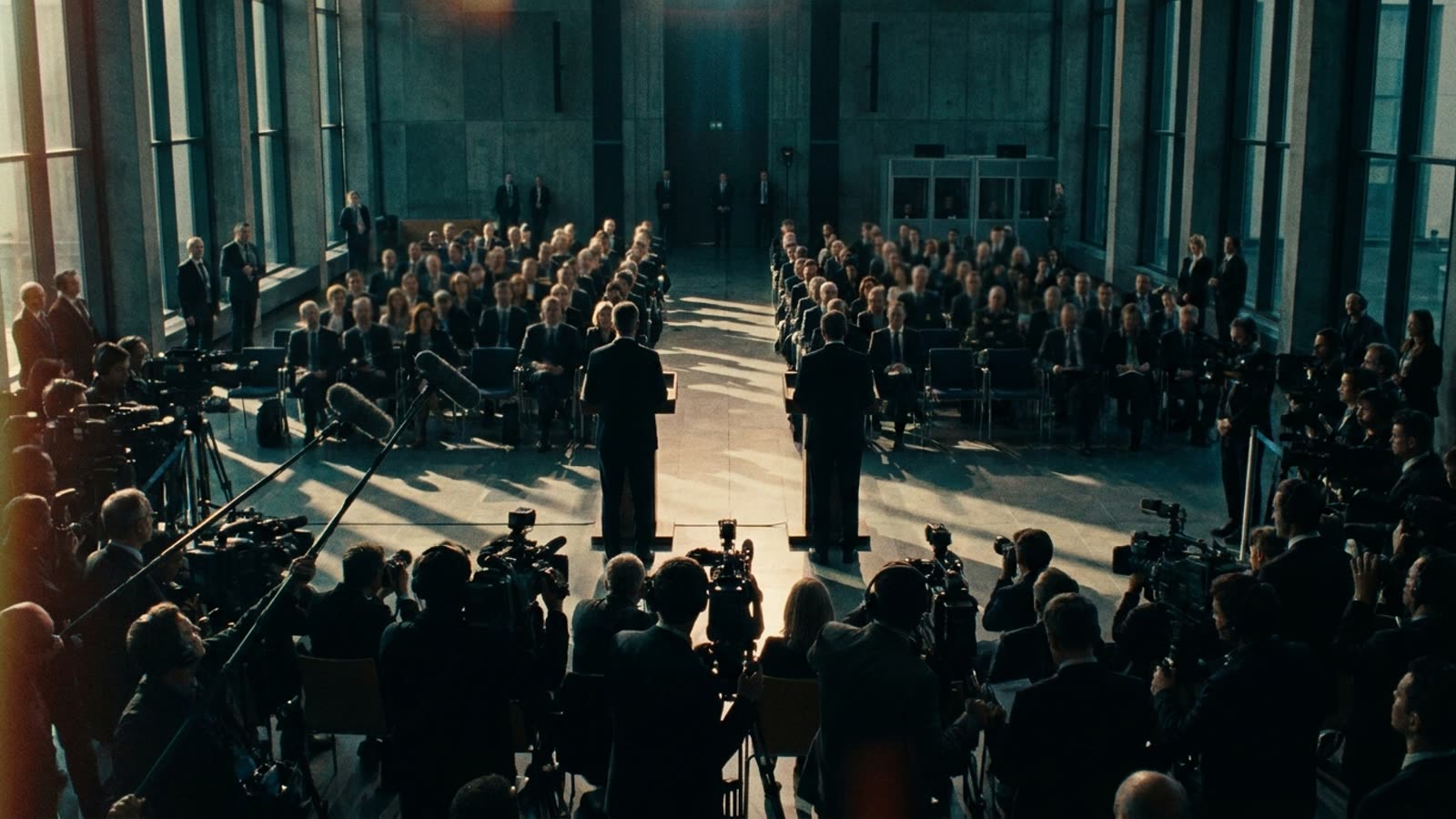
The most consequential foreign policy decisions in modern democracies are rarely made in cabinet meetings or parliamentary debates. They are made earlier, in secure rooms where intelligence professionals present the information that will frame every subsequent choice. The people who decide what goes into the briefing—and what stays out—exercise a form of power that is both essential and deeply uncomfortable for democratic theory.
This is not a conspiracy. It is a structural reality baked into how intelligence work functions. Elected leaders cannot read every intercept, analyze every satellite image, or cultivate every human source. They depend on professionals to synthesize oceans of data into digestible assessments. That synthesis is inherently editorial. Every briefing is an argument disguised as a summary.
The architecture of selective knowledge
Intelligence agencies operate under what scholars call "epistemic authority"—the presumption that they know things others cannot verify. When the CIA or MI6 presents an assessment, a prime minister cannot easily challenge the underlying methodology or demand to see the raw intercepts. Classification rules, source protection, and technical complexity create asymmetries that favor the briefer over the briefed.
This dynamic explains why the same set of facts can produce radically different policy outcomes depending on presentation. The 2003 Iraq WMD debacle was not primarily a failure of collection; it was a failure of analytical framing. Agencies had significant caveats and dissents buried in their assessments, but the executive summaries—the parts that busy leaders actually read—conveyed false certainty. The structure incentivized confidence over accuracy.
The problem is not unique to any single agency or country. Germany's BND, France's DGSE, and Israel's Mossad all face the same institutional pressures: they must appear valuable to justify their budgets, certain to be taken seriously, and aligned enough with policy preferences to maintain access. An intelligence chief who consistently delivers unwelcome assessments may find their briefing time quietly reduced.
The feedback loop of confirmation
Political leaders are not passive consumers of intelligence. They signal, consciously or not, what they want to hear. A president who has publicly committed to a course of action creates gravitational pull on the assessments that follow. Analysts who want their work to matter—who want to be in the room—learn to read these signals.
This does not require explicit pressure or political interference. It operates through subtler mechanisms: which analysts get promoted, which assessments reach the principal's desk, which dissents get footnoted into oblivion. The result is a feedback loop where intelligence both shapes and reflects policy preferences, making it nearly impossible to determine where objective analysis ends and institutional accommodation begins.
The most effective intelligence leaders understand this dynamic and fight against it, but they are fighting institutional gravity. The incentives favor telling power what it wants to hear, wrapped in the legitimizing language of classified sources and methods.
Why oversight consistently fails
Democracies have constructed elaborate oversight mechanisms—congressional committees, parliamentary bodies, inspectors general—to check intelligence agencies. These mechanisms are largely theatrical. Oversight committees depend on the agencies they supervise for the information needed to conduct oversight. They cannot verify what they are not shown, and they are not shown what agencies prefer to keep hidden.
The asymmetry is compounded by secrecy rules that prevent overseers from publicly discussing what they learn. A senator who discovers troubling practices cannot easily expose them without risking prosecution. The agencies thus operate in a zone of effective impunity, accountable in theory but insulated in practice.
Our take
The intelligence briefing is the black box of democratic governance—essential, influential, and almost entirely opaque to the citizens whose lives depend on its accuracy. This is not a problem that better oversight can solve, because oversight itself depends on the good faith of the overseen. The honest answer is that democracies have outsourced some of their most important decisions to unelected professionals whose work cannot be meaningfully checked. We accept this bargain because the alternative—elected officials doing their own intelligence analysis—is worse. But we should stop pretending the bargain is costless, or that the people in the briefing room are merely neutral conveyors of fact. They are, in the most literal sense, the people who decide what reality looks like to the people who decide everything else.