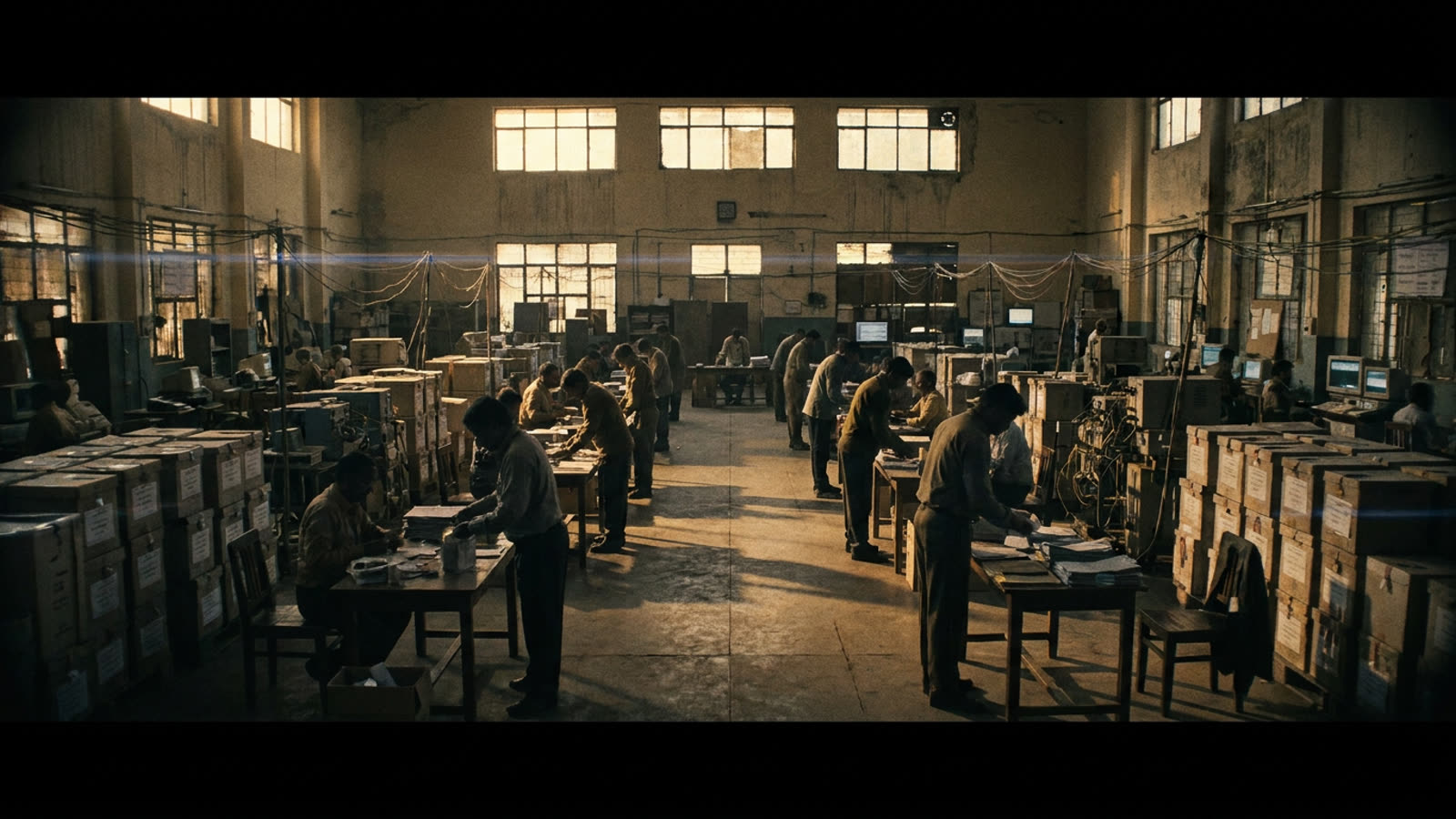
Every election night, as pundits obsess over exit polls and candidates rehearse victory speeches, a quieter drama unfolds in school gymnasiums, community centers, and government offices across the democratic world. Poll workers—often retirees, civic enthusiasts, and people who could use the modest stipend—sort ballots, verify signatures, and feed paper through tabulation machines. Their work is tedious, unglamorous, and absolutely essential. Without it, democracy is just an abstraction.
The institutions overseeing this process vary wildly. Some countries vest authority in independent commissions with constitutional protection; others rely on partisan officials whose incentives may not align with fair counting. Understanding these differences matters more than most voters realize.
The spectrum of independence
At one end sits India's Election Commission, a constitutional body whose chief commissioner enjoys tenure protections similar to a Supreme Court justice. The commission controls its own budget, sets election dates, and can postpone voting in regions experiencing violence—powers that would be unthinkable in many Western democracies. At the other end, the United States fragments authority across thousands of county-level officials, many of them elected on partisan tickets. A secretary of state in Ohio or Georgia wields enormous discretion over ballot design, polling locations, and certification deadlines, yet answers primarily to voters who may reward partisan loyalty over procedural neutrality.
Between these poles lie hybrid models. Germany's Federal Returning Officer operates under the Interior Ministry but enjoys strong norms of non-interference. Australia's Electoral Commission is statutorily independent but funded through annual appropriations, creating theoretical leverage for a hostile parliament. Mexico, scarred by decades of fraud under single-party rule, established the Instituto Nacional Electoral with elaborate cross-party oversight—a system so complex it sometimes struggles to meet its own deadlines.
The chain of custody problem
Ballots are physical objects that must travel from voters' hands to counting centers without tampering. This logistical challenge explains why election administration consumes so much bureaucratic energy. Seals, signatures, bipartisan observer teams, chain-of-custody logs—these mundane safeguards constitute the immune system of electoral integrity.
The shift toward mail voting in many democracies has lengthened this chain considerably. A ballot mailed from a rural address passes through postal workers, sorting facilities, and receiving clerks before reaching the signature-verification stage. Each handoff is a potential point of failure or, in the fevered imagination of conspiracy theorists, a point of fraud. Commissions have responded with envelope tracking, ballot curing procedures that let voters fix signature mismatches, and expanded observation rights. Whether these measures satisfy skeptics depends less on their technical adequacy than on pre-existing trust in institutions.
When legitimacy fractures
Electoral commissions derive authority not from coercive power but from perceived neutrality. Once that perception cracks, repair is painfully slow. Kenya's 2017 presidential election was annulled by the Supreme Court after the electoral commission failed to transmit results transparently; the rerun was boycotted by the opposition, leaving the victor governing under a cloud. Belarus's 2020 election, administered by a commission loyal to the incumbent, produced results so implausible that mass protests erupted for months. In both cases, the commission's credibility—or lack thereof—determined whether citizens accepted the outcome as legitimate.
The lesson is uncomfortable: procedural integrity matters, but so does the appearance of procedural integrity. A perfectly fair election administered by officials perceived as partisan will struggle for legitimacy, while a flawed election run by trusted neutrals may escape serious challenge.
Our take
Democracies spend enormous energy debating candidates and policies while treating the machinery of vote-counting as a background assumption. This is a mistake. The independence, competence, and perceived neutrality of electoral commissions are preconditions for everything else—the policy debates, the peaceful transfers of power, the consent of the governed. Reformers would do well to focus less on charismatic candidates and more on the unglamorous bureaucrats who make democracy's arithmetic possible.