The Republican Party's wartime unity lasted approximately four months.
What was supposed to be a routine lunch between President Trump and Senate Republicans on Tuesday became something far more revealing: a shouting match that spilled into the hallways and left senators visibly shaken. The subject was Iran, the president's conduct of the war, and whether congressional Republicans owe their commander-in-chief unconditional support when American casualties are mounting and an exit strategy remains elusive.
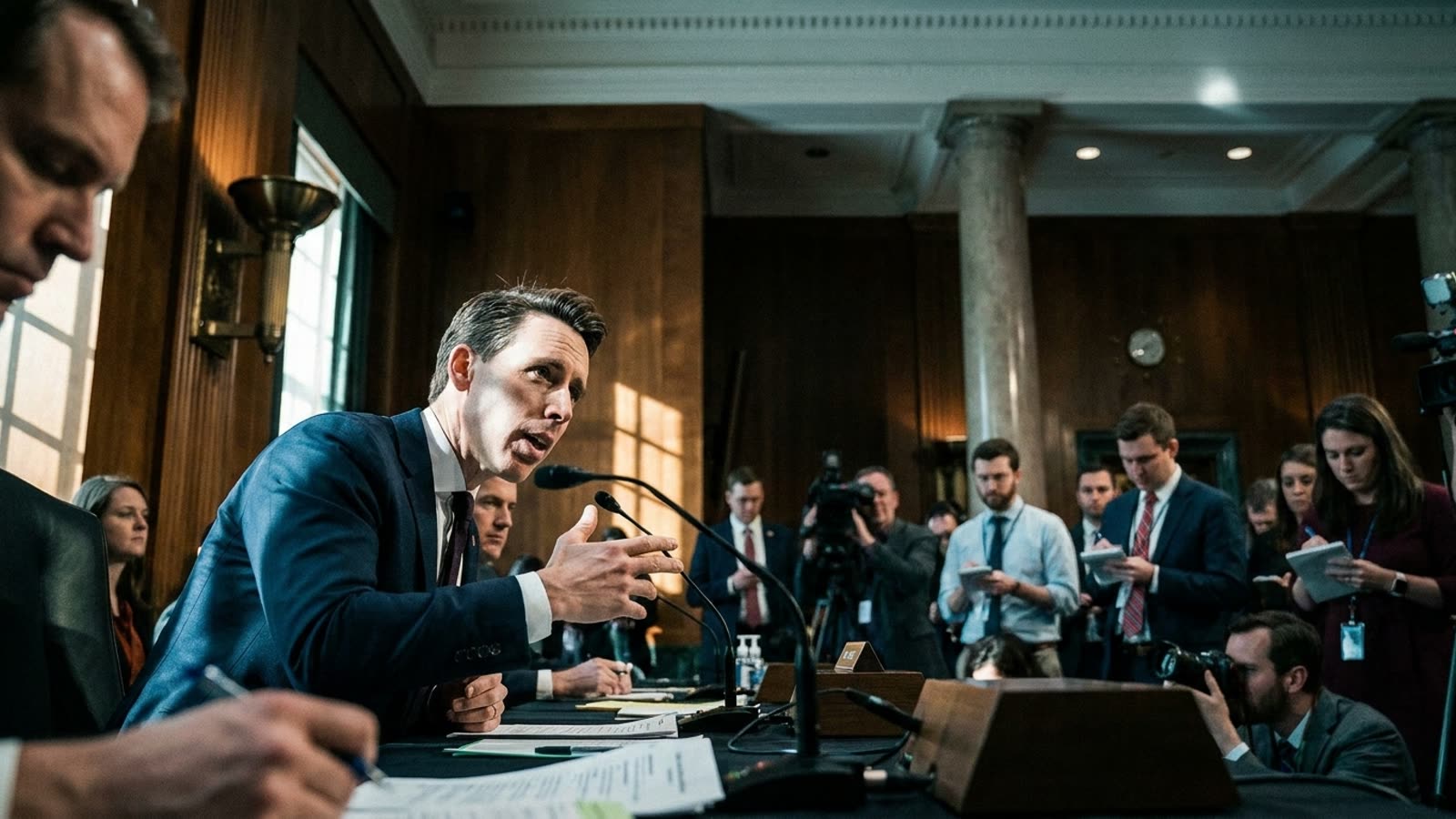
The confrontation reportedly began when Senator Josh Hawley of Missouri questioned the administration's timeline for achieving its stated objectives. Trump, according to multiple attendees, responded by questioning Hawley's loyalty and invoking his 2024 endorsement. The exchange escalated from there.
The loyalty test breaks down
For three years, Trump has demanded and largely received absolute fealty from Republican legislators. The formula was simple: back the president publicly, air grievances privately, and trust that his political instincts would deliver victories. That compact held through impeachment proceedings, election challenges, and countless policy reversals.
War is different. Senators facing reelection in 2028 are hearing from constituents who supported the Iran campaign in principle but are growing uneasy with its execution. The administration's shifting rationales—first nuclear facilities, then regime change, now regional stability—have made the mission difficult to defend at town halls. And unlike tweets or tariffs, military operations produce flag-draped coffins that arrive at Dover Air Force Base on a schedule no communications strategy can control.
The Senate's brief rebellion last week, when a bipartisan group advanced a resolution demanding consultation on escalation, was walked back within days under White House pressure. But the underlying tensions clearly remain unresolved.
What the outburst reveals
Presidential temper is nothing new in this administration. What's notable is the venue and the witnesses. A private lunch with friendly senators is supposed to be the safest possible environment for a president—a place to rally troops, not alienate them. That Trump could not maintain composure even there suggests the criticism is landing harder than the White House admits.
It also suggests the president understands something his public bravado obscures: the Iran war is not going according to plan, and the political costs are accumulating faster than the military gains. Approval ratings for the conflict have dropped fifteen points since March. Defense hawks who once cheered the campaign are now publishing op-eds urging diplomatic off-ramps.
Our take
The shouting will be forgotten by Friday. The fracture it exposed will not. Republican senators have discovered that supporting a president and supporting a war are not the same thing, and that the second commitment is far harder to sustain when the first demands silence about the second's failures. Trump has governed for years on the assumption that his party would follow him anywhere. He may be about to learn that "anywhere" has a boundary, and it runs through Tehran.