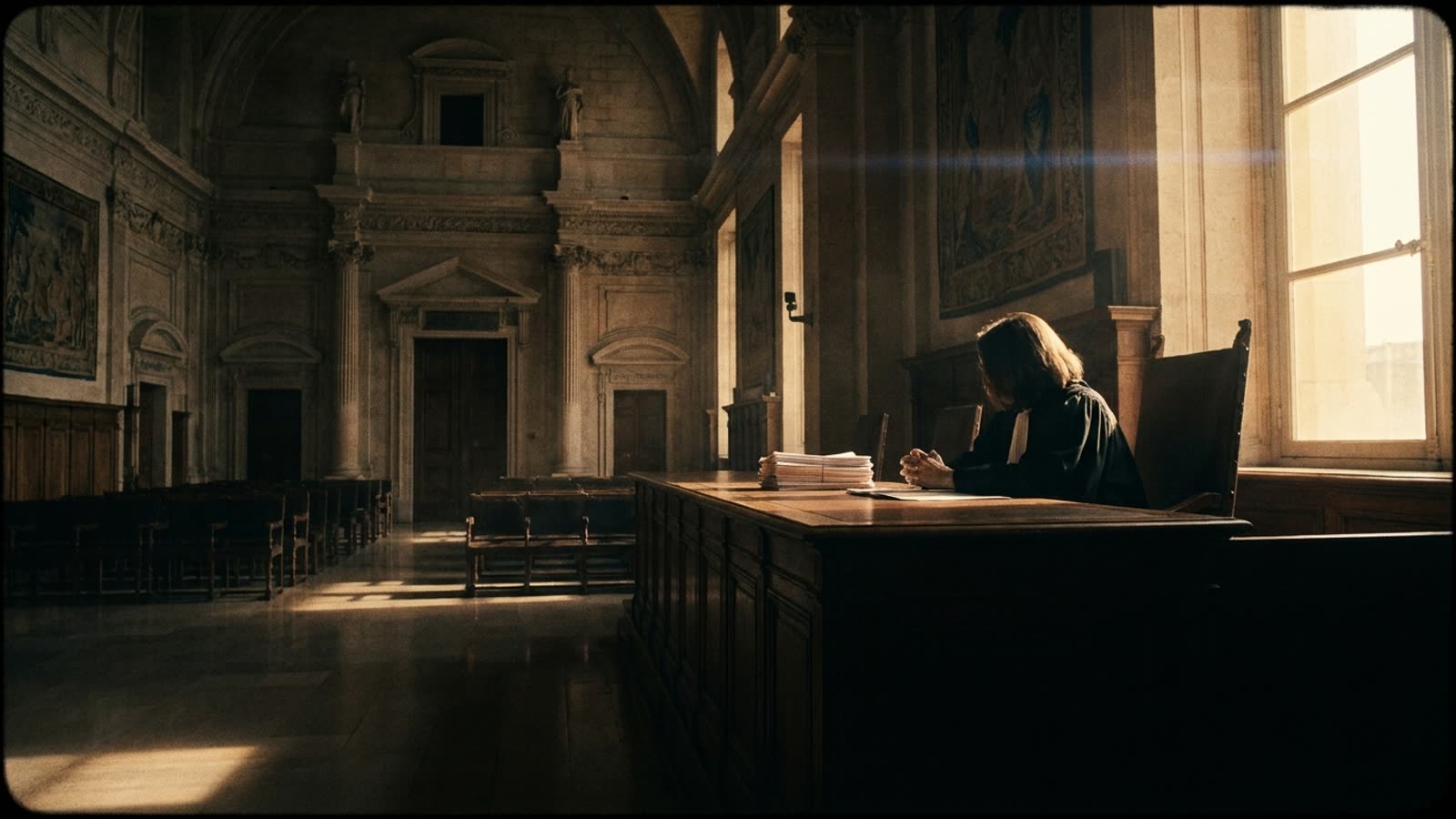
Every major democracy now operates under the watchful eye of judges who were never elected and cannot be removed by voters. This is not a bug in the system; it is the system. Constitutional courts have become the final arbiters of political possibility, wielding a power that would have astonished the framers of most national charters.
The premise seems straightforward: someone must determine whether laws comply with a nation's founding document. But the practice has metastasized far beyond that modest mandate. Courts now routinely strike down economic policy, mandate social spending, invalidate electoral arrangements, and force executives to reverse course on matters their voters explicitly endorsed. The question is no longer whether judges have power, but whether anyone can check it.
The German model and its imitators
The Bundesverfassungsgericht, established in 1951, represents the apex of constitutional court authority. It can void legislation, ban political parties, and compel government action—all while enjoying approval ratings that elected politicians can only envy. Its rulings on European integration have repeatedly forced Berlin to reconsider treaty commitments. When the court speaks, chancellors listen.
This model proved irresistible to post-authoritarian states. Spain, Portugal, South Korea, and virtually every Eastern European nation emerging from communism adopted some version of concentrated judicial review. The logic was defensive: constitutions needed guardians against the return of tyranny. But guardians accumulate power, and power rarely stays defensive.
The democratic tension
Critics across the political spectrum have noticed the problem. When Colombia's Constitutional Court orders the government to increase healthcare spending, or when Israel's Supreme Court strikes down a basic law, or when Hungary's constitutional tribunal blocks executive action, the same question arises: who elected these people?
The standard defense invokes rights protection. Majorities can be tyrannical; minorities need shelter. This is true, but it elides the reality that most constitutional adjudication involves policy disputes dressed in rights language. Whether a carbon tax is constitutional, whether a pension reform violates dignity, whether an electoral threshold is proportionate—these are political judgments wearing judicial robes.
Some courts have developed doctrines of deference, acknowledging that certain questions belong to elected branches. Others have charged forward, confident that their legitimacy derives from reasoned argument rather than popular mandate. The variation is enormous, and it matters: identical constitutional text produces wildly different outcomes depending on judicial philosophy.
The accountability gap
Most constitutional court judges serve long terms, often exceeding a decade. Many cannot be reappointed, insulating them from political pressure but also from accountability. Removal typically requires supermajorities that never materialize. The result is a branch of government that operates on a different time horizon than democracy itself.
This creates perverse incentives. Politicians can pass popular but constitutionally dubious laws, knowing the court will take the blame for striking them down. Courts can issue sweeping mandates, knowing they bear no responsibility for implementation. The feedback loops that discipline other institutions simply do not apply.
Our take
Constitutional courts are not going away, nor should they. The alternative—legislative supremacy with no judicial check—has its own pathologies. But the pretense that judges merely apply law while politicians make policy has become untenable. These are governing institutions, and they deserve the scrutiny that governing institutions receive. The robes do not confer neutrality; they confer power. Democracies would do well to remember the difference.