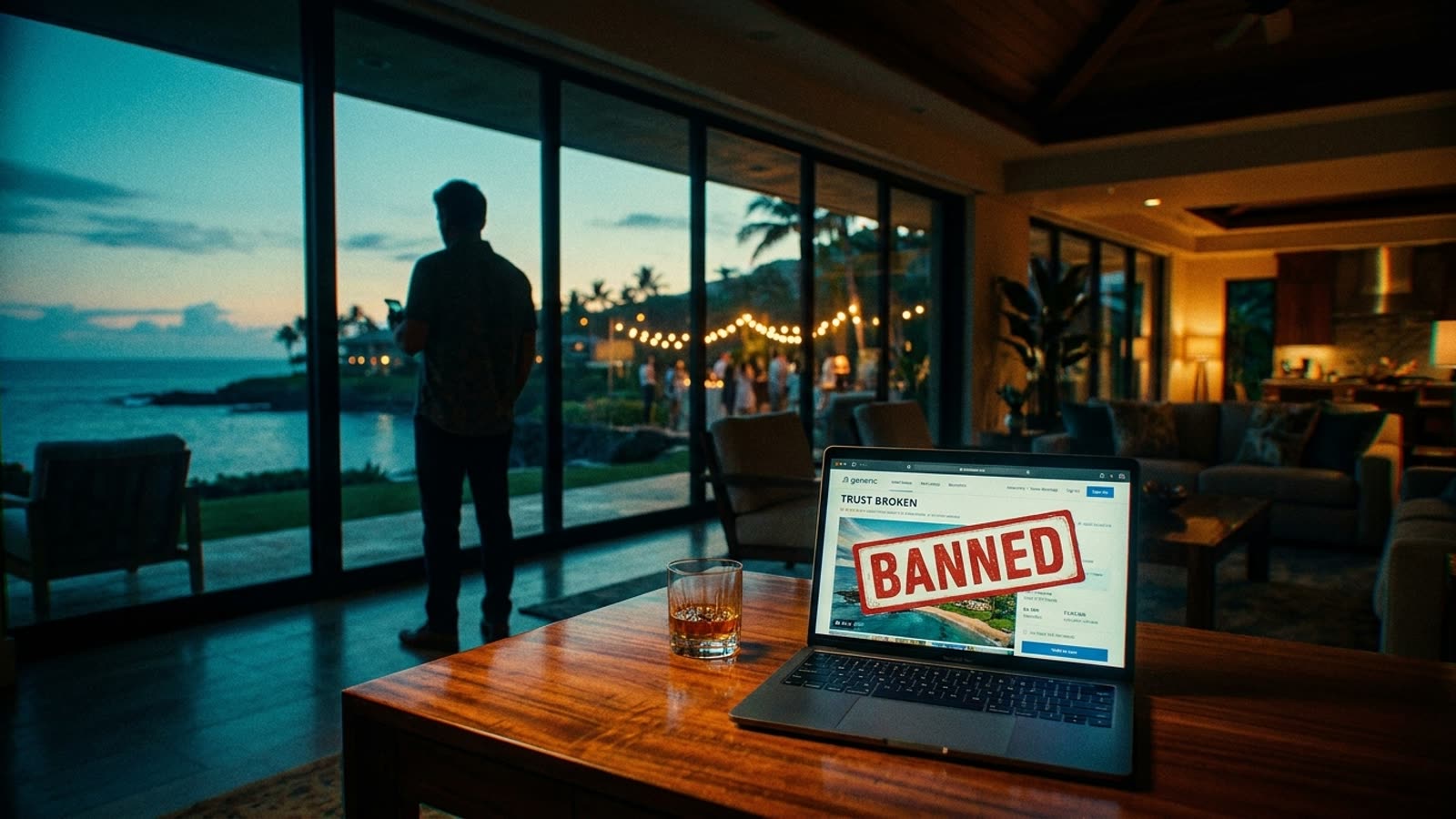
The luxury real estate business runs on a peculiar form of trust: wealthy strangers hand over keys to their most intimate spaces, expecting discretion and professionalism in return. A scandal now unfolding in Hawaii suggests that bargain may be more fragile than anyone cared to admit.
A prominent Honolulu real estate figure stands accused of using client properties for sexual encounters over a period of years, according to reports emerging this week. The allegations—still unfolding and contested—describe a pattern in which homes listed for sale became venues for the broker's personal activities, often without owners' knowledge or consent.
The Architecture of Access
High-end real estate operates in a gray zone of intimacy. Agents possess lockbox codes, alarm passwords, and the implicit permission to enter properties at will. They know when owners travel, which rooms go unused, which neighbors pay attention. This access is granted freely because the alternative—constant owner supervision—would make the selling process unworkable.
The Hawaii allegations puncture this arrangement's unstated assumption: that professionals will treat access as a fiduciary responsibility rather than a personal opportunity. Whether the specific claims prove true in court matters less, commercially speaking, than the fact that the scenario is entirely plausible. Every luxury homeowner who has ever wondered what happens during an open house now has a vivid worst-case scenario to contemplate.
Paradise and Its Discontents
Hawaii's real estate market carries particular vulnerabilities. Many sellers are mainland or international owners who visit their properties infrequently, creating extended windows of absentee ownership. The islands' culture of relaxed informality can blur professional boundaries that might remain sharper in Manhattan or London. And the market's recent cooling—after pandemic-era price surges—has intensified competition among brokers, potentially encouraging corner-cutting.
The accused broker reportedly built a substantial business serving affluent clients, the kind of practice where relationships matter more than transaction volume. If the allegations hold, the betrayal extends beyond any individual victim to the broader ecosystem of trust that makes such relationships possible.
Our take
This scandal will likely prompt some luxury brokerages to implement surveillance protocols and access logs that would have seemed paranoid a month ago. The more interesting question is whether high-end real estate can survive as a relationship business at all, or whether it will follow other industries toward algorithmic intermediation and constant monitoring. The broker-client intimacy that enabled this alleged misconduct is the same intimacy that makes a good agent invaluable. Killing one may require killing the other.