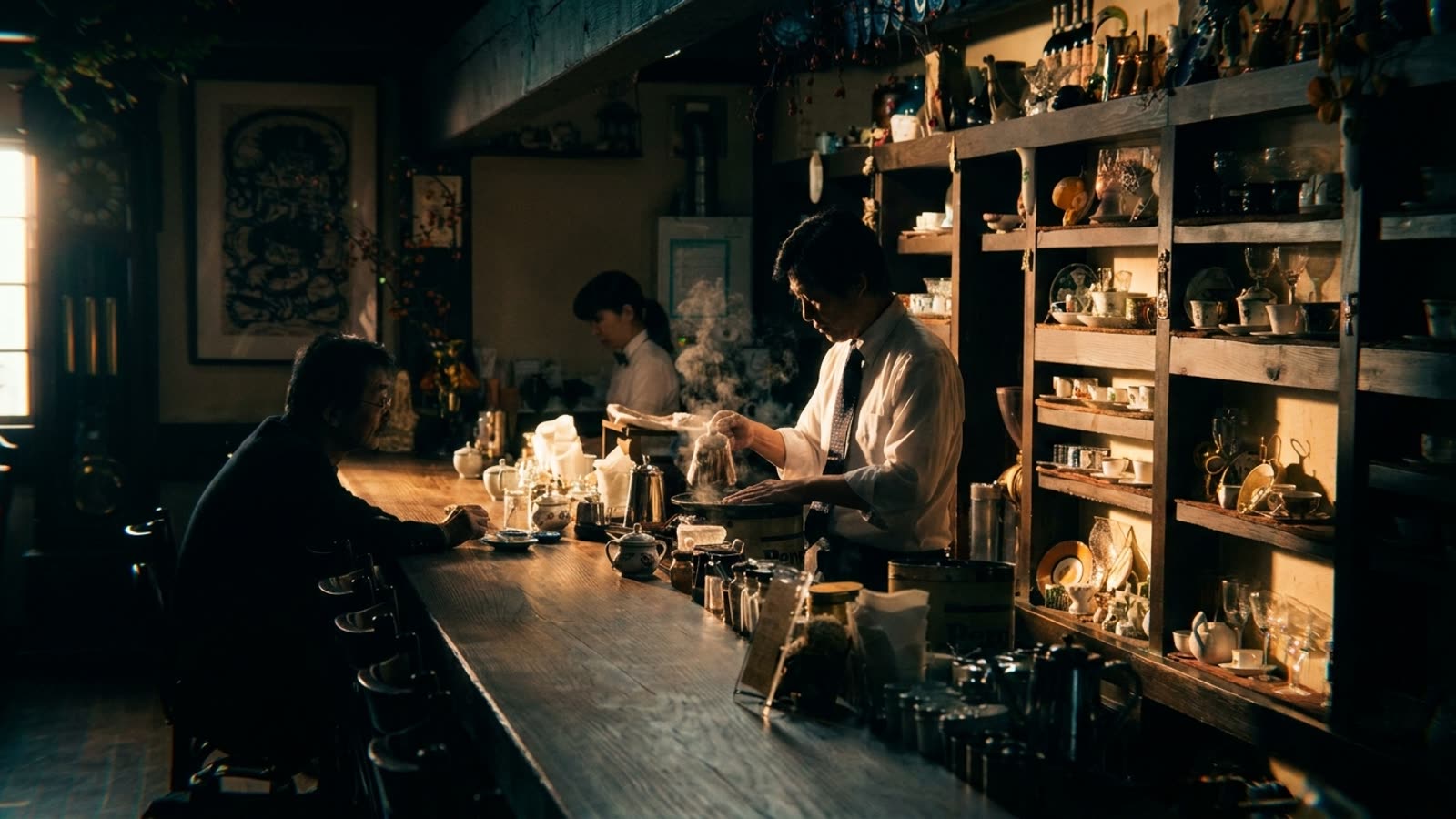
The kissaten is not convenient. It does not have Wi-Fi. The coffee costs more than it should, brewed slowly by a proprietor who has been doing this since before you were born, served in a cup that weighs more than your laptop. The vinyl record playing overhead will not be interrupted by a notification. This is the point.
Japan's traditional coffee houses—kissaten, literally "tea-drinking shop"—emerged in the early twentieth century as spaces for intellectuals, artists, and salarymen seeking refuge from the velocity of modern life. By the 1980s, there were tens of thousands across the country. Then came Starbucks, Doutor, and the convenience-store coffee revolution. The kissaten was declared dead, a relic of the Showa era preserved only in nostalgia.
The obituary was premature.
The economics of atmosphere
What the efficiency prophets failed to understand is that the kissaten was never selling coffee. It was selling time—specifically, the permission to waste it. In a culture that prizes productivity and social obligation, the kissaten offered a rare sanctuary: a place where lingering was not merely tolerated but expected. The thick smoke (now largely banned), the jazz or classical music, the elderly owner who remembered your order—these were not inefficiencies to be optimized away but the entire product.
Younger Japanese, raised on convenience and now drowning in digital noise, have begun rediscovering this. Social media accounts dedicated to kissaten culture have accumulated substantial followings. Vintage coffee equipment has become collectible. New establishments styled after the old ones are opening in Tokyo, Osaka, and Kyoto, though purists note these lack the essential ingredient: decades of accumulated atmosphere.
The global resonance
The kissaten's quiet persistence speaks to a broader cultural hunger. The "third place"—neither home nor work—has been theorized by sociologists for decades, but the kissaten represents something more specific: a third place that actively resists productivity. You cannot network here. You cannot optimize your morning. You can only sit with your siphon-brewed coffee and a thick slice of toast, watching the light change through frosted glass.
This is not nostalgia for nostalgia's sake. The kissaten model has begun influencing coffee culture elsewhere, from Melbourne to Brooklyn, where a new generation of cafés is deliberately slowing down, removing outlets, and curating for contemplation rather than throughput. The Japanese original remains the template.
Our take
The kissaten's survival is a small rebuke to the assumption that convenience always wins. Sometimes people will pay more for less—less speed, less connectivity, less of everything except the increasingly scarce commodity of unstructured time. The old men behind those counters, polishing cups they have polished for forty years, understood something that the disruptors missed: efficiency is a means, not an end. And some of us, occasionally, would like to remember what the end was supposed to be.