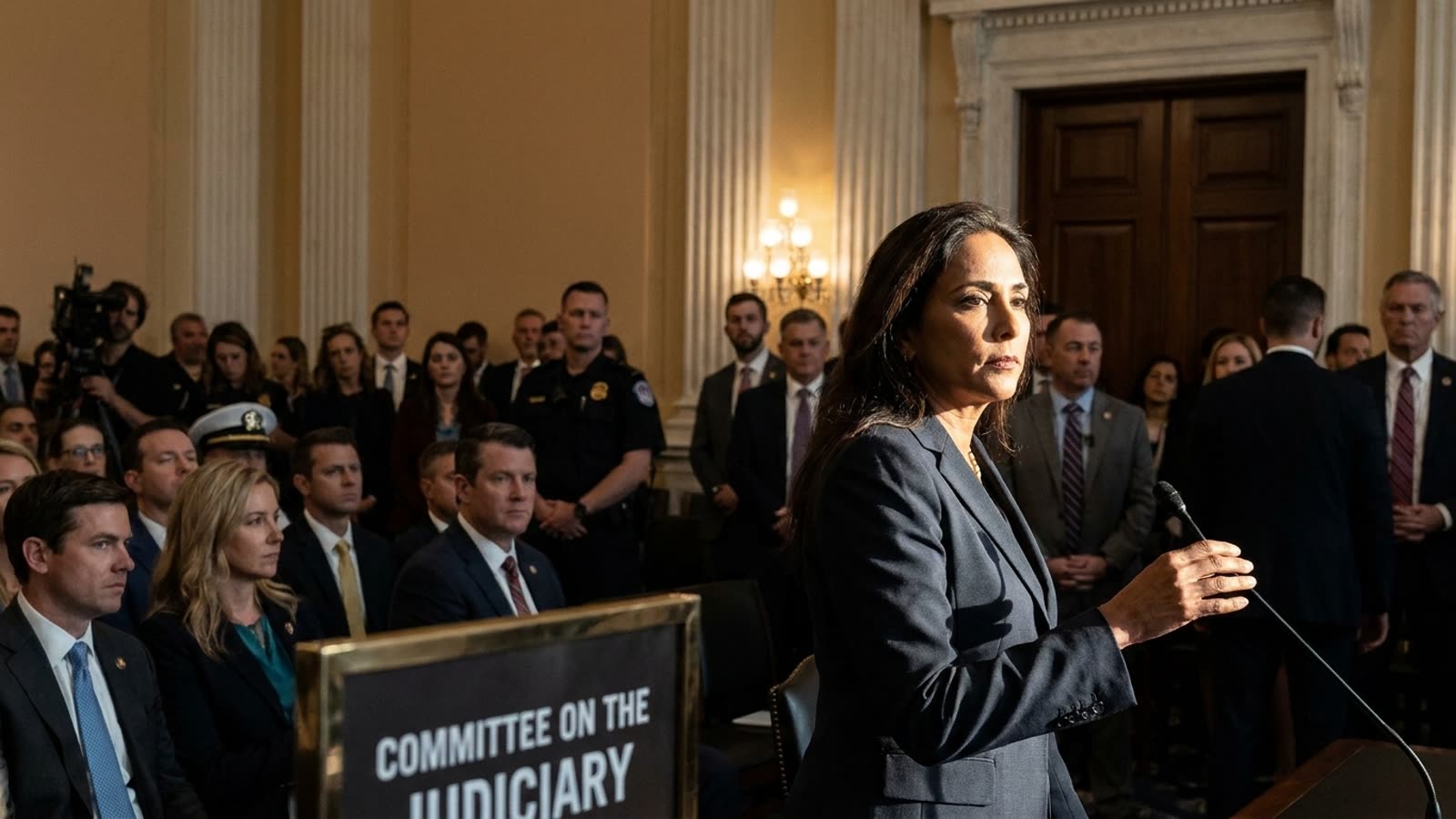
The resignation of Harmeet Dhillon from the Justice Department's Civil Rights Division is not merely a personnel change—it is the opening act of what promises to be a prolonged institutional crisis for the Trump administration's legal apparatus.
Dhillon, who led the division responsible for enforcing federal civil rights laws, submitted her resignation one day after Democrats secured historic majorities in both chambers of Congress. The timing is not coincidental. Sources familiar with the matter indicate that Dhillon clashed repeatedly with Justice Department leadership over legal strategy during the midterm campaign, including the administration's ill-fated attempts to challenge election procedures in several swing states.
The Dhillon tenure
A Republican National Committee official and prominent Trump ally, Dhillon took the civil rights post with a mandate to reshape the division's priorities. Under her leadership, the office shifted resources away from voting rights enforcement and toward investigations of alleged anti-conservative discrimination at universities and tech companies. Critics accused her of transforming a division created to protect marginalized communities into a vehicle for culture-war grievances.
The incoming Democratic Congress has already signaled intent to investigate the division's handling of several high-profile matters, including its approach to files related to Jeffrey Epstein and its oversight—or lack thereof—of Immigration and Customs Enforcement operations that resulted in civilian deaths. Dhillon's departure removes a potential star witness but does not eliminate the paper trail.
What comes next
The resignation creates an immediate vacuum at a sensitive moment. Acting leadership will need to manage a division demoralized by years of ideological whiplash while preparing for aggressive congressional oversight. Career attorneys who remained silent during the Dhillon era may now find their voices—and their document caches—newly relevant.
For the broader administration, Dhillon's exit raises an uncomfortable question: who follows? Cabinet secretaries and agency heads who rode out the midterm disaster are now calculating whether to stay and face subpoenas or depart while departure still looks voluntary. The next several weeks will reveal whether Dhillon is an outlier or a harbinger.
Our take
Dhillon's resignation is the sound of a door closing on a particular theory of governance—that the Justice Department's civil rights machinery could be repurposed for partisan ends without consequence. The consequence has arrived, wearing a Democratic gavel. Her successor, whoever that proves to be, inherits not a division but a crime scene that investigators are eager to process.