When health officials descend on a city that markets itself as the planet's final frontier, the optics are never good.
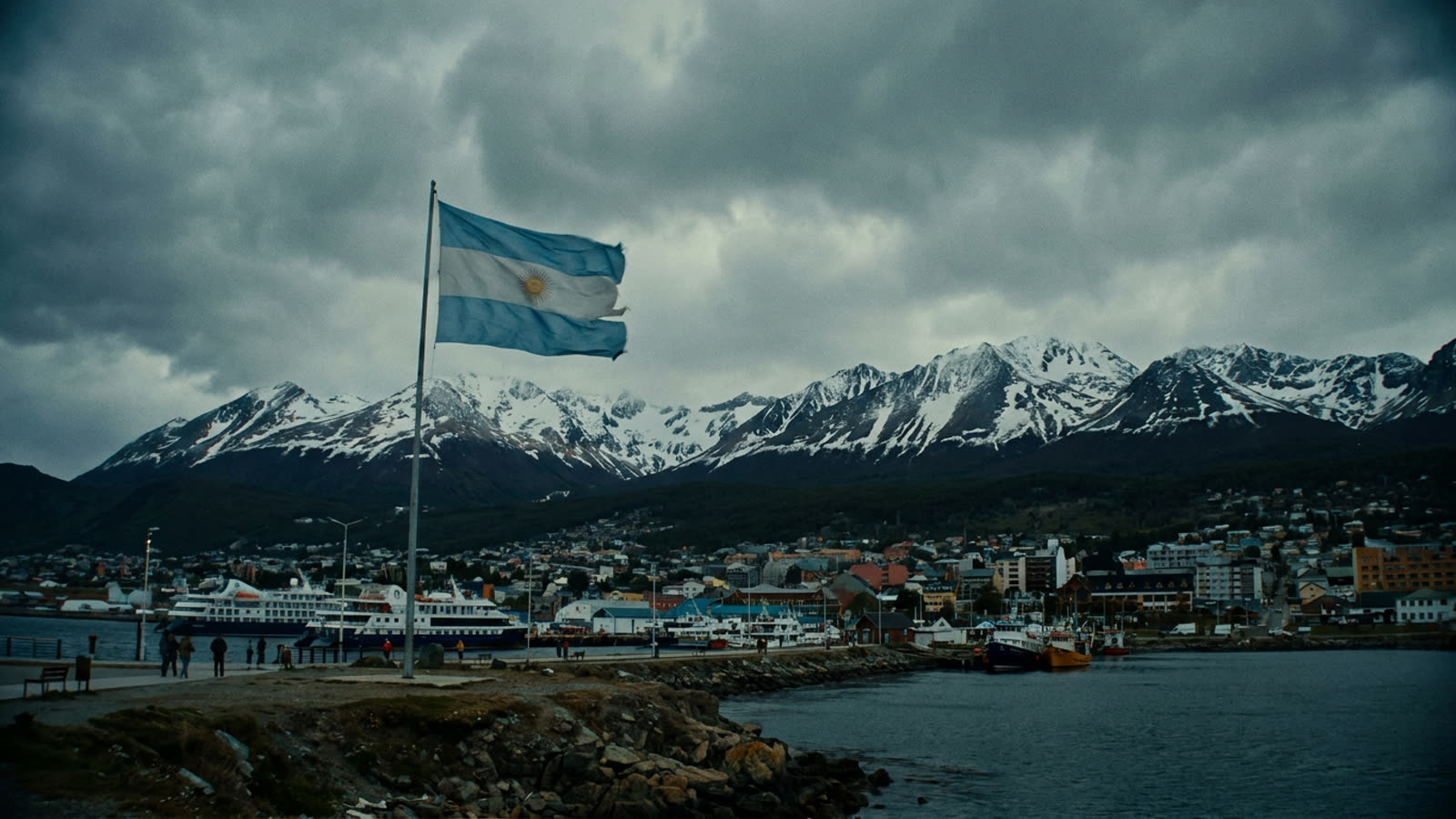
Ushuaia, the Argentine port city that has built an entire economy around its dramatic claim to be the southernmost city on Earth—the "end of the world," as every souvenir shop reminds you—is now fielding questions about whether its booming tourism industry sparked a hantavirus outbreak. Local authorities have moved quickly to deny any connection, a defensive posture that tells you everything about what's really at stake: not just public health, but the survival of a destination whose entire value proposition depends on the romance of remoteness.
The epidemiological puzzle
Hantavirus is not typically a traveler's disease. The pathogen spreads through contact with infected rodents or their droppings, making it a risk primarily for those who venture into wilderness areas or rural settings where mouse populations thrive. Patagonia has seen periodic outbreaks for decades, usually traced to hikers, campers, or agricultural workers. What makes the current cluster unusual enough to warrant a BBC investigation is the apparent geographic concentration around Ushuaia—and the uncomfortable timing, as the city experiences record visitor numbers following Argentina's currency devaluation, which has made the country irresistibly cheap for foreign tourists.
Health investigators are reportedly examining whether increased human traffic into previously undisturbed areas has created new exposure pathways. The theory is plausible: more hikers means more trails, more trails means more disturbance of rodent habitats, more disturbance means more human-mouse encounters. It's the kind of slow-motion environmental consequence that adventure tourism prefers not to discuss.
The economics of denial
Ushuaia's defensiveness is understandable, if not particularly convincing. The city of roughly 80,000 people hosts over 500,000 visitors annually, most of them en route to Antarctic cruises or Tierra del Fuego National Park. Tourism accounts for the overwhelming majority of the local economy. Any suggestion that visiting Ushuaia carries meaningful disease risk would be catastrophic—not just for hotels and tour operators, but for the entire Argentine Antarctic logistics industry that depends on the city as its primary staging ground.
The denial also reflects a familiar pattern in outbreak politics: localities almost always resist being identified as disease origins. Wuhan pushed back against COVID-19 attribution. West African nations bristled at Ebola stigma. Ushuaia is simply following the playbook, insisting that the virus was already present in the region and that tourists are victims, not vectors.
Our take
Ushuaia may well be right that tourism didn't cause this outbreak. Hantavirus has circulated in Patagonia for generations, and correlation with visitor numbers doesn't establish causation. But the city's reflexive denial misses the larger point. As remote destinations market themselves ever more aggressively to ever larger crowds, the question isn't whether tourism caused a particular outbreak—it's whether the infrastructure exists to manage the inevitable health risks that come with putting thousands of people into fragile ecosystems every week. The end of the world, it turns out, is not actually the end of epidemiology.