The World Health Organization confirmed Friday that at least five cases of hantavirus, including three deaths, have been linked to an outbreak aboard the Dutch expedition cruise ship MV Hondius, and that health authorities in a minimum of twelve countries are now attempting to trace dozens of passengers and crew who disembarked before the outbreak was identified.
The ship, operated by Oceanwide Expeditions, left Ushuaia, Argentina, on 1 April for a luxury Antarctic-to-Atlantic crossing carrying roughly 150 passengers and crew from 28 countries. Its first major intermediate stop was the remote British overseas territory of St Helena, on 24 April, where dozens of guests disembarked on planned itineraries. That date is now the one every public-health agency in Europe and North America is looking at, because the first confirmed hantavirus case on the ship was not reported until 4 May — a full eleven days later.
Why this is uniquely complicated
Hantavirus, in most of its known strains, does not spread person to person. It is contracted by breathing in air contaminated with particles of rodent urine, droppings, or saliva, and the epidemiology usually stops there. The strain behind the MV Hondius outbreak is the Andes strain, which is native to southern Argentina and Chile and which is the only hantavirus strain in the medical literature with documented human-to-human transmission. The WHO has now classified this as the first known transmission of the virus aboard a ship.
The incubation period is the other problem. Andes-strain hantavirus can take up to six weeks to produce symptoms. Someone who got off the MV Hondius at St Helena on 24 April might therefore not develop a fever until the first week of June. That is why the WHO's contact list is not 150 people. It is 150 people plus anyone those 150 people have since hugged, shared a hotel room with, or sat next to on a plane.
The twelve countries
The WHO confirmed Friday that it is coordinating with Canada, Denmark, Germany, the Netherlands, New Zealand, Saint Kitts and Nevis, Singapore, Sweden, Switzerland, Turkey, the United Kingdom, and the United States. The UK's tally alone includes seven nationals who disembarked in St Helena, four who remain on the island, one who was evacuated to the Netherlands in a stable condition, one in intensive care in South Africa, and two more self-isolating voluntarily at home. In the United States, the Centers for Disease Control classified the outbreak as a Level 3 emergency response — the lowest tier — and five states (California, Arizona, Virginia, Georgia, and Texas) are actively monitoring passengers, none of whom are symptomatic so far.
France, meanwhile, is monitoring eight nationals who came into contact with a Dutch passenger who died on an evacuation flight from Saint Helena to Johannesburg. One of the eight is showing mild symptoms.
Where the ship is now
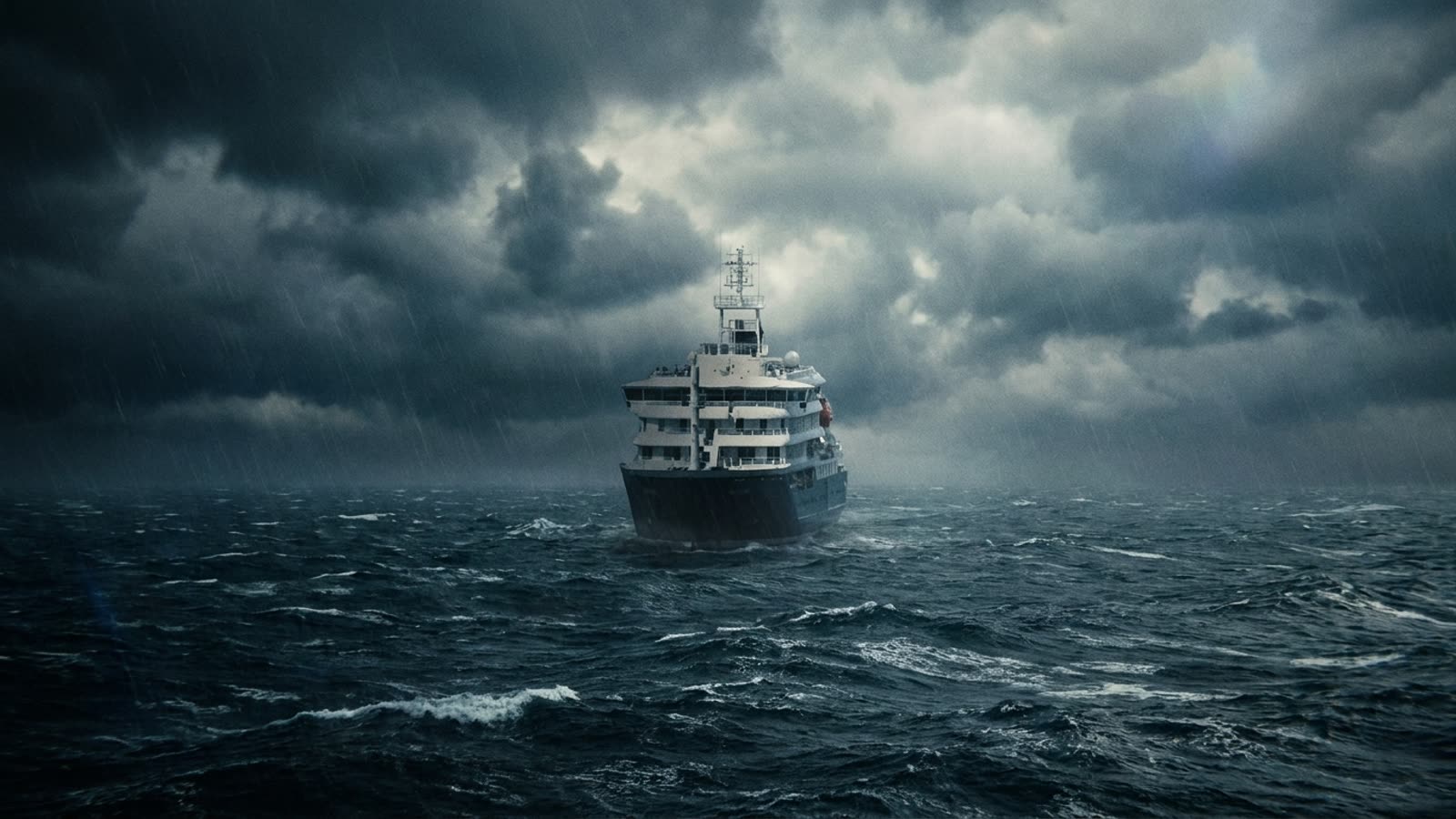
The MV Hondius itself is, at time of writing, still at sea. Cape Verde refused the vessel permission to dock. It has spent several days anchored off the West African coast and is now making for Spain's Canary Islands, with an expected arrival on 10 May. Spanish port authorities have not yet said whether they will allow the ship in, or whether any disembarkation will be supervised by a full quarantine protocol.
Our take
An outbreak like this is fundamentally a race against an incubation window, and the window is not closed. The chaotic nature of the initial response — an expert told the BBC it has been "highly chaotic and uncoordinated" — is not reassuring, but the genuine good news is that the public-facing risk outside the cohort of identified contacts is, for now, low. The next ten days will decide whether this remains a bounded incident or becomes a global one.