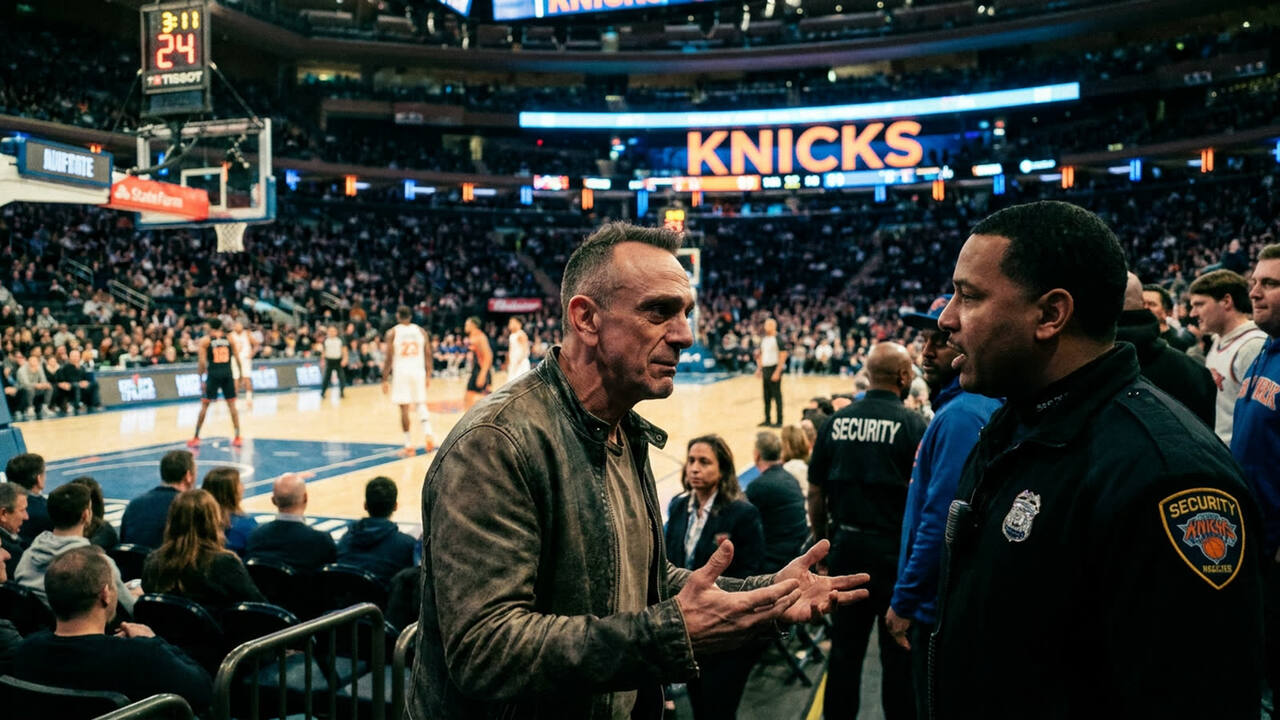
Hank Azaria has spent decades voicing some of television's most iconic characters—Moe Szyslak, Chief Wiggum, Apu Nahasapeemapetilon—and earning the kind of industry respect that translates into reliable courtside seats at Madison Square Garden. Then Taylor Swift showed up with Travis Kelce, and suddenly the six-time Emmy winner found himself displaced from his usual spot, watching the Knicks from somewhere decidedly less prestigious.
The actor's frustration, aired publicly this week, is both petty and profound. Azaria isn't wrong to be annoyed; he's been a fixture at MSG for years, the kind of loyal celebrity attendee teams love because he actually watches the game rather than treating it as a photo opportunity. But his complaint inadvertently illuminates the brutal mathematics of contemporary fame: Swift's Instagram post from those seats will generate more engagement than Azaria's entire career filmography combined.
The economics of courtside
Arena seating has always been transactional, but the currency has shifted. In the 1990s, courtside was about wealth and local prestige—hedge fund managers, real estate developers, the occasional movie star. Now it's about content potential. A team's social media reach expands exponentially when Swift appears on camera, her presence guaranteeing viral moments and mainstream news coverage that no amount of traditional advertising could purchase.
The Knicks, perpetually hungry for relevance despite their storied history, understand this calculus perfectly. Azaria represents the old model: genuine fandom, consistent attendance, modest promotional value. Swift represents the new one: sporadic appearances that function as cultural events. One brings loyalty; the other brings logarithmic attention.
Character actors in the attention economy
Azaria's situation reflects a broader anxiety among the entertainment industry's middle class. Character actors once enjoyed a comfortable existence—steady work, respectable pay, enough recognition for good restaurant reservations and yes, decent arena seats. They were famous enough to matter but not so famous that their presence overwhelmed whatever they were attending.
That middle ground has largely collapsed. The attention economy rewards extremes: either you're Taylor Swift, commanding every room you enter, or you're functionally anonymous despite decades of acclaimed work. There's diminishing space for the Hank Azarias of the world, artists whose contributions are undeniable but whose Instagram follower counts don't move markets.
Our take
Azaria deserves his courtside seats more than Swift does, if we're measuring by genuine investment in the team. He's been showing up for years; she's been showing up for Travis Kelce. But deserving has nothing to do with how arenas allocate their most visible real estate in 2026. The Knicks aren't selling basketball to Hank Azaria—they're selling Taylor Swift to everyone else. His public complaint is sympathetic and futile, the lament of a man who played by the old rules only to discover they'd been rewritten while he was perfecting his Moe Szyslak impression.