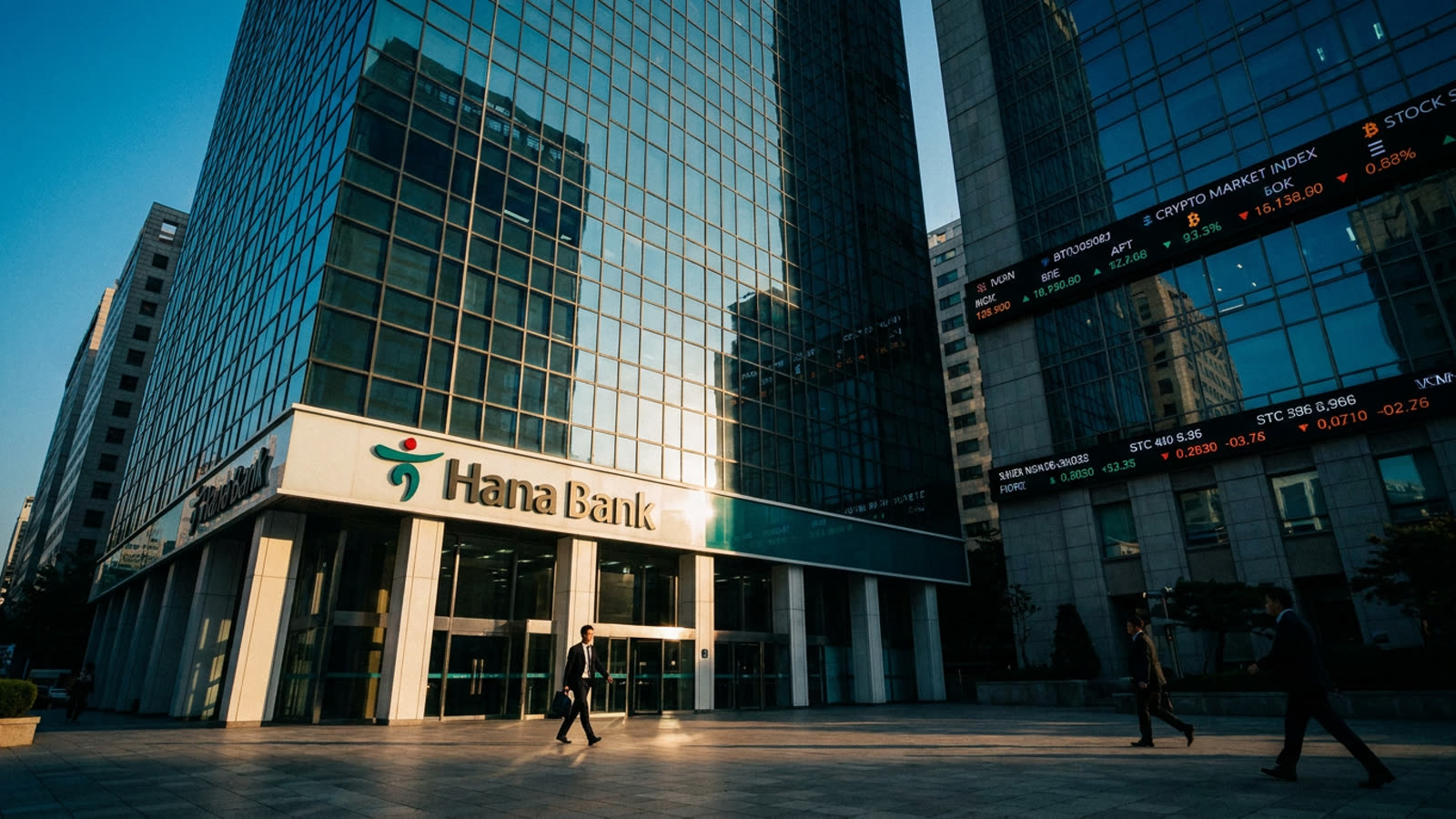
When South Korea's fourth-largest financial group writes a check for nearly $700 million to become a major shareholder in the country's dominant crypto exchange, it's not a hedge—it's a declaration. Hana Financial Group's acquisition of a 6.55% stake in Dunamu, the operator of Upbit, marks one of the largest traditional-finance-to-crypto deals in Asian history and sets the stage for a new kind of competition: banks that don't just custody digital assets but issue them.
The transaction, which values Dunamu at roughly $10 billion, makes Hana the fourth-largest shareholder in a company that processes more daily trading volume than any other Korean exchange. But the share purchase is almost beside the point. What matters is what comes next: a won-pegged stablecoin, blockchain-based remittances, and tokenized securities—all built on rails that Hana will now help control.
The stablecoin play
Korea has been conspicuously absent from the stablecoin conversation. While Tether and Circle have dominated dollar-denominated markets, and Japan's megabanks have experimented with yen tokens, the won has remained largely analog. Hana's announced plans change that calculus. A bank-issued, won-backed stablecoin would immediately become the most regulated and arguably most trustworthy fiat on-ramp in Korean crypto—a market where Upbit already commands roughly 80% of domestic spot volume.
The timing is strategic. Korea's Financial Services Commission has signaled it will finalize stablecoin regulations by year-end, and Hana appears to be positioning itself as the compliant first mover. If the bank can launch before foreign competitors navigate Korean licensing, it could lock in network effects that prove difficult to dislodge.
Why banks are buying, not building
Hana's approach—acquiring rather than incubating—reflects a broader shift in how legacy finance engages with crypto. Building exchange infrastructure from scratch is expensive, slow, and politically risky for institutions that answer to regulators and shareholders. Buying a stake in an existing, licensed operator lets Hana access Dunamu's technology stack, user base, and regulatory relationships without the reputational exposure of launching a standalone crypto venture.
The deal also arrives amid a flurry of M&A interest in Korean exchanges. OKX is reportedly pursuing a 20% stake in Coinone, Korea's third-largest platform, suggesting that both foreign exchanges and domestic banks see the Korean market as undervalued relative to its trading volumes. For Hana, the Dunamu stake is defensive as much as offensive: better to be inside the tent when regulators redraw the rules.
Our take
This is the deal that crypto-native observers have been predicting—and dreading—for years. When banks stop fighting digital assets and start absorbing them, the industry's libertarian roots get quietly composted into something far more institutional. Hana isn't buying Dunamu because it believes in decentralization; it's buying Dunamu because stablecoins and tokenized deposits are the future of payments, and it would rather own the pipes than rent them. For Korean retail traders, that probably means better consumer protections and duller innovation. For the global stablecoin market, it means the dollar's dominance just got a little more contested.