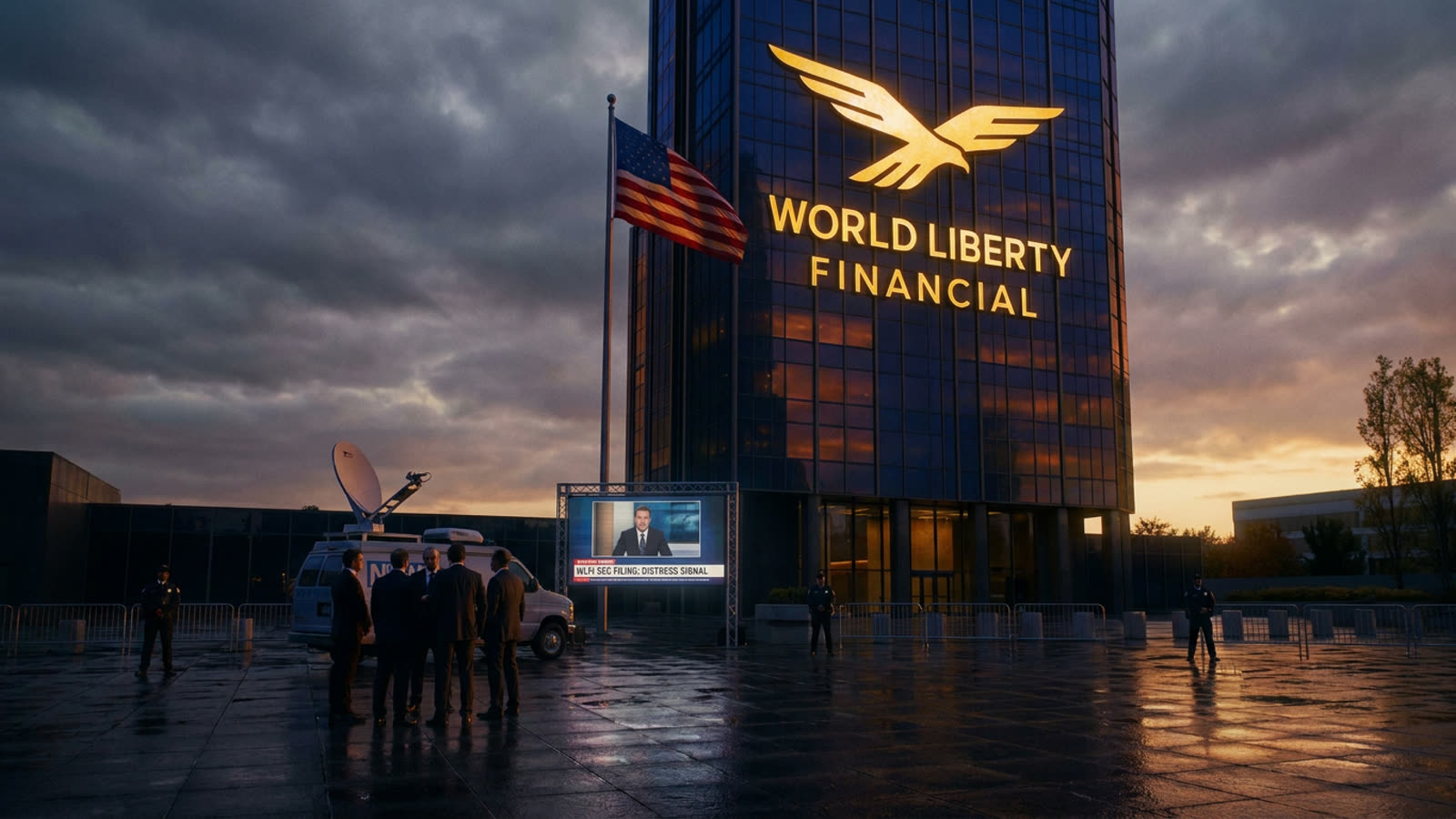
A company holding billions of tokens tied to Donald Trump's crypto venture has told regulators it may not be a going concern by year's end—a remarkable admission that underscores how quickly the political-meme-coin economy can curdle.
AI Financial, formerly known as Alt5 Sigma and now serving as a treasury vehicle for World Liberty Financial, disclosed in an SEC filing that its 7.28 billion WLFI tokens are currently valued at approximately $706 million. The problem: the company paid roughly $1.46 billion for them. The bigger problem: those tokens remain locked, meaning the paper loss cannot be realized, hedged, or escaped. The filing's going-concern language—boilerplate for struggling companies, extraordinary for one adjacent to a former and potentially future president—suggests management sees no clear path to liquidity.
The architecture of illiquidity
World Liberty Financial launched in late 2024 as a DeFi-adjacent project with heavy Trump family branding and a token sale that raised hundreds of millions of dollars from investors betting on regulatory favor in a second Trump administration. The structure was always unusual: WLFI tokens were sold as governance instruments with no immediate transferability, a design that insulated the project from securities-law scrutiny while also trapping buyers in a one-way trade. AI Financial appears to have been one of the largest single purchasers, building a position that now represents a catastrophic concentration of illiquid risk.
The token's implied price has fallen more than 50% from cost basis, but because there is no functioning secondary market, that decline exists only on a mark-to-model basis. If and when tokens unlock, actual selling pressure could push prices far lower. The filing does not specify when or whether liquidity will arrive.
Political exposure in both directions
The timing is uncomfortable. Trump remains the presumptive Republican nominee, and his campaign has leaned into crypto-friendly rhetoric, promising to end what allies call regulatory persecution of the industry. Yet the distress at AI Financial illustrates the inverse risk: projects that wrapped themselves in MAGA branding attracted capital on political speculation rather than technological merit, and that capital is now stuck.
For the broader crypto market, the episode is a reminder that meme-adjacent tokens—whether tied to politicians, celebrities, or internet jokes—carry structural risks that outlast any single news cycle. Liquidity is not a feature you can bolt on later; it is either present at launch or it is a liability.
Our take
The SEC filing is not, in itself, proof of fraud or failure. Companies issue going-concern warnings and survive all the time. But the sheer scale of the loss—three-quarters of a billion dollars, locked and bleeding—makes AI Financial a case study in what happens when political enthusiasm substitutes for due diligence. If Trump wins in November, WLFI holders may yet see a reprieve. If he loses, or if the tokens never unlock, the episode will join a long list of crypto cautionary tales. Either way, the filing should be required reading for anyone tempted to confuse a campaign slogan with an investment thesis.