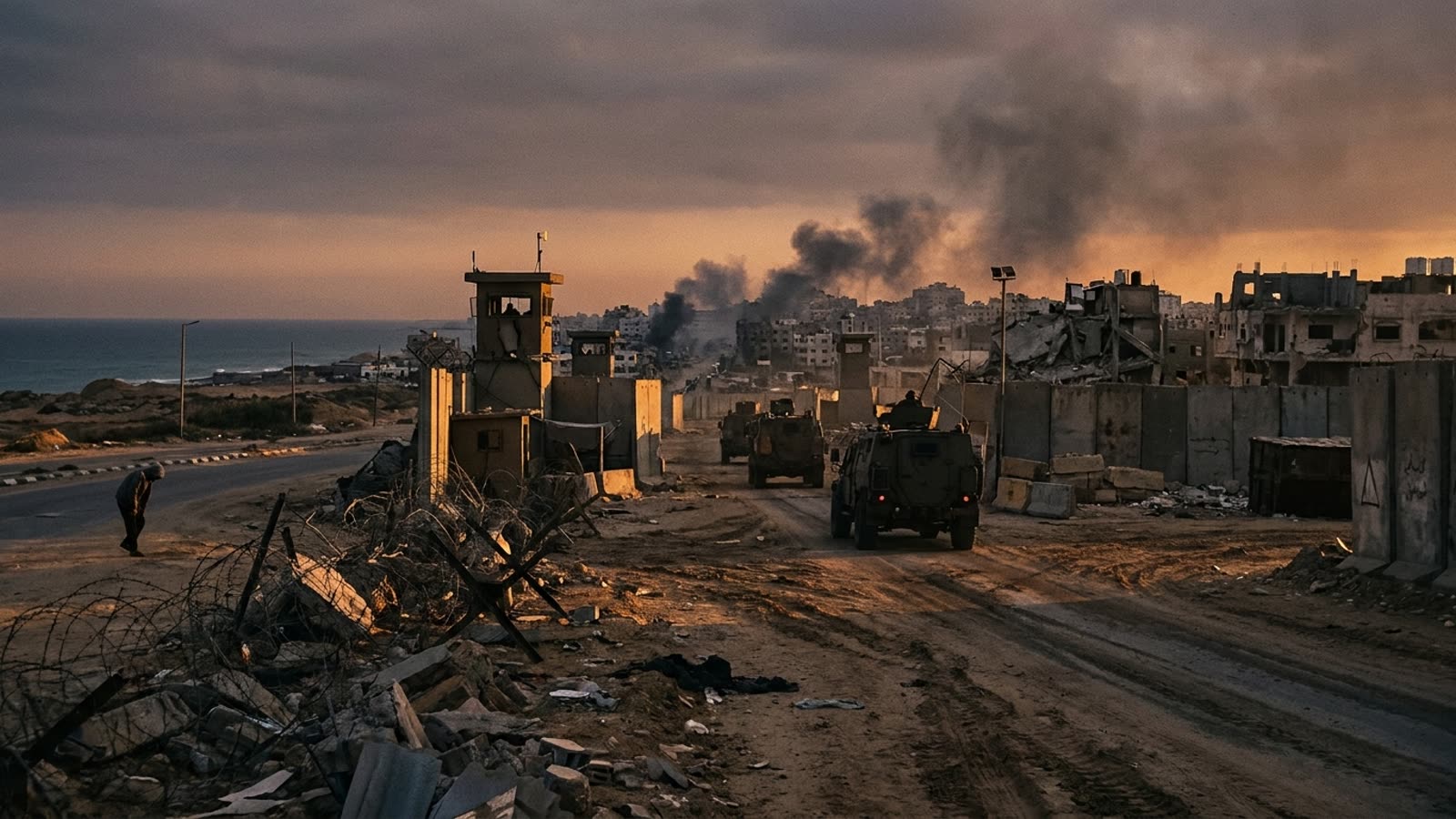
The semantic gymnastics required to describe Israel's military operations in Gaza have grown increasingly strained. What began as a response to the October 7, 2023 attacks has evolved, nearly three years later, into something that looks less like counterterrorism and more like territorial acquisition—a distinction that matters enormously under international law, even if it barely registers in Washington's talking points.
Israeli forces are now pushing to control additional swaths of Gaza, prompting Hamas to issue fresh warnings against escalation. The militant group's threats carry less weight than they once did, given its degraded military capacity, but the underlying dynamic reveals a conflict that has long since departed from its stated objectives.
The creeping permanence problem
What distinguishes the current phase is not the violence—Gaza has known little else—but the infrastructure of permanence. Israeli military planners have stopped pretending that their presence is temporary. Buffer zones have widened. Checkpoints have hardened. The vocabulary of "security corridors" has replaced talk of withdrawal timelines.
For the Netanyahu government, this serves multiple purposes: it satisfies coalition partners who have openly advocated for resettlement of Gaza, it creates facts on the ground that complicate any future negotiations, and it keeps the military establishment occupied with something other than domestic political crises. The strategy is coherent, if morally fraught.
International alarm, limited action
Western allies have expressed concern with increasing frequency and decreasing consequence. The gap between diplomatic language and diplomatic leverage has never been wider. European foreign ministries issue statements; arms shipments continue. The Biden administration's successors have inherited a policy of strategic ambiguity that has curdled into strategic paralysis.
Hamas's warnings of escalation are, in this context, almost beside the point. The group retains the capacity for violence but has lost the ability to shape the conflict's trajectory. Its threats function primarily as domestic messaging to a Palestinian population that has endured catastrophic losses and seen no pathway to political resolution.
The annexation question
No Israeli official uses the word "annexation" in English-language interviews. But the operational reality increasingly resembles what annexation would look like if it were conducted in slow motion, without formal declaration, and with sufficient plausible deniability to preserve diplomatic relationships that both sides find useful to maintain.
The international community's alarm is genuine. Its willingness to impose costs is not. This asymmetry has defined the conflict for decades; the current phase merely makes it more visible.
Our take
The honest assessment is uncomfortable: Israel is redrawing Gaza's map while the world watches, protests, and ultimately accommodates. Hamas's warnings matter less than the concrete being poured. The question is no longer whether this constitutes a land grab but whether anyone with leverage intends to do anything about it. The answer, so far, is no.