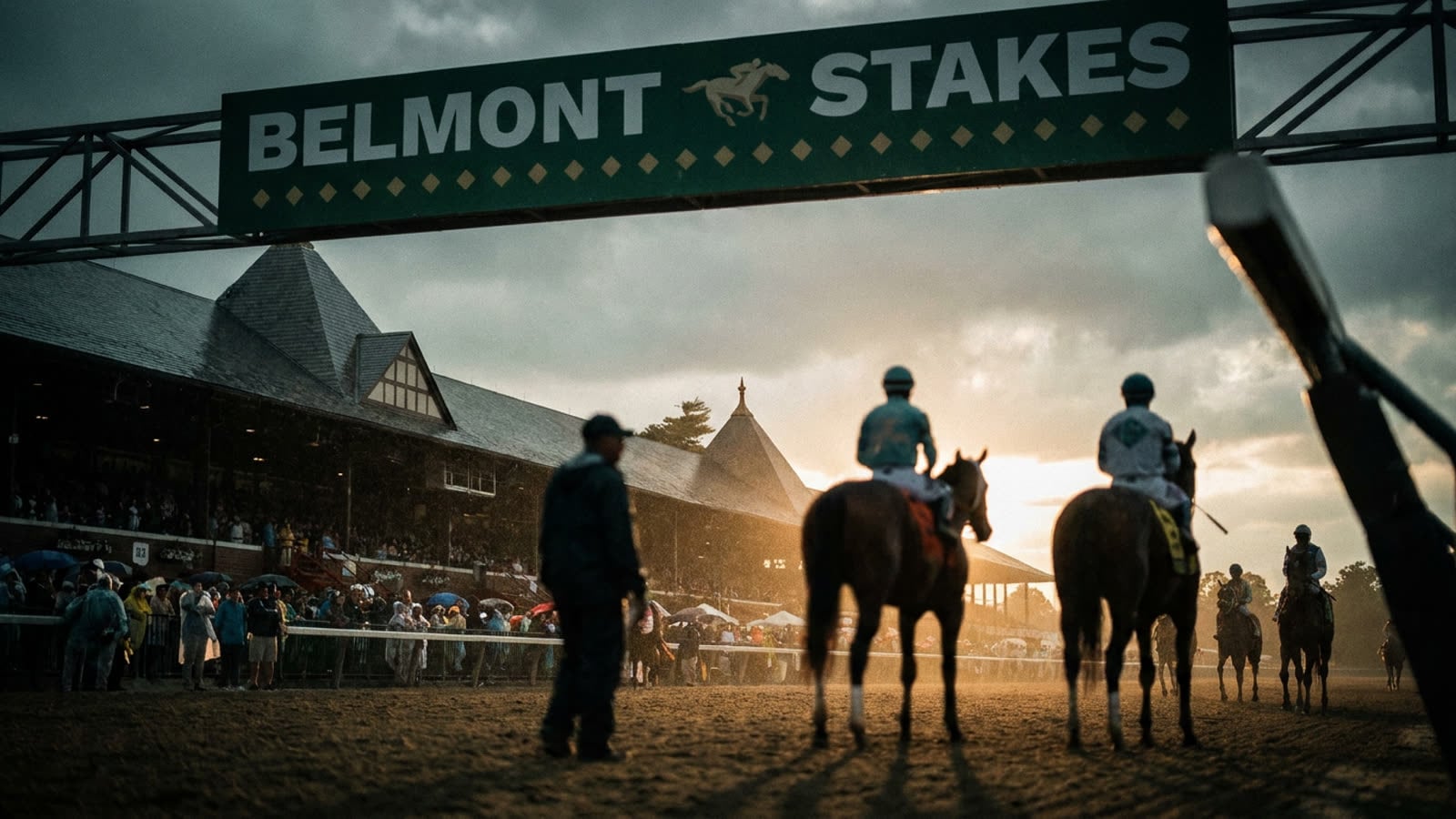
Golden Tempo crossed the finish line at Belmont Park on Saturday with the same imperious authority that carried him to victory at Churchill Downs five weeks ago, and yet the triumph felt incomplete. The colt who seemed destined for greatness after his Derby romp had stumbled at the Preakness, turning what could have been a coronation into another cautionary tale about the brutal mathematics of thoroughbred racing.
The Belmont victory was emphatic—Golden Tempo's long, ground-eating stride perfectly suited to the mile-and-a-half test that has broken so many pretenders. But horse racing's Triple Crown demands perfection across three different tracks, three different distances, and three different configurations of exhaustion. Since Justify completed the sweep in 2018, the sport has watched a parade of talented horses fall short, each near-miss reinforcing just how improbable the achievement remains.
The architecture of impossibility
The Triple Crown's design is almost perversely challenging. The Kentucky Derby rewards tactical speed over ten furlongs. The Preakness, just two weeks later, tests recovery and adaptability at a slightly shorter distance. The Belmont—the longest of the three at twelve furlongs—demands stamina that many modern thoroughbreds, bred increasingly for explosive speed rather than endurance, simply do not possess.
Golden Tempo's Preakness defeat came not from any obvious deficiency but from the accumulated toll of racing's compressed calendar. His trainer acknowledged afterward that the colt had shipped poorly to Baltimore, arriving at Pimlico slightly off his feed. In a sport where margins are measured in fractions of seconds, such minor disruptions can cascade into defeat.
The economics of almost
For Golden Tempo's connections, the Belmont win salvages what might have been a disappointing spring. The colt's syndication value, which cratered after the Preakness, will recover substantially. Two classic victories in a single season remains an extraordinary achievement, even if it falls short of immortality.
But the Triple Crown's commercial power lies precisely in its rarity. The thirteen horses who have completed the sweep since 1919 occupy a different category entirely—their names invoked with a reverence that two-time classic winners never quite achieve. Golden Tempo will retire to stud as an accomplished racehorse. He will not retire as a legend.
Our take
The Triple Crown's difficulty is a feature, not a bug. In an era when sports increasingly engineer moments of triumph—expanding playoffs, adding wild cards, manufacturing drama—horse racing's ultimate prize remains genuinely hard to win. Golden Tempo's near-miss is a reminder that excellence and perfection are not synonyms, and that the gap between them is where sports find their meaning.