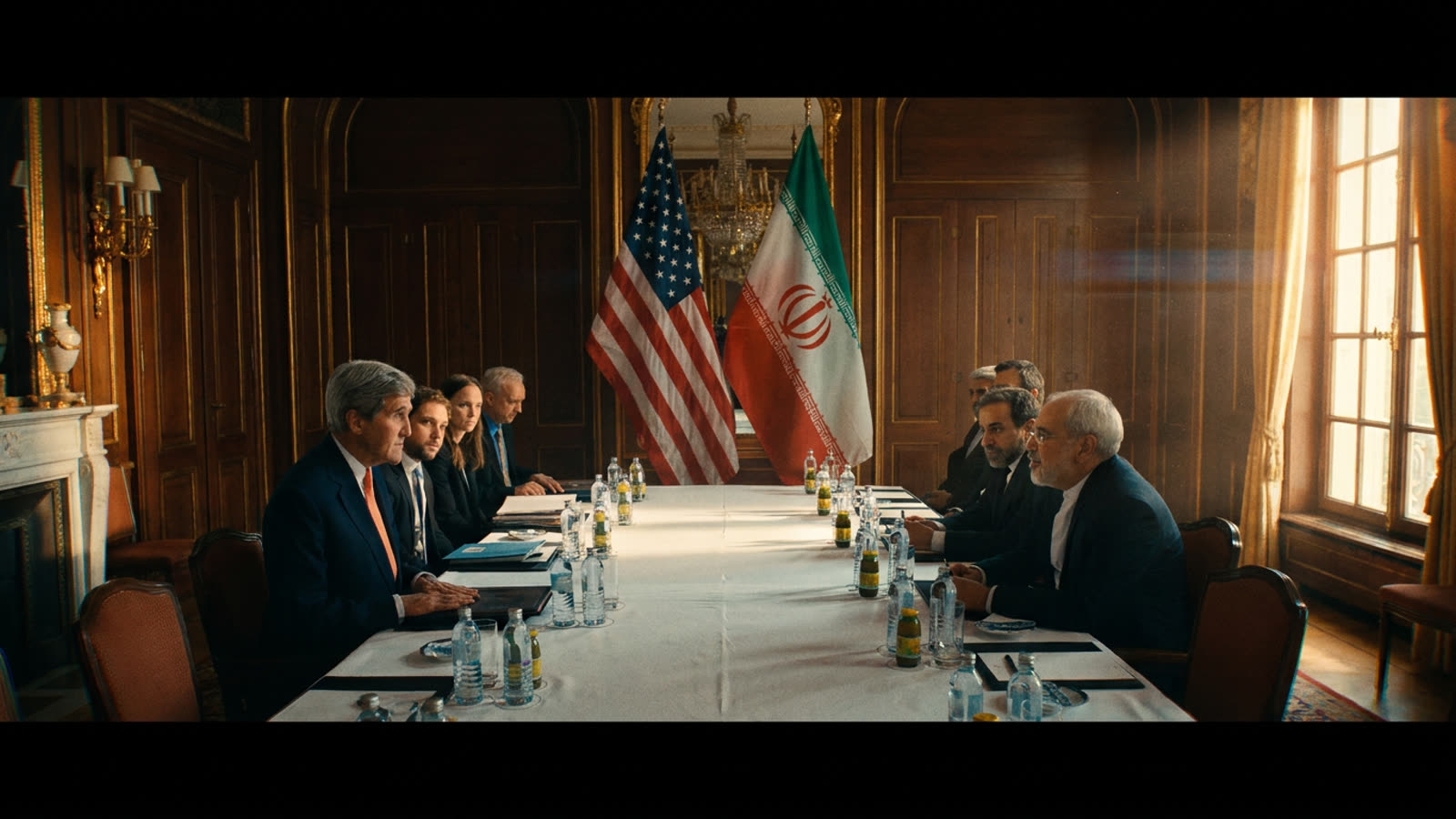
The G7 summit opening today in France has the feel of a wedding reception where the couple eloped weeks ago. The United States and Iran have already announced their agreement to end hostilities and reopen the Strait of Hormuz — the diplomatic equivalent of presenting the in-laws with a fait accompli. Now the leaders of Britain, Canada, France, Germany, Italy, and Japan must decide whether to offer enthusiastic congratulations or quiet resentment.
The timing is no accident. By convening the summit immediately after the deal's announcement, the Biden-era tradition of consulting allies before major foreign policy pivots has been definitively retired. President Trump, fresh from celebrating his eightieth birthday with UFC fights on the White House lawn, arrives in France having already reshaped the Middle East's strategic landscape without waiting for European input.
The consultation that wasn't
European diplomats spent years warning that unilateral American action on Iran would destabilize the transatlantic relationship. They got unilateral American action — just not the kind they feared. Instead of maximum pressure escalating to conflict, they received maximum dealmaking culminating in a peace they had little hand in crafting.
French President Emmanuel Macron, who has long positioned himself as Europe's chief interlocutor with both Washington and Tehran, finds himself hosting a summit where his leverage has evaporated. The Élysée Palace had prepared extensive briefing materials on potential Iranian concessions; most are now moot. Germany's Chancellor, who campaigned partly on restoring Berlin's voice in transatlantic security, arrives with nothing to restore.
The irony is thick: European leaders spent Trump's first term decrying his withdrawal from the 2015 Iran nuclear deal. Now he has delivered a broader agreement — one that addresses not just nuclear enrichment but shipping lanes and regional proxies — and they must applaud politely while processing their irrelevance.
What the summit can still accomplish
The G7 retains genuine work to do, even if the headline act has already performed. Sanctions architecture must be coordinated; European banks and energy companies need clarity on which restrictions lift and when. The humanitarian situation in Iran, where years of economic isolation have devastated ordinary citizens, requires a coordinated aid framework.
There is also the matter of verification. The Iran deal reportedly includes provisions for international monitoring of nuclear sites, but the inspection regime's details remain unpublished. European technical expertise — France's nuclear engineers, Germany's industrial inspectors — could prove essential if the agreement is to have teeth.
And then there is Ukraine. The war in Eastern Europe has not paused for Middle Eastern diplomacy. European leaders will press Trump on continued support for Kyiv, hoping that his appetite for deal-making might extend to brokering a settlement there as well.
Our take
The G7 summit in France is less a gathering of equals than a tutorial in the new transatlantic hierarchy. Trump has demonstrated that American foreign policy can be conducted as a bilateral enterprise, with allies informed rather than consulted. European leaders may resent this, but their options are limited: reject the Iran deal and look churlish, or embrace it and accept their diminished role. They will choose the latter, dress it in diplomatic language about "welcoming progress," and return home to explain why the phone did not ring before history was made.