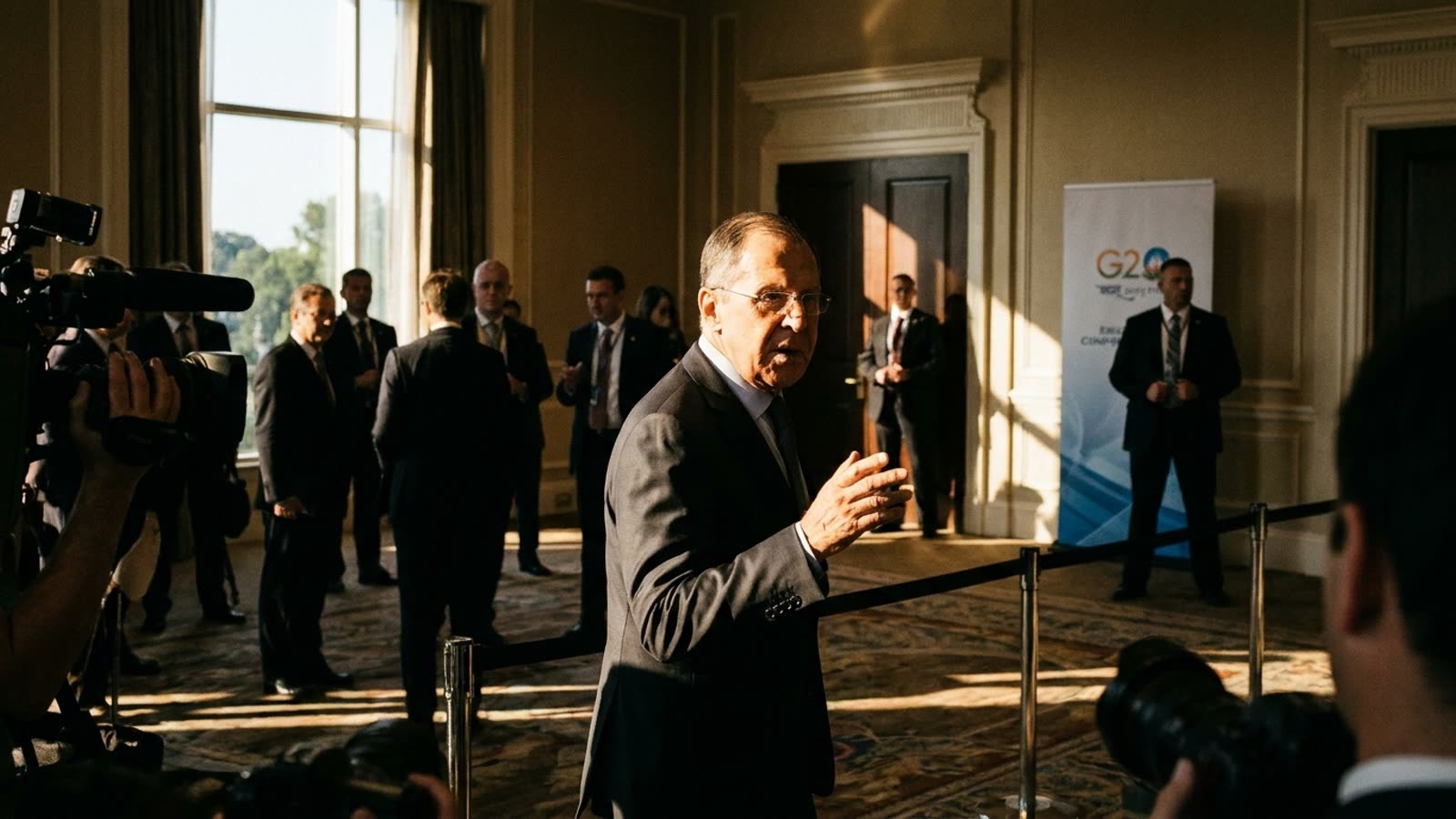
The Group of 20 has always been an exercise in managed hypocrisy — autocrats and democrats smiling for cameras, pretending the family portrait represents something other than a temporary truce among rivals. In Atlanta this week, even that thin pretense collapsed. Several European foreign ministers refused to pose alongside Russia's Sergey Lavrov, and rather than produce a photograph with visible gaps, the United States simply cancelled the session altogether.
The decision is both symbolic and substantive. Symbolic because the "family photo" has been a fixture of G20 summits since the group's elevation to leader-level meetings during the 2008 financial crisis — a visual shorthand for the idea that, whatever their differences, the world's major economies can still occupy the same frame. Substantive because the cancellation reflects a diplomatic reality that predates the photo op: the G20's utility as a forum for consensus-building has been steadily eroding since Russia's full-scale invasion of Ukraine in 2022, and the ongoing Iran conflict has only accelerated the fracture.
The Lavrov problem
Lavrov remains under personal sanctions from the European Union, the United Kingdom, and Canada. His presence at any multilateral gathering creates an immediate protocol headache — do you shake his hand? Do you acknowledge him in a corridor? The photo session forced the question into its starkest form: do you literally stand beside him?
For ministers from Poland, the Baltic states, and several Nordic countries, the answer was an emphatic no. Their refusal was not spontaneous; diplomats had been negotiating alternative arrangements for days, including the possibility of a photo with Lavrov digitally excised or positioned at the far edge. None proved acceptable. The Biden administration, now hosting its final G20 foreign ministers' meeting before the presidential transition, opted for cancellation rather than a visible schism.
What the G20 is — and isn't — for
The group was never designed to resolve geopolitical conflicts. Its original mandate was economic coordination: fiscal stimulus, financial regulation, trade facilitation. But the absence of a security mandate has not prevented security crises from hijacking its agenda. The Iran-Israel war, the disruption of Strait of Hormuz shipping, and the unresolved Ukraine conflict all loomed over the Atlanta talks. Communiqué language on each issue remained contested as of Friday evening, with Russia and China blocking references that assign blame and Western members refusing to sign anything that doesn't.
The photo cancellation is a symptom, not a cause, of this dysfunction. But symptoms matter. When the ritual of standing together becomes impossible, the ritual of working together becomes harder to sustain.
Our take
The G20 will survive this embarrassment; institutions are resilient precisely because they tolerate embarrassment. But the Atlanta summit should dispel any lingering illusion that the forum can serve as a bridge between the West and its adversaries. It cannot. What it can still do — coordinate on climate finance, debt relief, pandemic preparedness — requires lowering ambitions and accepting that the family, such as it is, will no longer pose for portraits. That is a loss, but perhaps an honest one.