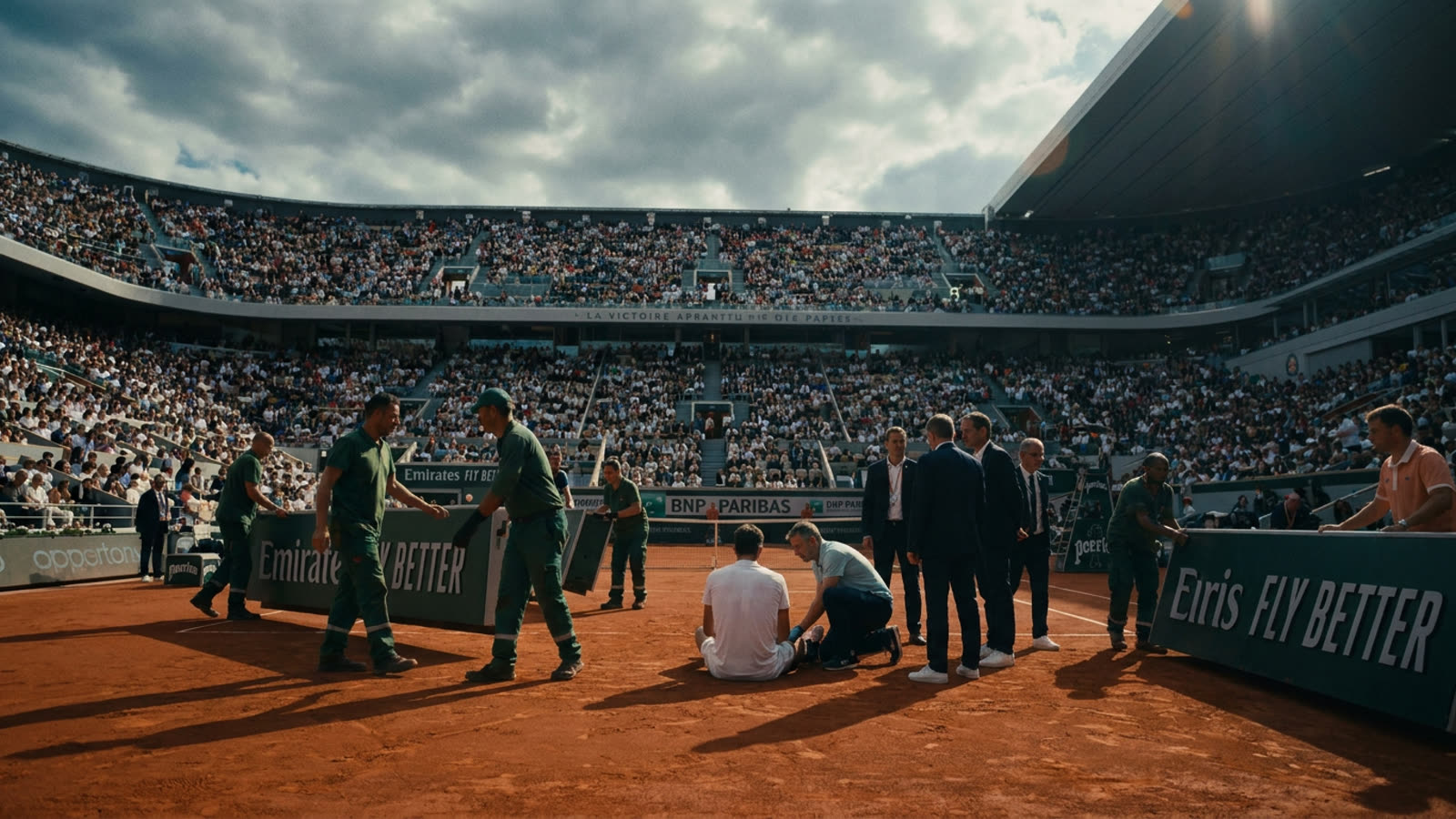
The French Open has become the first Grand Slam to acknowledge what players have complained about for years: the advertising boards ringing clay courts are too close, too hard, and too dangerous. After multiple players suffered injuries diving for shots this fortnight—and lodged formal complaints with tournament officials—Roland Garros organizers announced they would relocate certain courtside advertisements further from the playing surface.
The concession, while modest, marks a rare instance of player safety concerns actually overriding commercial considerations in professional tennis. It also raises uncomfortable questions about why it took visible injuries and public outcry to prompt action that athletes have been requesting through official channels for the better part of a decade.
The economics of every square meter
Grand Slam courts are among the most valuable advertising real estate in sports. A single courtside board at Roland Garros can command seven figures for the fortnight, and tournament organizers have steadily crept those boards closer to the baseline as broadcast technology has improved and sponsorship demand has intensified. The calculation has always been straightforward: closer boards mean more screen time, which means higher rates.
What changed this year was the visibility of the consequences. Social media amplified footage of players crashing into boards, and the complaints—previously confined to locker rooms and player council meetings—went public. Several athletes gave pointed post-match interviews questioning why their safety was subordinate to sponsor placement.
A tour-wide problem with no tour-wide solution
The French Open's response exposes a structural weakness in tennis governance. Unlike the NFL or NBA, where a single league can mandate uniform safety standards, professional tennis is fragmented across the ATP, WTA, ITF, and the four independently operated Grand Slams. Each tournament negotiates its own sponsorship deals and sets its own court dimensions within loose guidelines.
This means Roland Garros can move its boards, but the Australian Open, Wimbledon, and the US Open face no obligation to follow suit. Nor do the dozens of smaller tournaments where players compete most weeks of the year, often on courts with even less space between the baseline and the barriers.
Our take
Tennis has spent two decades professionalizing every aspect of the sport except the one that matters most to the people actually playing it. Prize money has soared, broadcast deals have multiplied, and the tour has expanded into ever more markets—all while players absorb the physical costs of that growth. The French Open's belated adjustment is welcome, but it should embarrass the sport's governing bodies that it required injuries and Instagram posts rather than proactive leadership. The commercial imperative in tennis is now so deeply embedded that athlete welfare has become an afterthought addressed only when the optics become untenable.