The cooling break was never supposed to matter tactically. FIFA introduced mandatory hydration pauses for matches played above certain temperature thresholds as a straightforward health intervention — three minutes for players to drink water, spray themselves with cooling mist, and avoid heat exhaustion. The game would resume exactly as it had been. Except it never does.
Managers discovered almost immediately that a pause in open play, with all twenty-two players gathered near their benches, presented something football almost never offers: a chance to coach during the match itself. Unlike halftime, where fifteen minutes can dilute urgency, the water break arrives when patterns are fresh, when a pressing trap that isn't working can be diagnosed in real time, when a player drifting out of position can be physically repositioned before the referee's whistle.
The geometry of three minutes
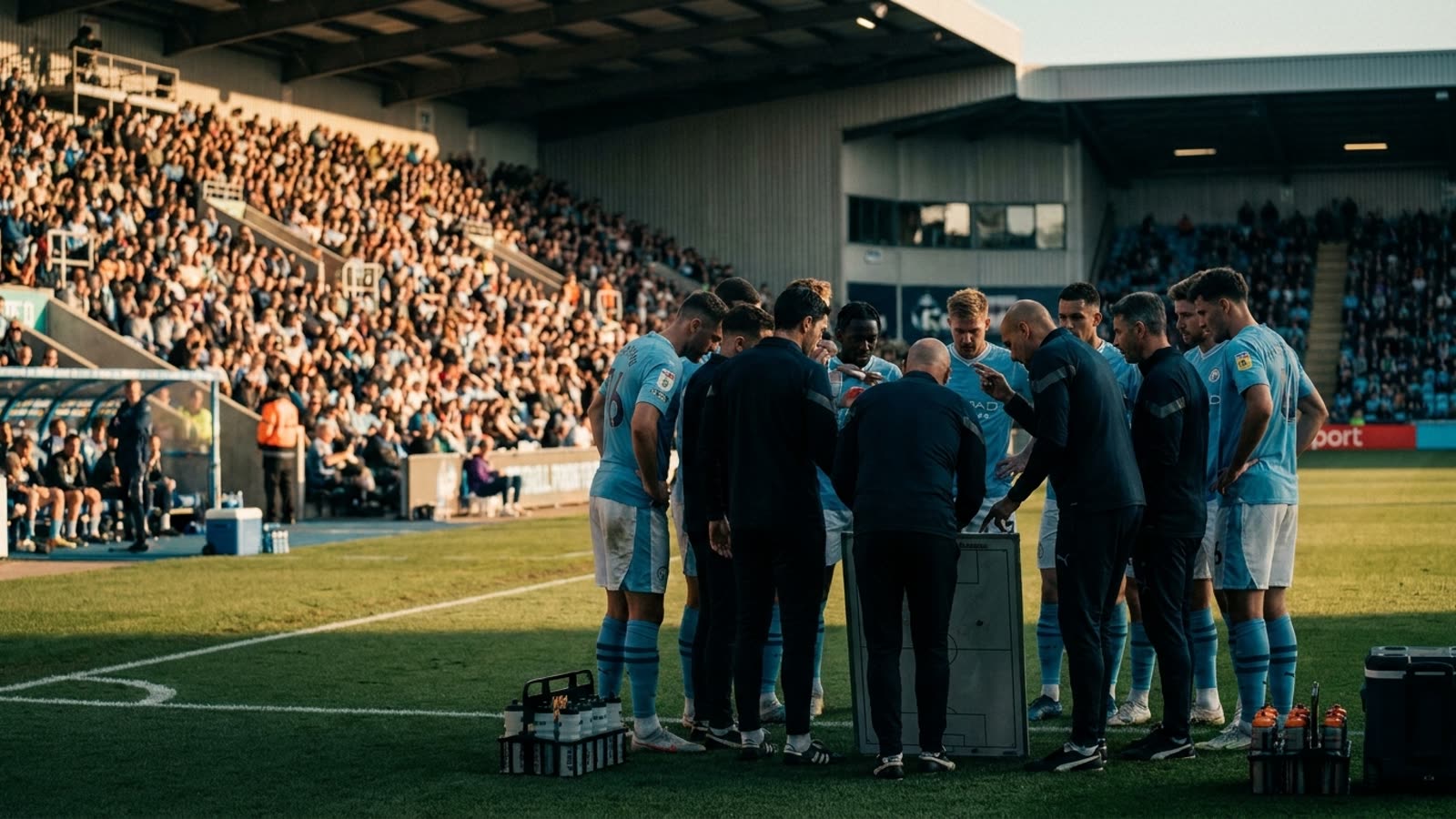
In conventional football, a manager's in-match influence is limited to shouting from the technical area, hand signals that players may or may not see, and substitutions that sacrifice personnel to change shape. The water break eliminates these constraints. Coaches can gather their entire outfield unit, draw formations on whiteboards or tablets, and issue specific instructions to individuals without the chaos of active play.
The most sophisticated managers now prepare water-break interventions as discrete tactical packages. If the opponent's full-backs are pushing high, the break becomes the moment to instruct wingers to hold their runs and exploit the space behind. If the midfield is being overrun, it's the moment to switch from a single pivot to a double pivot without making a substitution. The three minutes function as a free timeout in a sport that traditionally offers none.
Why momentum matters more than hydration
The psychological dimension may matter even more than the tactical one. Football is a game of momentum — a team that has dominated the previous twenty minutes often finds that dominance evaporating after a cooling pause. The break resets emotional intensity. A side that was chasing the ball desperately, legs heavy and minds fraying, gets to catch its breath and remember its shape. A side that was flowing finds its rhythm interrupted.
This is why managers of leading teams have occasionally expressed quiet frustration with mandatory breaks. When you're controlling a match, the last thing you want is a forced interruption that allows the opponent to regroup. The water break democratizes the match, giving the trailing side a lifeline that pure football would not.
Our take
The water break represents football's accidental experiment with American-style timeouts, and the results are instructive. Coaches will always find edges in the margins, and a sport that prides itself on continuous play has inadvertently created pockets of discontinuity ripe for exploitation. Whether this enriches the tactical spectacle or undermines football's flowing character depends on your philosophy. What's certain is that the next time you see players trudging toward the touchline for hydration, the real action is happening on the whiteboard.