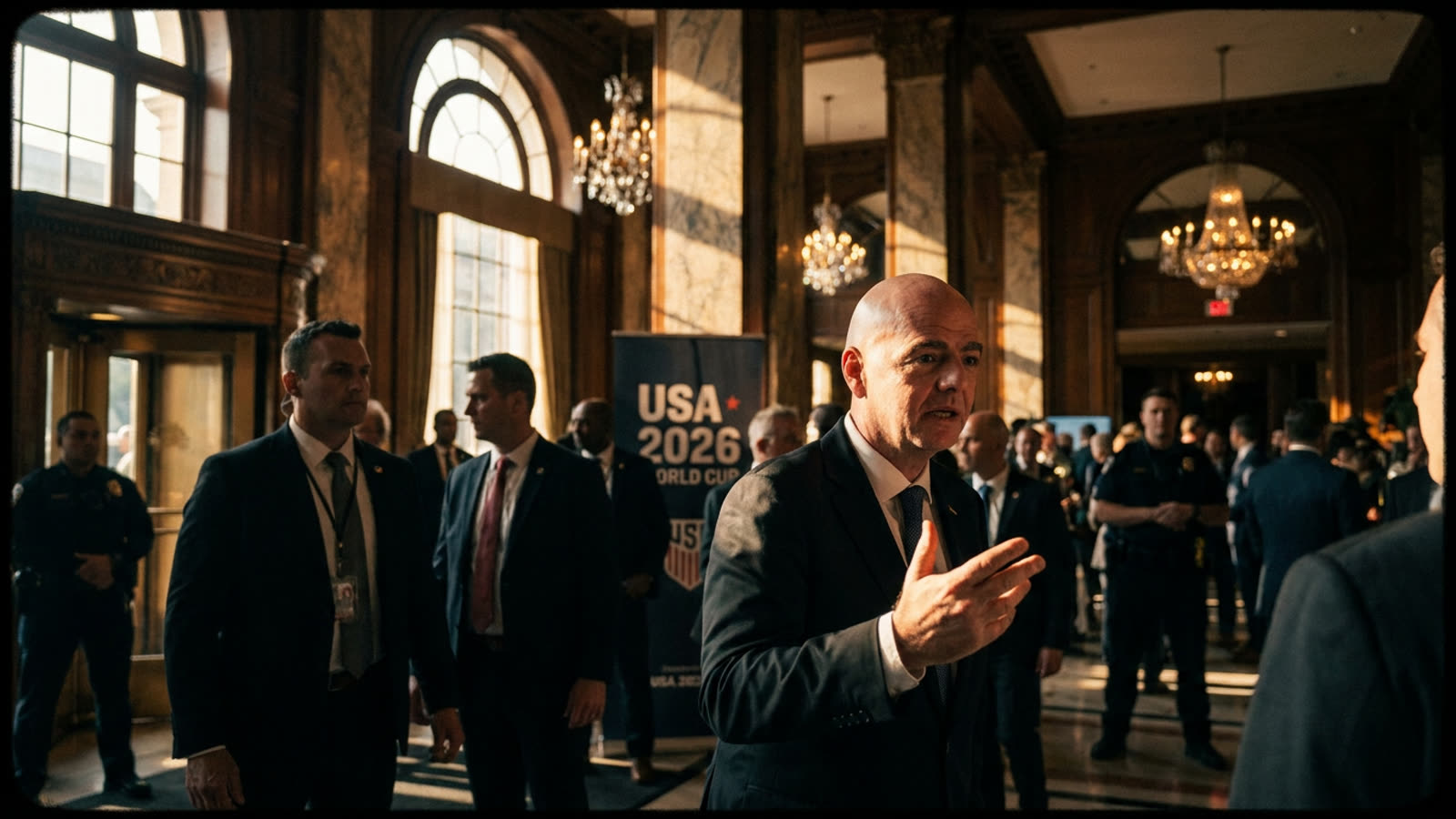
The relationship between Gianni Infantino and Donald Trump is not a friendship. It is a masterclass in transactional diplomacy, one that illuminates how international organizations secure American favor in an era when the United States has grown both more powerful and more susceptible to personal courtship.
Reporting this week has detailed years of careful cultivation: the FIFA president showering Trump with gifts, securing face time at Mar-a-Lago, and positioning himself as an ally rather than a supplicant. The 2026 World Cup, co-hosted by the United States, Canada, and Mexico, was the prize—but Infantino's long game suggests the relationship was never really about a single tournament.
The anatomy of access
Infantino understood something that many foreign leaders have grasped only belatedly: Trump responds to personal attention in ways that transcend traditional diplomatic channels. The FIFA chief's approach bypassed the State Department, the Commerce Department, and the usual machinery of international negotiation. Instead, he went directly to the man himself, bearing gifts and effusive praise.
This is not unprecedented. Saudi Arabia's Mohammed bin Salman employed similar tactics. So did Emmanuel Macron, at least initially. But Infantino's campaign stands out for its duration and its specificity—he was courting Trump well before the 2026 bid was secured, suggesting he recognized early that American politics was becoming more personalized, more transactional, and more amenable to the kind of relationship-building that FIFA has perfected in other contexts.
What FIFA wants
The World Cup is the world's most-watched sporting event, and hosting it confers enormous prestige—and profit—on FIFA itself. But the organization's ambitions extend beyond any single tournament. Infantino has pushed aggressively to expand FIFA's commercial footprint, launching new competitions and seeking deeper integration with American media and sponsorship markets.
An American president who views FIFA favorably is an asset beyond measure. It means smoother visa processes for athletes and officials, friendlier regulatory treatment, and the implicit endorsement of the world's largest economy. Infantino's investment in the relationship was not charity; it was strategic positioning for a decade of American engagement.
Our take
There is nothing illegal about giving gifts to a president, provided the proper disclosures are made. But the Infantino-Trump courtship reveals something uncomfortable about how American influence is now acquired: not through policy papers or diplomatic cables, but through the careful application of flattery to a single individual's ego. FIFA, an organization with its own long history of corruption scandals, has simply adapted to the market. The question is whether American institutions have any remaining capacity to distinguish between a partnership and a seduction.