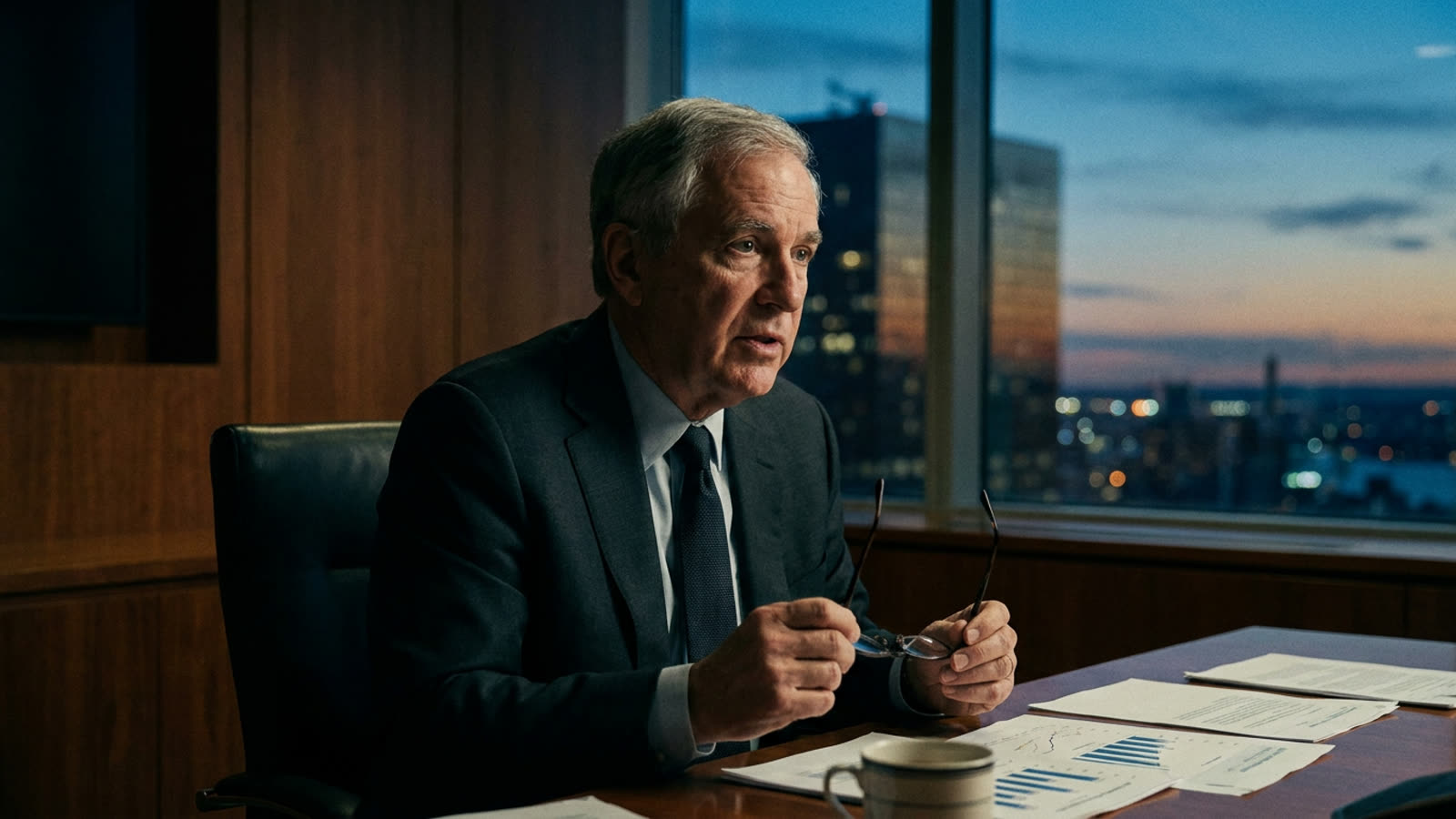
The Federal Reserve has spent the better part of four years insisting that 2% inflation was just around the corner. Bill Dudley, the former New York Fed president who spent a decade at the institution's most powerful regional bank, is done pretending the corner is in sight. In remarks that amount to a public rebuke of current policy, Dudley called the case for cutting rates "very, very weak" and warned that the Fed's credibility is now genuinely at risk after years of missing its inflation target.
This is not some permabear hedge fund manager talking his book. Dudley is a creature of the Fed system, a Goldman Sachs economist who became one of the most influential voices in American monetary policy. When he says the institution he helped run is in trouble, the bond market listens.
The Warsh inheritance
New Fed Chair Kevin Warsh arrives at the Eccles Building with a problem that predates him by years. The central bank has not sustainably hit its 2% inflation target since before the pandemic, and the cumulative credibility damage is now manifesting in Treasury yields that refuse to cooperate with the Fed's forward guidance. Citadel Securities, the market-making giant, warned separately that the Fed risks "falling behind the curve" — the polite way of saying policymakers are letting inflation expectations drift upward while they dither.
Warsh campaigned, in the peculiar way that Fed chair candidates campaign, on a platform of restoring the institution's inflation-fighting credibility. But as Bloomberg's analysis notes, he is now doomed to break with that pitch. The economy is not cooperating with a hawkish stance, and the political pressure from the administration for easier money is relentless. Treasury Secretary Bessent, meanwhile, has limited tools to arrest the climb in long-end yields that is making the government's borrowing costs increasingly painful.
The market's verdict
Franklin Templeton's Sonal Desai captured the institutional mood when she said it is "not yet the time to go all-in on long-end yields." Translation: even the bond bulls are not confident the Fed will get inflation under control anytime soon. The 10-year Treasury yield has become a referendum on Fed credibility, and the verdict is not flattering.
The irony is that Dudley's critique lands at a moment when the Fed has more reasons than usual to consider cutting rates — softening labor data, cooling consumer spending, and a manufacturing sector that never fully recovered from the post-pandemic whiplash. But cutting now would validate every critic who said the Fed was always going to blink before finishing the inflation fight.
Our take
Dudley is right, and that is precisely the problem. The Fed painted itself into this corner by declaring victory on inflation prematurely in 2024, then watching prices re-accelerate. Now Warsh inherits an institution whose words carry less weight than they did a decade ago. The central bank can either hold rates and risk a recession it will be blamed for, or cut rates and confirm that 2% is an aspiration rather than a target. Neither option restores credibility. The Fed's real problem is not the rate decision in front of it — it is the half-dozen rate decisions behind it that trained markets to doubt.