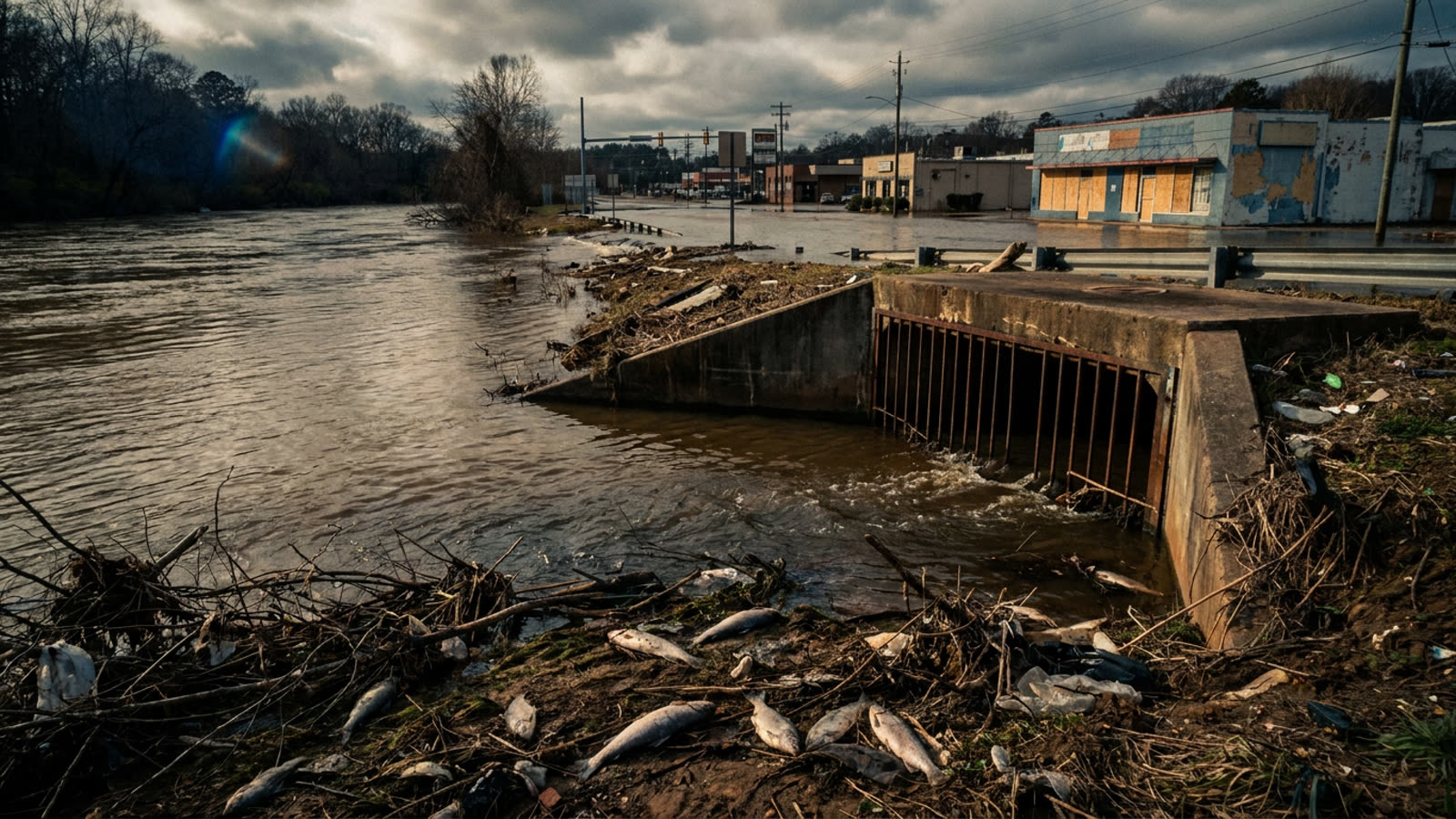
When a downpour over Atlanta's northern suburbs sent a toxic pulse of runoff into the Chattahoochee River last week, the immediate casualties were measured in thousands of dead fish floating belly-up through one of the Southeast's most economically vital watersheds. The longer-term damage will be measured in dollars, reputation, and the growing gap between Sun Belt growth narratives and Sun Belt infrastructure reality.
The fish kill—among the largest recorded on the Chattahoochee in recent memory—resulted from a familiar cascade: impervious surfaces channeling stormwater directly into tributaries, carrying with it fertilizer runoff, petroleum residue, and oxygen-depleting organic matter. The river, which supplies drinking water to more than five million people and anchors a recreation economy worth hundreds of millions annually, absorbed the shock in the most visible way possible.
The infrastructure deficit comes due
Atlanta has spent two decades marketing itself as the capital of the New South—a business-friendly alternative to coastal metros with their congestion, regulation, and expense. The pitch worked. Metro Atlanta added more than a million residents since 2010, and corporate relocations from California and the Northeast became a steady drumbeat.
But population growth outpaced infrastructure investment. Stormwater systems designed for a smaller, less paved metropolitan area now struggle to handle the runoff from endless subdivisions, distribution centers, and parking lots spreading north toward the mountains. The Chattahoochee, once buffered by forests and wetlands, increasingly receives whatever washes off the region's expanding hardscape.
Economic exposure multiplies
The immediate economic hit is modest—fishing guides canceling trips, kayak outfitters warning customers away, riverfront restaurants fielding questions about water quality. But the compounding effects matter more. Corporate site selectors increasingly factor environmental resilience into relocation decisions. Insurance actuaries are repricing climate and infrastructure risk across the Sun Belt. And the Chattahoochee's role as a drinking water source means any sustained degradation creates regulatory and public health complications that ripple through every sector.
Atlanta is hardly alone. Phoenix faces aquifer depletion, Houston floods with metronomic regularity, and Miami's drainage systems struggle against rising seas. The Sun Belt growth model assumed infrastructure could be backfilled later. Later is arriving.
Our take
Dead fish make for dramatic photographs but poor policy catalysts—the news cycle moves on, the river eventually recovers, and the development permits keep getting approved. That's the trap. Atlanta's economic success was built on being cheaper and easier than the alternatives. Maintaining that edge while retrofitting infrastructure for a larger, wetter, more volatile climate will require spending money the region's low-tax political culture has been reluctant to authorize. The Chattahoochee just sent an invoice. Whether anyone opens it is another matter.