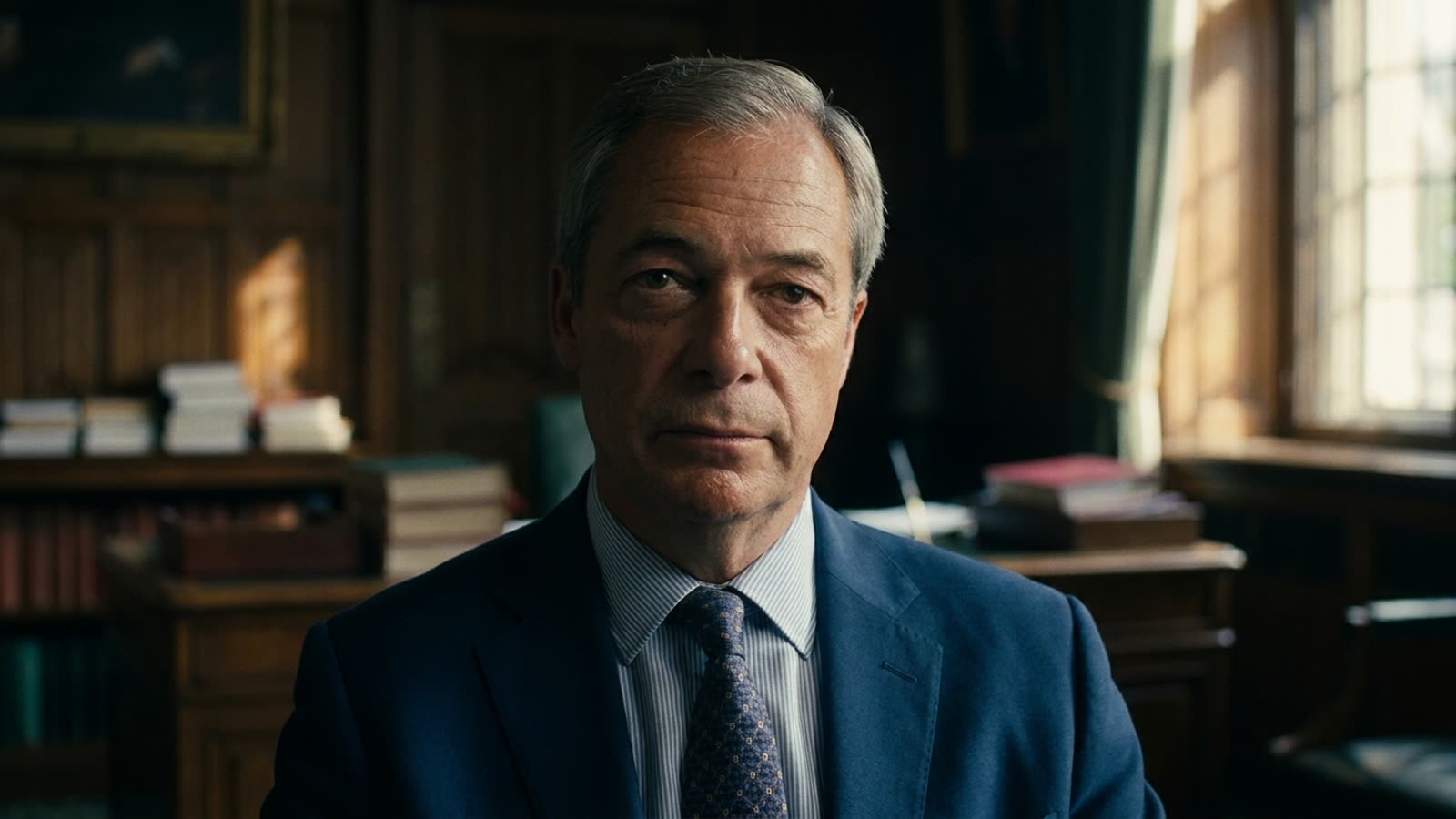
The man who built his political brand on sovereignty and straight talk now finds himself ensnared by the very transparency that cryptocurrency evangelists celebrate. Nigel Farage, leader of Reform UK and perennial disruptor of British politics, is facing a formal Parliamentary investigation into whether he properly declared a £5.4 million ($6.8 million) gift from a crypto billionaire—a sum that would make it one of the largest political donations in recent British history.
The Parliamentary Commissioner for Standards has opened the probe following reports that Farage received the funds from Justin Sun, the Tronix blockchain founder who has cultivated a reputation for flamboyant wealth and regulatory friction. If the commissioner finds Farage violated the House of Commons code of conduct, he could face suspension from Parliament—an ignominious outcome for a politician who has spent decades positioning himself as the authentic voice of British populism.
The Sun connection
Justin Sun is not a subtle benefactor. The Chinese-born, Grenadian-passport-holding entrepreneur has spent lavishly to insert himself into elite circles, from paying $6.2 million for a Giacometti sculpture to dining with Donald Trump after winning a charity auction. His blockchain platform, Tron, has faced scrutiny from the SEC over alleged securities violations, though Sun has denied wrongdoing. For Farage, accepting such a gift—assuming the reports are accurate—represents either remarkable naïveté about political optics or a calculated bet that his base simply does not care.
The timing compounds the awkwardness. Reform UK has been riding high in British polls, with some surveys placing it ahead of the governing Labour Party. A standards investigation, even if it ultimately clears Farage, introduces friction at precisely the moment when the party is attempting to present itself as a credible governing alternative rather than a protest vehicle.
Crypto's political entanglements
The Farage affair is the latest chapter in cryptocurrency's complicated relationship with democratic politics. In the United States, crypto PACs spent over $130 million in the 2024 election cycle, helping to elect candidates sympathetic to lighter regulation. The industry has learned that political access is purchasable, and wealthy founders have proven willing to write large checks.
But the blockchain's permanent ledger means that money flows can be traced with uncomfortable precision. Sun's wealth is visible; his transactions are auditable; his associations are documented. The same technology that promises financial freedom also creates an indelible record of who gave what to whom. For politicians accustomed to the genteel opacity of traditional donor relationships, crypto money comes with strings attached—strings made of cryptographic proof.
Our take
Farage has survived scandals that would have ended lesser careers, and he may well survive this one. But there is a particular irony in watching a politician who championed Brexit on grounds of accountability now struggling to account for millions in foreign cryptocurrency wealth. The probe may find no wrongdoing. It may find technical violations that result in a slap on the wrist. What it has already found, however, is that in the age of blockchain politics, the money always talks—and it talks on the record.