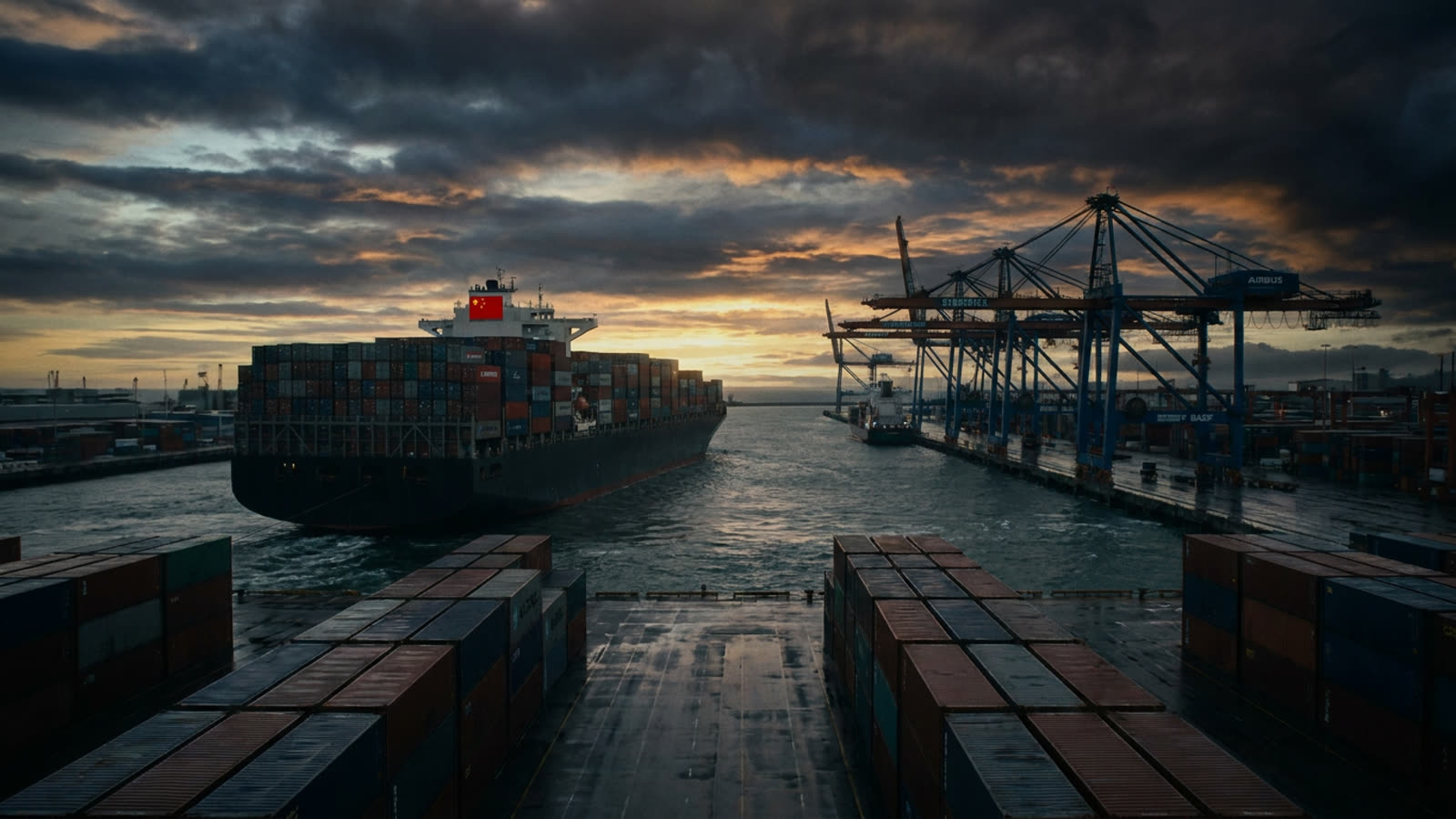
The European Union has spent decades perfecting the art of the strongly worded statement. Now, as it edges toward imposing punitive tariffs on Chinese electric vehicles, Brussels is discovering that Beijing has perfected something else entirely: the art of making trading partners regret their leverage.
The bloc's anti-subsidy investigation into Chinese EVs, launched in late 2023, is approaching its endgame. Provisional duties could land as early as this summer, with rates potentially exceeding 25 percent on top of existing 10 percent levies. The Commission frames this as defending European industry from unfair competition. What it actually represents is a test of whether the EU can conduct economic statecraft without the United States holding its hand—and early signs suggest the answer is no.
The subsidy question nobody wants to answer
Brussels's legal case is straightforward: Chinese EV manufacturers benefit from state subsidies that European competitors cannot match, distorting the market. This is almost certainly true. BYD, SAIC, and their peers have received everything from cheap land to below-market loans to direct cash injections from provincial governments eager to dominate the industry of the future.
But the EU's righteous framing obscures an uncomfortable reality. European automakers spent the past two decades chasing diesel efficiency while Chinese firms bet on electrification. Volkswagen, Stellantis, and BMW are not losing market share because Beijing cheats; they are losing because Shenzhen built better cars faster. Tariffs do not fix a fifteen-year innovation gap. They buy time—time that European manufacturers have shown little evidence of knowing how to use.
Beijing's asymmetric arsenal
China's response has been calibrated to exploit Europe's divisions. Rather than blanket retaliation, Beijing has targeted specific member states with surgical precision. French cognac producers face anti-dumping probes. Spanish pork exporters watch nervously as Chinese inspectors discover newfound concerns about quality standards. German chemical giants receive quiet warnings about their substantial China operations.
The strategy is elegant in its cruelty: punish the loudest voices for tariffs while rewarding the silent. Hungary and Greece, already skeptical of confrontation with Beijing, now have economic cover for their political reluctance. The unanimity required for serious EU trade action becomes mathematically improbable when a third of member states calculate that appeasement pays better than solidarity.
The American shadow
Europe's timing could hardly be worse. The Trump administration's return has produced an American trade policy that treats allies and adversaries with equal suspicion. Brussels cannot count on Washington to coordinate pressure on Beijing; it may instead find itself squeezed from both directions, facing American tariffs on European goods even as it battles Chinese ones.
This leaves the EU in an impossible position. Escalate against China alone, and European exporters absorb retaliation without American backup. Back down, and the bloc confirms what Beijing has long suspected: that European threats are performances for domestic audiences, not genuine policy commitments.
Our take
The EU's EV tariffs are not wrong on the merits—Chinese subsidies are real, and market distortions deserve responses. But Europe is attempting great-power competition with a committee structure designed for agricultural quotas. Brussels will likely impose some tariffs, declare victory, and watch as Chinese manufacturers simply route production through Hungary or Morocco, as European farmers lose access to Chinese consumers, and as the fundamental competitive gap remains unchanged. The trade war Europe is edging toward is one it can survive but cannot win. That distinction matters less to politicians than to the industries they claim to be protecting.