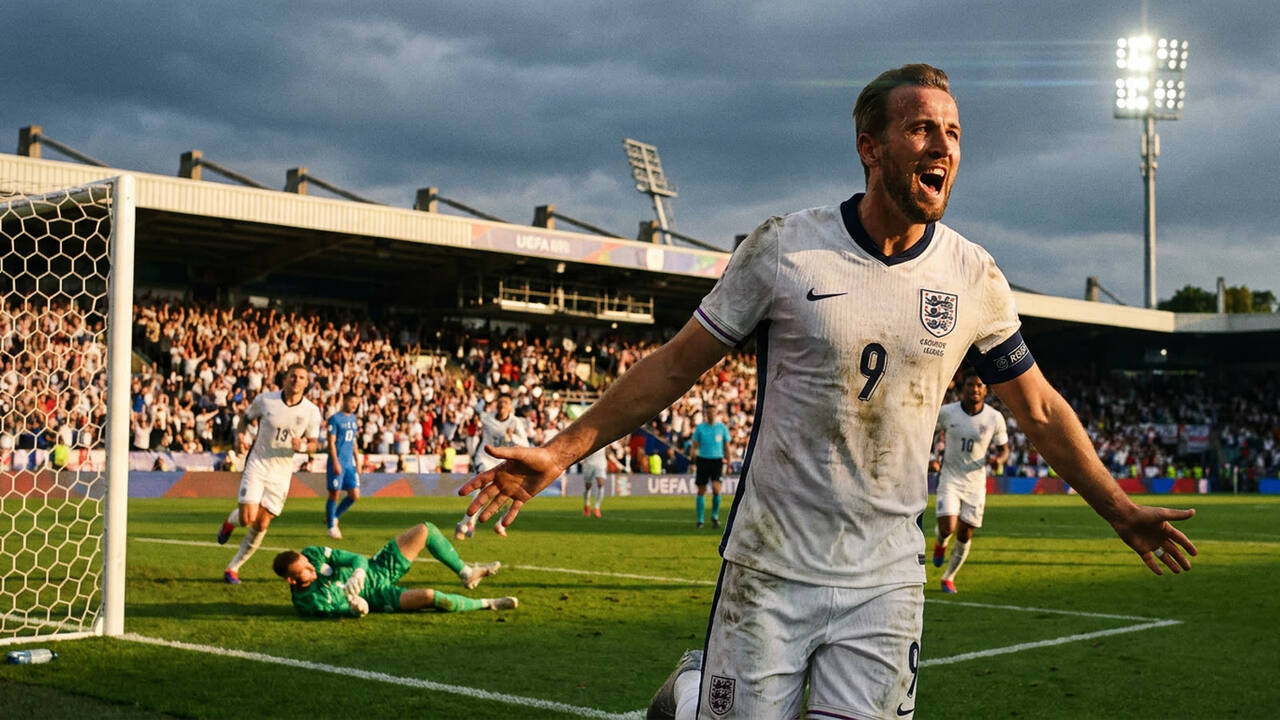
Harry Kane's penalty stroke in the first half was technically unremarkable—a confident side-foot into the bottom corner, goalkeeper diving the wrong way—but its significance extended well beyond the scoreline. After a frustrating opening fixture in which England dominated possession yet failed to convert, the Tottenham-turned-Bayern striker has announced that his World Cup has properly started.
The early goal transformed the match's entire texture. England, who had looked tentative and over-coached in their tournament debut, suddenly played with the freedom that Gareth Southgate's critics have long demanded. The ball moved faster, the pressing intensified, and Kane himself began dropping deeper to orchestrate rather than waiting isolated in the box.
The penalty question
Kane's spot-kick record remains one of international football's most reliable certainties. His conversion rate from twelve yards hovers near ninety percent across club and country, a statistical anomaly that owes as much to psychological steadiness as technical precision. Opponents know where he tends to place it; they simply cannot stop it.
The foul that earned the penalty was itself instructive. Kane's movement into the channel drew a panicked challenge from a defender who had been warned about his runs all week. At thirty-two, Kane has lost half a step of pace but compensated with positioning intelligence that borders on clairvoyance. He knows where the ball will arrive before the passer does.
England's broader puzzle
Yet the early lead also exposed questions that will resurface against sterner opposition. England's midfield remains oddly configured, with Declan Rice asked to cover acreage that would exhaust a younger man, while the creative burden falls almost entirely on Jude Bellingham's shoulders. When Bellingham tired in the second half, England's attacking rhythm flatlined.
Southgate's substitution patterns suggested he recognizes the issue. Fresh legs in midfield stabilized possession, though the manager's reluctance to unleash his bench attackers until the final fifteen minutes frustrated supporters who remember his conservative instincts from previous tournaments.
Our take
Kane's penalty was the least surprising event of the World Cup so far, which is precisely why it mattered. England needed their captain to do the obvious thing obviously well, and he obliged. The harder questions—whether this squad possesses the depth and tactical flexibility to survive knockout football—remain unanswered. But for one afternoon, a converted penalty bought Southgate time and bought Kane the confidence that tournament strikers require. Sometimes the boring solution is the correct one.