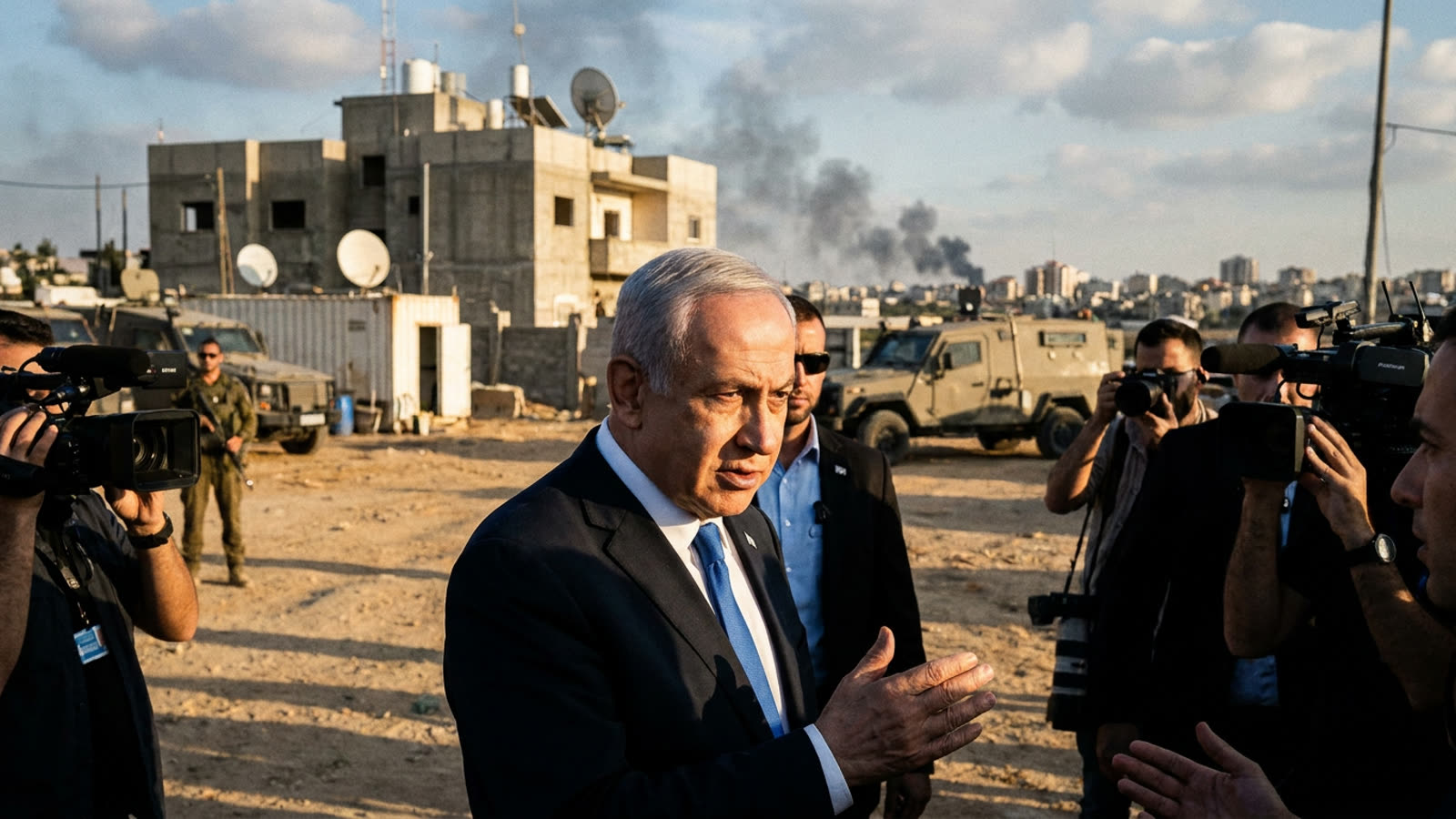
The juxtaposition has become so routine it barely registers as irony anymore: Egypt convened fresh ceasefire negotiations in Cairo this weekend even as Israeli strikes killed nine people in Gaza, including children. The diplomatic calendar and the military calendar have learned to coexist, each operating on its own timeline, intersecting only in press releases.
This is the summer of 2026's Middle East in miniature—talks that never quite collapse, violence that never quite stops, and a humanitarian catastrophe that has become background noise to the world's attention economy.
The Egyptian gambit
Cairo has positioned itself as the indispensable mediator, a role that serves President Sisi's interests in multiple directions. Hosting negotiations burnishes Egypt's credentials with Washington, provides leverage over Hamas (which depends on Egyptian goodwill for whatever limited access Gaza has to the outside world), and keeps Cairo relevant in a regional order being reshaped by the Abraham Accords and their aftermath.
The talks themselves follow a familiar pattern. Hamas demands a permanent ceasefire and full Israeli withdrawal; Israel insists on maintaining security control and the return of hostages. The gaps are not new. What's new is the exhaustion—among mediators, among the populations enduring the violence, among the international community that has largely moved on to other crises.
The violence beneath the diplomacy
Nine dead in Gaza on the same day negotiations resume is not an aberration; it is the baseline. The Israeli military continues operations it describes as targeting Hamas infrastructure, while Palestinian health authorities document a civilian toll that has become numbing in its scale. The war that began in October 2023 has now ground on for nearly three years, transforming Gaza into something between a humanitarian emergency and a permanent state of siege.
The death toll has long since passed the point where individual tragedies register internationally. Children killed in airstrikes become statistics, then footnotes, then silence. This is not cynicism; it is the documented psychology of compassion fatigue, and it has political consequences. Without sustained international pressure, neither party faces meaningful incentives to accept terms it finds unfavorable.
Why these talks probably won't succeed either
The structural obstacles to a ceasefire remain unchanged. Netanyahu's coalition depends on hardline partners who oppose any deal that could be framed as a Hamas victory. Hamas's leadership, dispersed between Gaza, Qatar, and elsewhere, has little reason to trust Israeli security guarantees. The United States, nominally the most powerful external actor, is consumed by its own crisis with Iran and has limited bandwidth for Gaza diplomacy.
Egypt will host the talks, issue cautiously optimistic statements, and eventually announce a pause for "consultations." The violence will continue. The cycle will repeat.
Our take
There is something almost obscene about the ritual of ceasefire negotiations conducted while the killing continues unabated. It allows all parties—the belligerents, the mediators, the international community—to gesture toward peace without actually achieving it. Egypt gets diplomatic credit, Israel maintains military pressure, Hamas survives another news cycle, and the people of Gaza endure another day of war. The talks are not a path to peace; they are a substitute for it, a performance that has become its own purpose. Until someone decides that ending the war matters more than managing it, Cairo's conference rooms will remain busy and Gaza's morgues will remain full.