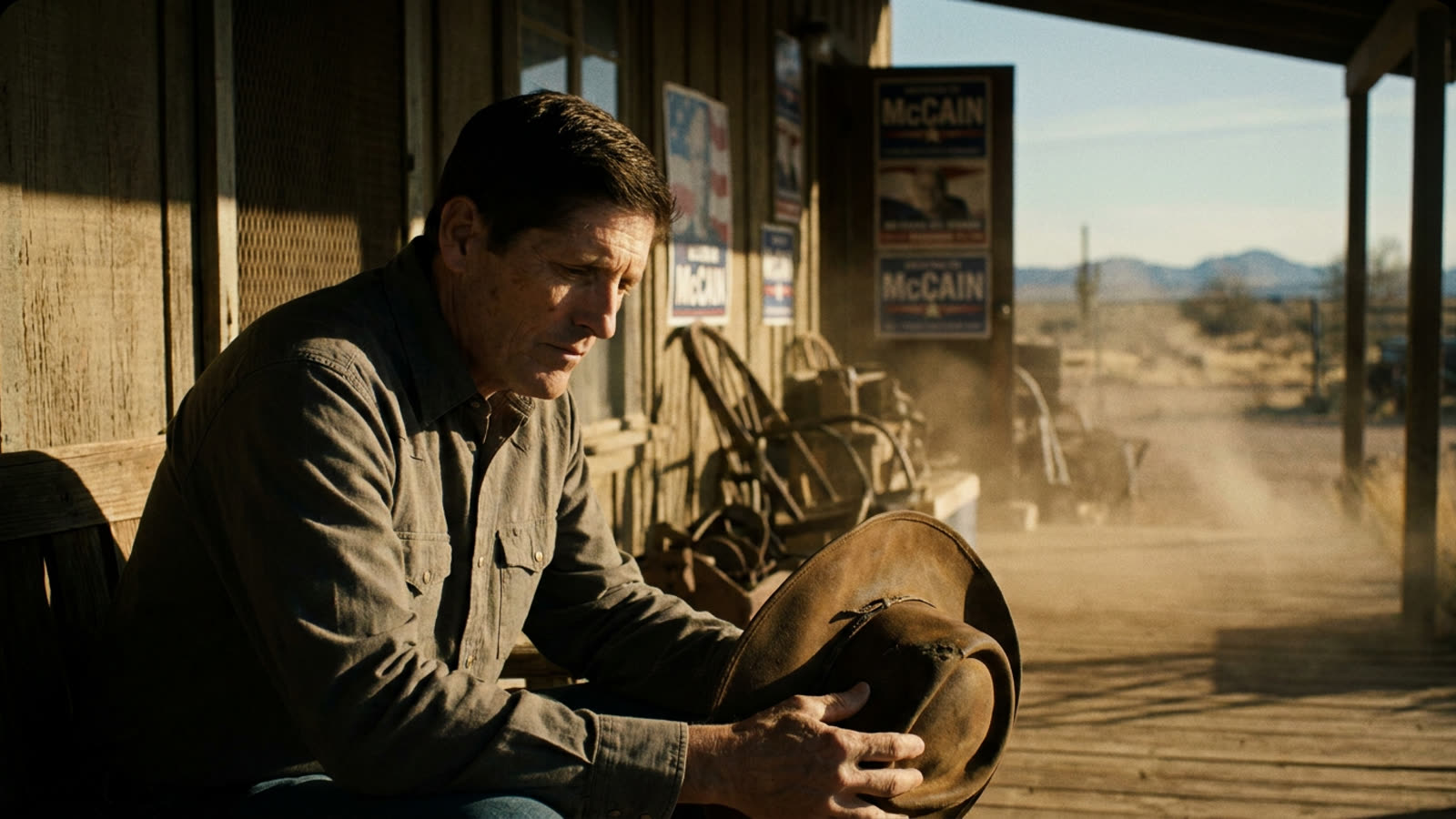
Doug McCain lived most of his life in deliberate obscurity, a choice that distinguished him from the sprawling, headline-generating clan that bore his surname. His death this week at 66 closes a chapter for a family that once represented a particular strain of American political identity—military service, institutional respect, bipartisan compromise—that feels almost archaeological in 2026.
The eldest of John McCain's seven children, Doug was born during the senator's first marriage to Carol Shepp and largely avoided the political spotlight that consumed his father's life and, to varying degrees, his siblings'. While Meghan McCain became a media fixture and Jack McCain pursued military service that echoed his father's, Doug charted a quieter path.
The weight of a name
Being a McCain in Arizona meant something specific: it meant your father was a war hero, a presidential candidate twice over, and eventually the Republican who voted to save the Affordable Care Act with a dramatic thumbs-down that enraged Donald Trump. It meant Thanksgiving dinners where foreign policy was table talk and where the definition of patriotism was both assumed and contested.
Doug's relative anonymity was itself a statement. In families where public service is treated as obligation, stepping back requires its own courage. He reportedly maintained close relationships with his siblings despite the blended-family complexity that came with his parents' divorce and his father's remarriage to Cindy Hensley.
A dynasty in twilight
John McCain died in August 2018, nearly eight years ago now, from glioblastoma. His funeral became a bipartisan spectacle—Barack Obama and George W. Bush delivered eulogies, pointedly excluding the sitting president. The McCain name became shorthand for a Republican Party that no longer existed, or perhaps never quite did.
Doug's death arrives as that transformation is complete. The GOP of 2026 bears no resemblance to his father's party of internationalism and institutional deference. Whether that represents progress or decline depends entirely on whom you ask, but the McCain brand of conservatism is undeniably extinct in any meaningful electoral sense.
Our take
There is something poignant about outliving your own relevance, and the McCain family has experienced this collectively. Doug McCain chose privacy in a family that made privacy nearly impossible, and that choice deserves respect. His death is not a major news event by conventional metrics—he held no office, commanded no headlines. But it marks another step in the slow fade of a political dynasty that, for better or worse, represented an America that believed its institutions would hold. They did not, but the McCains believed they would, and that belief was not nothing.