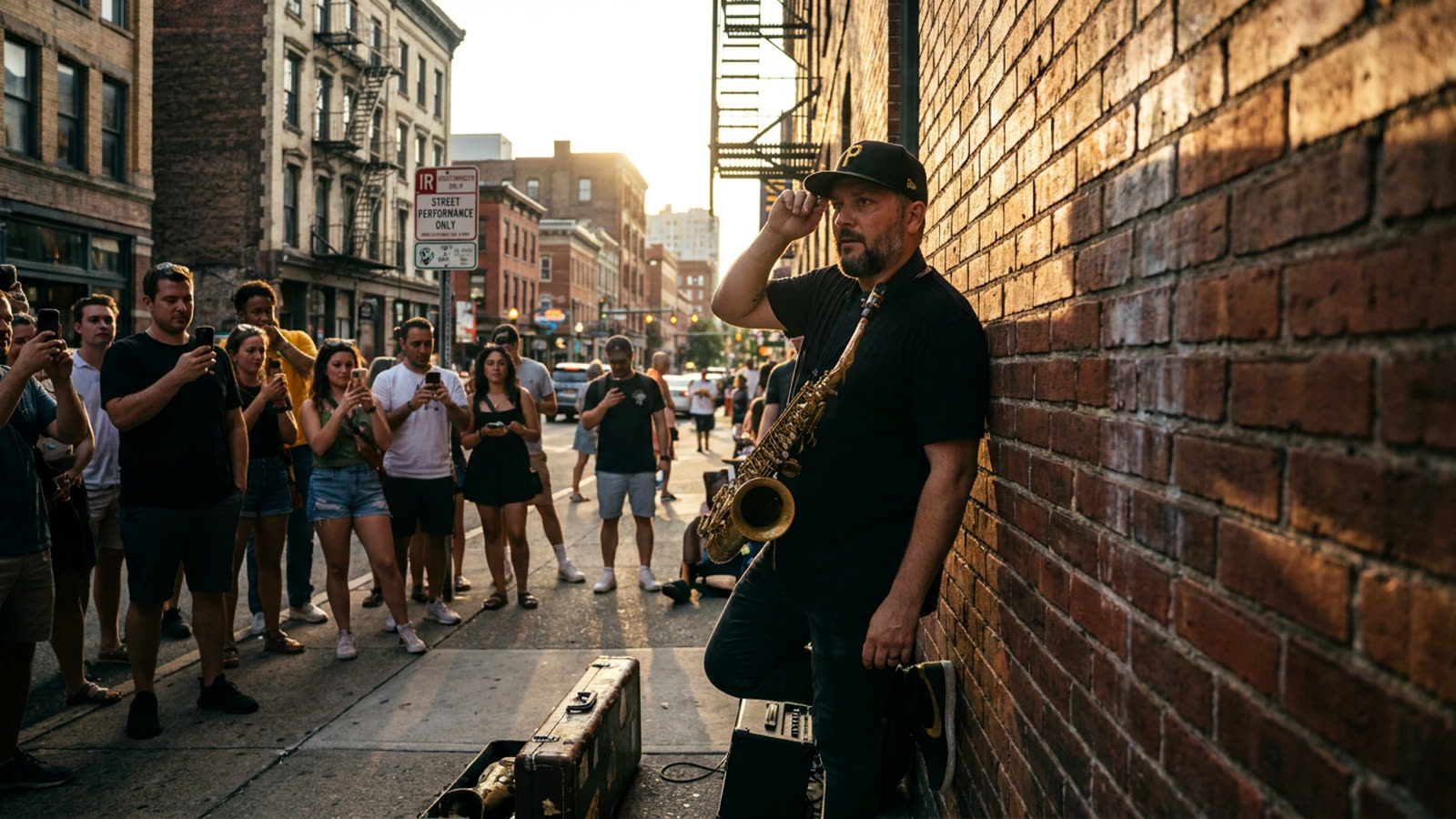
A young man plays saxophone on a city sidewalk, his case open for tips, and within weeks he has more followers than most signed musicians will accumulate in a career. SaxBoy Billy—the moniker itself a perfect marriage of instrument and internet-era branding—represents the latest iteration of a phenomenon that has quietly restructured the economics of street performance: the viral busker.
The formula is now well-established. A performer with genuine talent and photogenic appeal gets filmed by a passerby. The clip lands on TikTok's For You page. Comments flood in—"protect him at all costs," "why is this better than anything on the radio"—and within days, the algorithm has manufactured a folk hero. Billy's saxophone covers, heavy on smooth jazz inflections and crowd-pleasing pop melodies, have proven irresistible to the platform's recommendation engine.
The new economics of the sidewalk
What distinguishes this generation of street performers from their predecessors isn't talent—buskers have always been skilled—but leverage. A decade ago, a saxophonist in Billy's position might have hoped for a few hundred dollars in daily tips and perhaps a local news segment. Now, the calculus includes brand partnerships, Spotify playlists, and the very real possibility of a record deal. The open instrument case has become a loss leader for the content economy.
This shift has not gone unnoticed by municipalities. Several major cities have begun requiring permits specifically for performers who attract filming crowds, recognizing that a viral busker creates different logistical challenges than a traditional one. The audience isn't just listening anymore; they're producing.
Authenticity as performance
The paradox at the heart of SaxBoy Billy's appeal is that his supposed authenticity—the raw, unmediated quality of street performance—is precisely what makes him so shareable. Viewers consume his videos as an antidote to the overproduced content that dominates their feeds, even as his clips are edited, hashtagged, and optimized for maximum reach. The sidewalk becomes a set; the tips become props.
This isn't a criticism of Billy himself, who by all accounts is a talented musician making the most of available platforms. It's an observation about what audiences now want from their entertainment: the appearance of discovery, the feeling of having found something before it was found.
Our take
SaxBoy Billy will likely parlay this moment into something more durable—a tour, an album, perhaps a sync licensing deal that puts his saxophone behind a car commercial. Good for him. But his rise is less a story about individual talent than about the infrastructure that now exists to identify, amplify, and monetize that talent at unprecedented speed. The busker's hat is now a funnel to the algorithm, and we're all dropping coins into it whether we realize it or not.