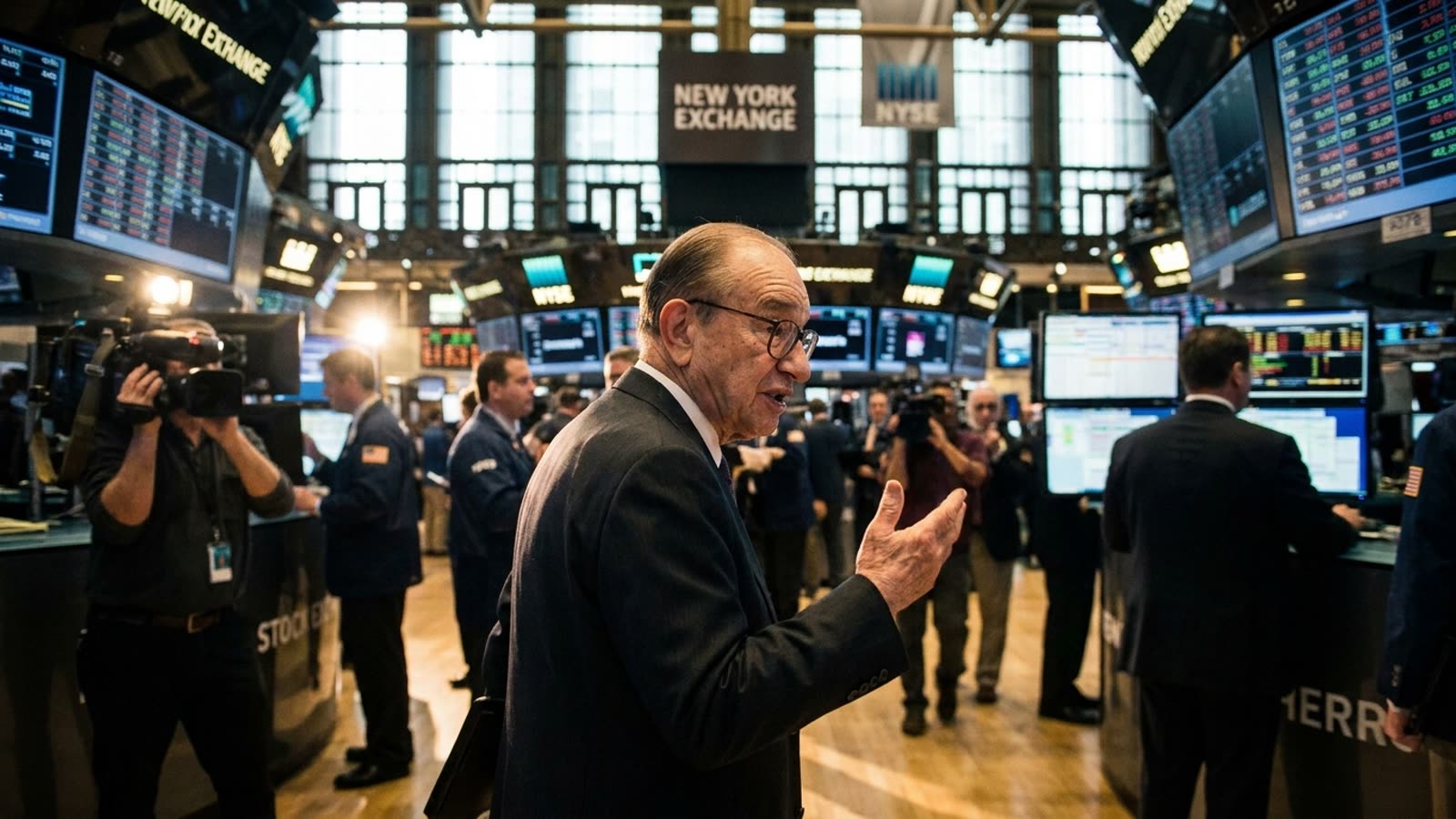
When the global economy gets sick, something counterintuitive happens: the dollar gets stronger. Not because America is doing well, necessarily, but because everyone else is doing worse. This phenomenon has a name, and it sounds like something you'd order at a diner.
The dollar milkshake theory, popularized by Santiago Capital's Brent Johnson, argues that the United States sits at the center of global finance with the world's largest straw, sucking up capital from everywhere else whenever stress emerges. The metaphor is deliberately crude. It's also remarkably predictive.
The mechanics of the straw
The theory rests on a structural reality: the world runs on dollars. Roughly half of all international trade is invoiced in dollars. About sixty percent of global foreign exchange reserves are held in dollars. When a Brazilian company borrows from a Japanese bank to buy German machinery, the transaction probably clears through New York.
This creates a peculiar dynamic during crises. When uncertainty rises, investors don't just seek safety—they seek dollar-denominated safety. Treasury bonds, money market funds, even just cash in American banks. The demand for dollars increases precisely when the global economy is struggling, which strengthens the dollar, which makes dollar-denominated debts harder to service for everyone else, which creates more stress, which increases dollar demand further.
It's a feedback loop that enriches the center at the expense of the periphery. Critics call it financial imperialism. Proponents call it the natural result of having the deepest, most liquid capital markets on earth. Both are probably right.
Why emerging markets hate this
For countries that borrow in dollars but earn revenue in local currency, a strengthening dollar is an economic vice. Their debts become more expensive to service. Their imports cost more. Their central banks face an impossible choice: raise interest rates to defend the currency and crush domestic growth, or let the currency fall and watch inflation spiral.
This is not theoretical. It has played out repeatedly across Latin America, Southeast Asia, and Africa. The pattern is so consistent that some economists have started calling dollar strength a form of monetary tightening that the Federal Reserve exports to the world without ever intending to.
The milkshake theory suggests this dynamic is not a bug but a feature of the current system—and that it will intensify as other major economies face demographic decline, debt crises, or political instability. Europe's energy vulnerabilities, Japan's aging population, China's property troubles: each problem, in this framework, eventually becomes another sip through America's straw.
The theory's limits
No framework is perfect, and the milkshake theory has obvious blind spots. It assumes continued confidence in American institutions, which recent political volatility has tested. It underestimates the slow diversification away from dollar reserves that some central banks have pursued. And it cannot account for truly catastrophic American policy errors that might shatter the dollar's privileged position entirely.
There's also a timing problem. The theory describes a long-term structural advantage but offers little guidance on when the milkshake effect will dominate versus when local factors will matter more. Traders who bet on dollar strength at the wrong moment have lost fortunes waiting for the theory to be vindicated.
Our take
The dollar milkshake theory is less a prediction than a description of how the current system is wired. It explains why American markets can rally while the rest of the world struggles, why the dollar strengthens during global crises rather than weakening, and why reforming the international monetary system is so difficult—the country with the straw has no incentive to share. Whether this arrangement is sustainable for another decade or another century is unknowable. What's clear is that understanding the milkshake is now essential equipment for anyone trying to make sense of global capital flows. The metaphor may be silly. The dynamics it describes are deadly serious.