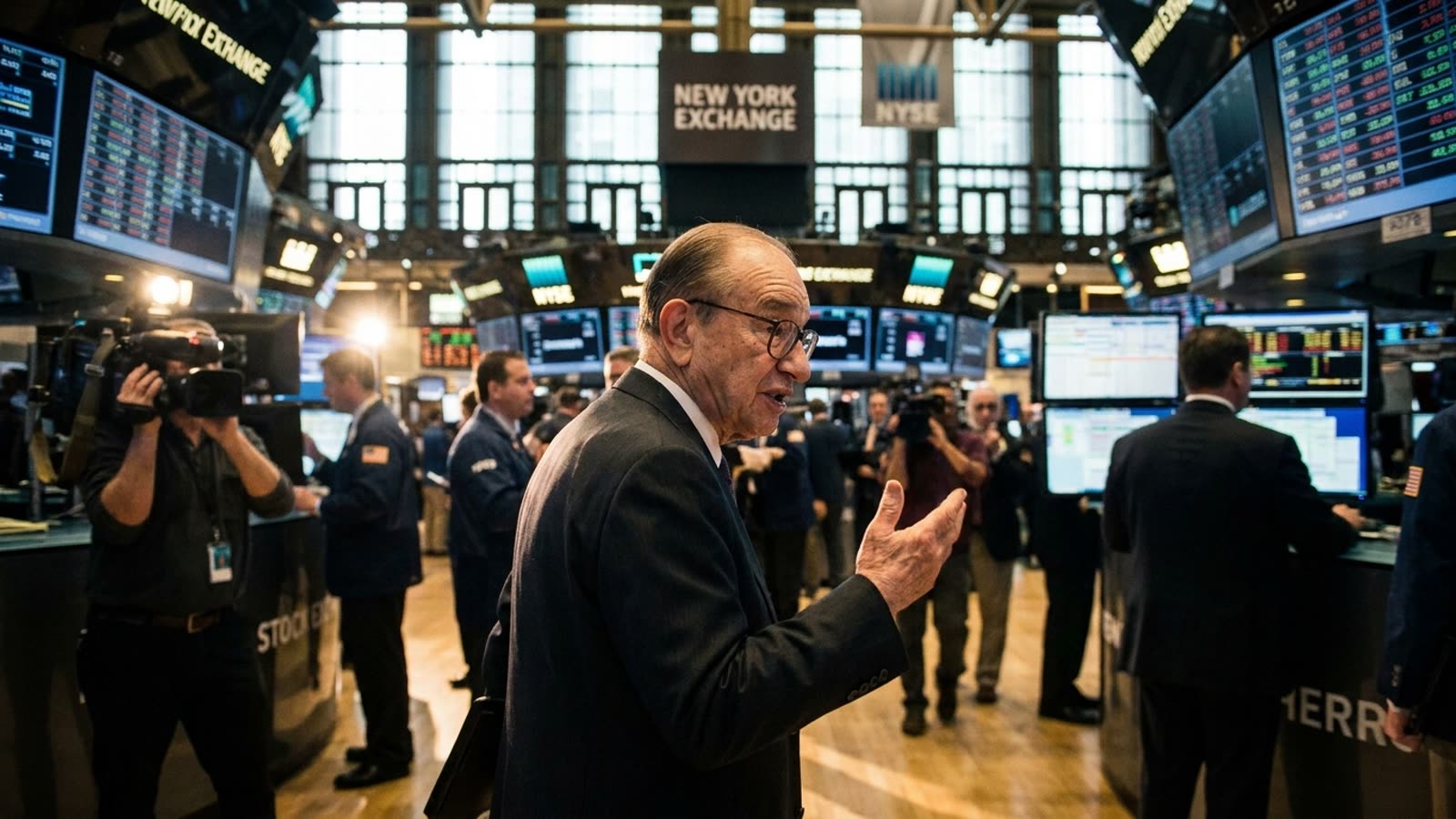
Few figures in American economic history have been so celebrated in their time and so questioned in retrospect as Alan Greenspan, who died Sunday at the age of 100. The man who served as Federal Reserve chairman for nearly two decades — from the Reagan era through the early months of the second Bush administration — became synonymous with a particular approach to monetary policy: light-touch regulation, faith in market self-correction, and the strategic deployment of ambiguity as a policy tool itself.
Greenspan's tenure coincided with what economists call the Great Moderation, a period of low inflation and steady growth that made central banking look almost easy. He navigated the 1987 stock market crash, the savings and loan crisis, the Asian financial crisis, the dot-com bubble, and the aftermath of September 11 — each time deploying rate cuts with a confidence that earned him near-oracular status in Washington and on Wall Street.
The Greenspan put
His most enduring contribution to market psychology may be the concept that bears his name: the "Greenspan put," the implicit guarantee that the Fed would step in to cushion financial markets whenever they fell too far, too fast. This asymmetric approach — tolerating bubbles on the way up, intervening on the way down — created a generation of investors who learned to buy the dip with the confidence that the central bank had their backs.
Critics argue this very dynamic inflated the housing bubble that exploded in 2008, six years after Greenspan left office but squarely within the policy framework he established. His resistance to regulating derivatives, his dismissal of warnings about subprime lending, and his ideological commitment to market self-regulation all came under withering scrutiny during the financial crisis. In 2008 congressional testimony, Greenspan admitted he had found a "flaw" in his free-market ideology — a rare moment of public doubt from a man who had built a career on projecting certainty.
The language of ambiguity
"If I seem unduly clear to you, you must have misunderstood what I said." The quip, delivered to a Senate committee in 1987, became Greenspan's signature. His deliberately opaque testimony — what came to be called "Fedspeak" — was not merely stylistic. It was strategic, designed to preserve the Fed's flexibility while moving markets through suggestion rather than explicit commitment. Every subsequent Fed chair has grappled with his legacy on communication, some embracing greater transparency, others recognizing the power that ambiguity still holds.
Greenspan outlived most of his contemporaries and critics alike, remaining intellectually active into his late nineties. He watched Jerome Powell navigate the pandemic economy and Kevin Warsh, his ideological heir, take the chairmanship earlier this year. The debates he shaped — about the Fed's proper role in asset prices, about the limits of deregulation, about whether central bankers can or should prevent bubbles — remain unresolved.
Our take
Greenspan was neither the wizard his admirers believed nor the villain his detractors later constructed. He was a technocrat who genuinely believed markets knew best, and who lived long enough to see that belief tested to destruction. The financial system that emerged from 2008 is more regulated, more cautious, and more aware of systemic risk than the one he oversaw — which is itself a kind of legacy, even if not the one he intended. At 100, he had outlived the consensus that made him famous. The questions he raised about central banking's proper scope will outlive us all.