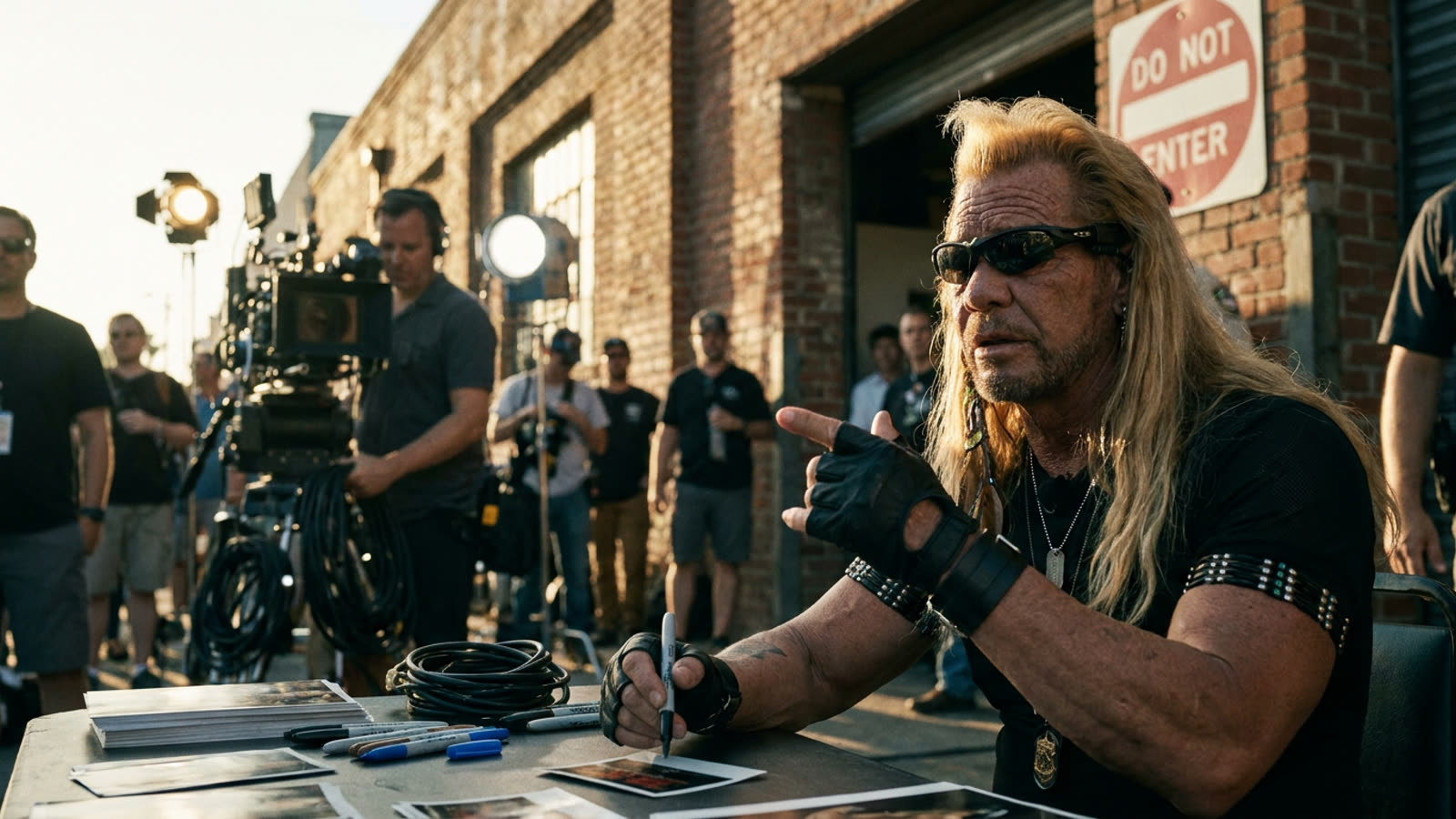
Duane "Dog" Chapman remains, improbably, a fixture of American celebrity nearly two decades after his A&E series made bounty hunting appointment television. The mullet-and-leather aesthetic that once seemed like camp now reads as a cultural artifact — and yet Chapman continues generating headlines, a testament to the peculiar durability of reality TV fame.
The original "Dog the Bounty Hunter" ran from 2004 to 2012, turning a Hawaii-based bail bondsman with a complicated past into a household name. Chapman's formula was simple: chase down bail jumpers, deliver folksy moral lectures, cry on camera. It worked spectacularly. At its peak, the show drew over 4 million viewers and spawned the entire "working-class hero with a camera crew" subgenre that would eventually give us "Duck Dynasty," "Pawn Stars," and countless imitators.
The immortality of tabloid relevance
What's remarkable about Chapman's continued presence isn't the headlines themselves — marriages, health scares, family drama — but that anyone still cares. The man is 73 years old. His last regularly scheduled series ended years ago. Yet he maintains the kind of name recognition that eludes most former reality stars, who typically fade into Instagram obscurity or county fair appearances.
The secret, such as it is, lies in Chapman's understanding that reality television was never really about the premise. Bounty hunting was merely the MacGuffin. The actual product was personality — specifically, a personality broad enough to be parodied but sincere enough to generate genuine emotional investment. Chapman wept freely, preached redemption loudly, and never met a camera he didn't treat like a confessional.
What reality TV built
Chapman emerged from the same era that produced Paris Hilton, the Osbournes, and the first season of "The Real World" graduates who learned to leverage exposure into permanent careers. But while many of his contemporaries pivoted to other ventures, Chapman stayed stubbornly on-brand. He is, and apparently always will be, Dog the Bounty Hunter — even when he's not actually hunting anyone.
This persistence illuminates something about the reality TV celebrity model. Unlike traditional fame, which requires ongoing work product, reality fame creates a character that exists independently of new content. Chapman doesn't need another show. He needs only to remain recognizably himself, generating the occasional tabloid story that reminds audiences he exists.
Our take
Duane Chapman is less a celebrity than a proof of concept. He demonstrated that reality television could manufacture permanent public figures from raw material that traditional Hollywood would never touch — and that these figures could maintain relevance through sheer force of personality long after their shows ended. The formula he helped establish now powers everything from influencer culture to political campaigns. Whether that's his legacy or his warning label depends entirely on your tolerance for men in sleeveless shirts dispensing unsolicited life advice.