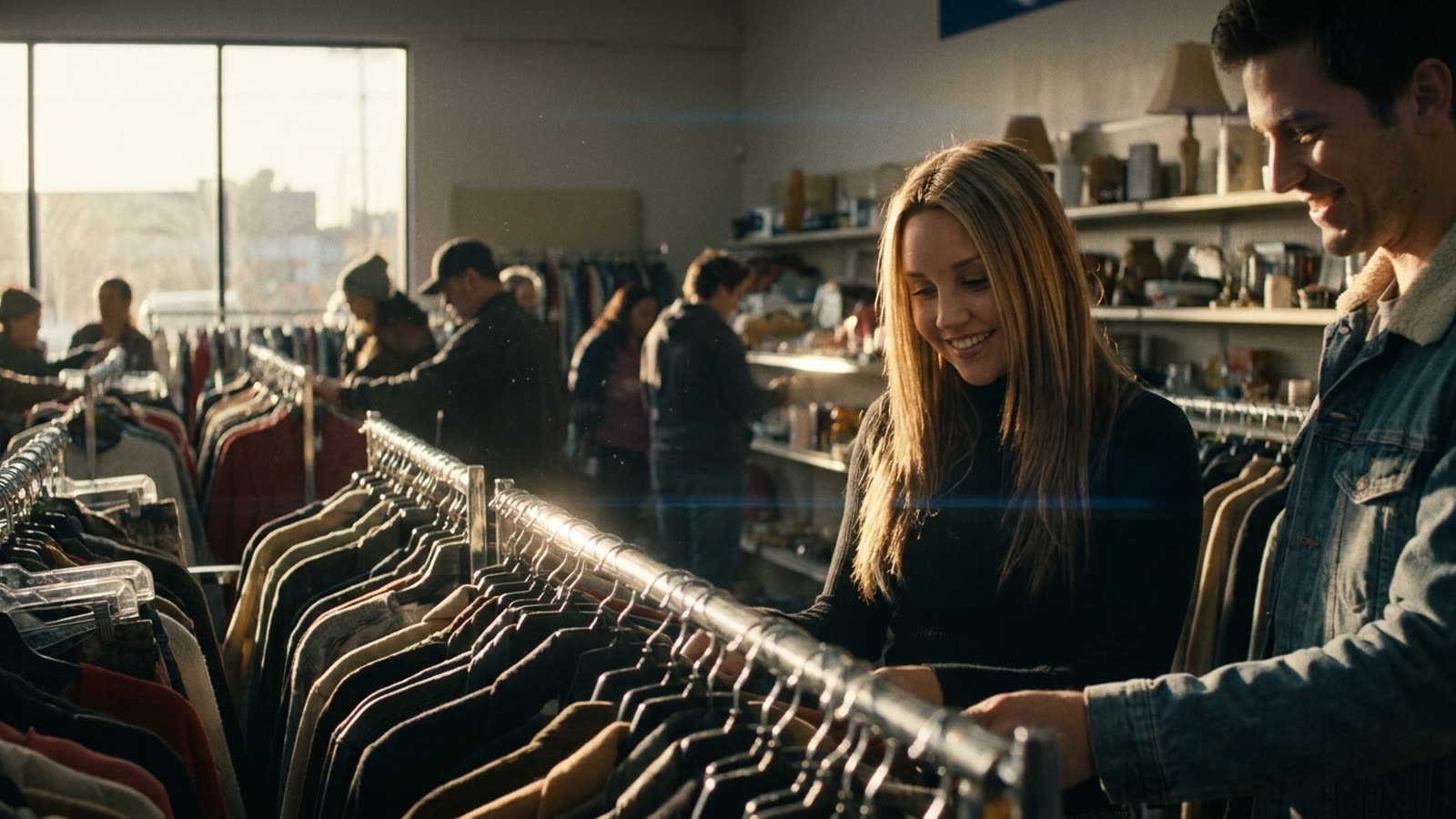
Amanda Bynes was spotted this week doing something remarkably unremarkable: browsing the racks at a Goodwill thrift store with her boyfriend, looking relaxed, looking present, looking like someone who has figured out how to exist in the world without the world watching her unravel. For anyone who followed her trajectory from Nickelodeon golden child to conservatorship subject to psychiatric hold to tabloid fixture, the banality of the image is its own kind of triumph.
The 39-year-old former star of The Amanda Show and She's the Man has been photographed several times recently on quiet outings — coffee runs, casual shopping trips, the unglamorous errands that constitute a functional life. She appears to have lost weight, though more notable is the absence of the erratic behavior that defined her public persona for much of the 2010s. No wigs. No Twitter meltdowns. No Drake marriage proposals. Just a woman buying secondhand clothes with someone she cares about.
The conservatorship generation
Bynes's story runs parallel to Britney Spears's, though it attracted less sustained attention and generated no documentary industrial complex. Both women were placed under conservatorships following very public mental health crises — Bynes in 2013, initially under her mother's control. Unlike Spears, Bynes's conservatorship ended relatively quietly in 2022, after she completed treatment and demonstrated to a court that she could manage her own affairs. The lack of fanfare was itself telling: there was no #FreeAmanda movement, no courtroom drama, no villain to vanquish. Just paperwork and progress.
What followed has been a careful, almost invisible reintegration. Bynes enrolled in fashion school. She got engaged, then quietly ended the engagement. She has not attempted a comeback in any conventional sense — no reality show, no tell-all memoir, no carefully orchestrated return to screens. She has simply been living, which for someone whose every breakdown was documented in real time, constitutes its own form of radical privacy.
Why thrift stores matter
There is something pointed about the Goodwill detail. Bynes earned substantial money during her Nickelodeon and film career, though the exact state of her finances post-conservatorship remains private. But the choice to shop secondhand — whether born of necessity, environmental consciousness, or simple preference — signals a relationship with consumption that diverges sharply from the celebrity industrial complex. No paparazzi-friendly Erewhon run. No Birkin on the arm. Just fluorescent lights and donated sweaters.
This is not the narrative arc that Hollywood typically scripts for its former child stars. The template demands either spectacular redemption (Drew Barrymore) or spectacular destruction (too many to name). Bynes appears to be charting a third path: quiet, unglamorous, sustainable. She is not performing wellness for an audience. She is, by all visible evidence, simply well.
Our take
We have become so accustomed to watching young women shatter under the weight of early fame that we have forgotten what it looks like when one of them quietly puts herself back together. Amanda Bynes shopping at Goodwill will not trend. It will not spawn think pieces about the parasocial contract or the cruelty of the tabloid gaze. But it might be the best possible outcome for someone who spent her twenties in genuine crisis: a life small enough to be livable, and boring enough to be her own.